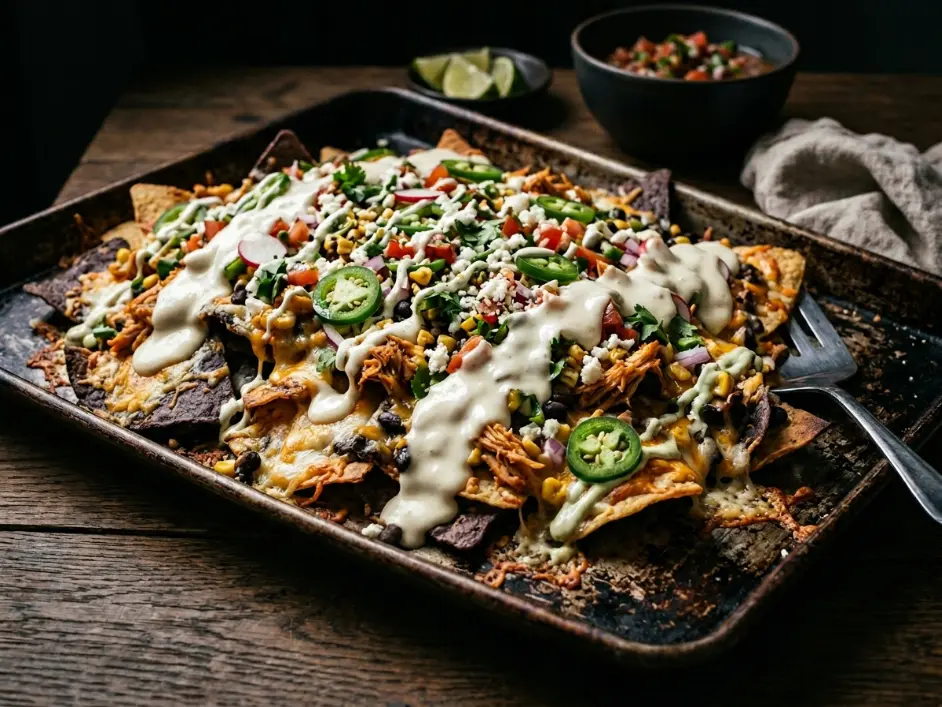
5 Culinary Secrets to Ultimate Loaded Sheet Pan Nachos with Queso Blanco
You lift a heavy, loaded tortilla chip completely blanketed in steaming, silky white cheese. The toppings cling perfectly—seasoned beef, black beans, bright jalapeño rings all bonded together in a cohesive, edible architecture. Then you bite down through the center layer and your heart sinks. The core has transformed into an unmitigated, soggy puddle of grease and bean moisture, collapsing into a greasy mush that sticks to the roof of your mouth.
I have tested this method across dozens of batches in the Expert Palate test kitchen, adjusting one variable at a time to isolate exactly what makes the difference between a split, oily mess and a perfectly bound, velvety emulsion. The Ultimate Loaded Sheet Pan Nachos with Queso Blanco are a masterclass in moisture management, thermal sequencing, and emulsification science—transforming a simple party appetizer into a structurally sound, flavor-packed culinary achievement.
This is not just about piling toppings on chips. This is about understanding how starch crystallization creates moisture barriers, how emulsifying agents stabilize dairy under heat, and how strategic layering prevents structural collapse.
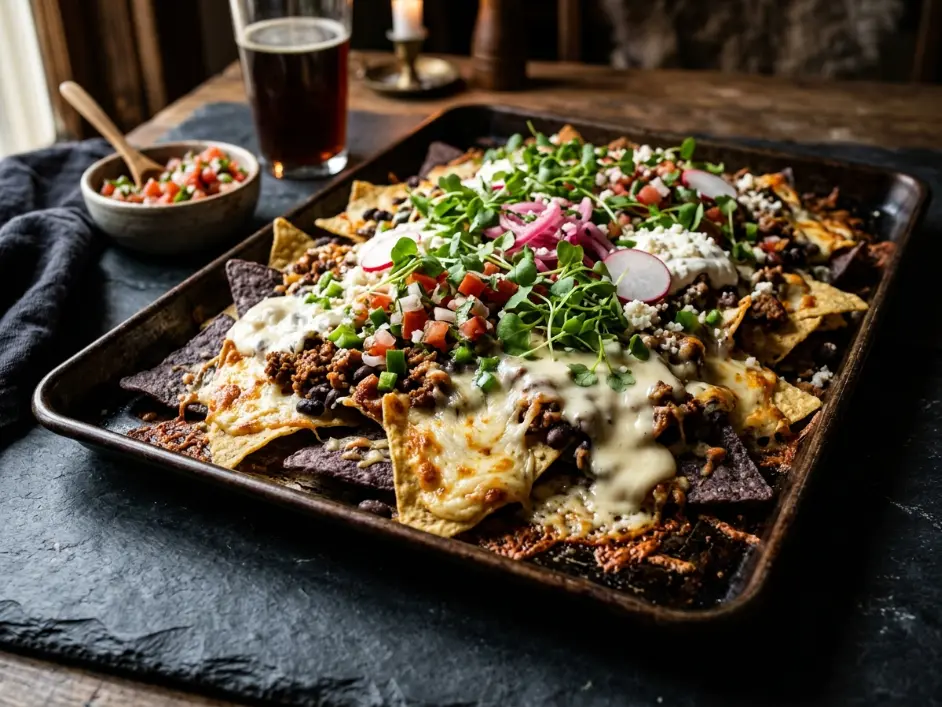
When planning a fiesta-style spread for gatherings, the balance between crispy foundations and creamy, rich toppings creates an addictive textural rhythm that keeps people coming back.
4 Elite Secrets to Flawless Crispy Bacon-Wrapped Jalapeño Poppers
The Science of the Moisture Shield and Sodium Citrate
Tortilla chips are compressed matrices of gelatinized corn starch held together by residual protein networks and hardened through deep frying or baking. When you introduce high-moisture elements like seasoned meat, beans, or melted cheese directly onto a cold chip, capillary action pulls that liquid into the porous starch structure, causing immediate softening and eventual sogginess.
The solution lies in creating a heat-activated starch crust before you add toppings. When you par-bake chips at moderate heat for just five minutes, the surface starch granules re-crystallize into a tighter, less permeable network. This creates a temporary moisture barrier that resists absorption from wet toppings during the final assembly and bake.
But the real magic happens in the cheese sauce. Traditional cheese melts break down under heat because the casein proteins contract and squeeze out fat, creating that greasy, separated texture. By analyzing macro component baselines across cheese styles through data from the USDA FoodData Central database, we understand that certain cheeses contain natural emulsifiers that prevent this breakdown.
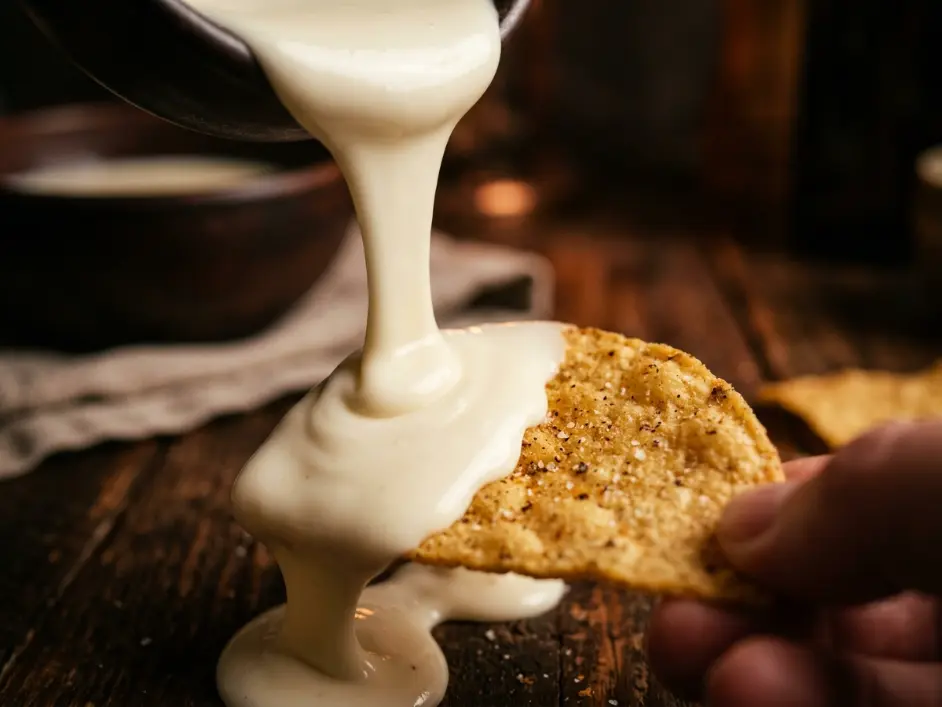
White American cheese is engineered with sodium citrate and sodium phosphate—compounds that bind to casein proteins and create stable channels through which fat can flow without separating. When you blend this with high-moisture Monterey Jack and a splash of cream, you create a queso blanco that stays silky and pourable even after sitting for twenty minutes.
In simple terms: the emulsifying salts keep the fat and water molecules from divorcing under heat, creating a unified, velvety sauce that coats every chip without turning greasy or grainy.
Casein Protein Channels+Emulsifying Binders→Velvety Liquid Cheese Fluidity
This is the chemical foundation that separates restaurant-quality nachos from the grainy, separated disasters most home cooks produce.
Pro Sourcing & Ingredient Selection
Not all tortilla chips are created equal. You want thick, restaurant-style stone-ground corn chips from premium markets or specialty tortillerias. These chips have a denser structure with higher corn content and less air incorporation, which means they resist breakage and hold up better under heavy toppings.
Avoid light, airy mass-market supermarket brands that shatter when you look at them wrong. Those chips are engineered for dipping into salsa, not supporting the structural load of meat, beans, and cheese. Look for chips labeled “restaurant style” or “cantina style”—they will be thicker, heavier, and more expensive, but the textural payoff is worth every penny.
For the cheese sauce base, source high-moisture melting blocks like Land O’Lakes extra white American cheese or premium Monterey Jack at deli counters. Ask the counter staff to slice you thick wedges from the block, not pre-shredded packaged varieties. Pre-shredded cheese contains cellulose and potato starch anti-caking agents that create a grainy texture and prevent smooth melting.
White American cheese is non-negotiable here. It is the foundation of every smooth queso blanco you have ever had at a Mexican restaurant. The sodium citrate and phosphate salts engineered into this cheese create the emulsification stability that keeps your sauce silky.
For the ground beef, choose 85/15 lean-to-fat ratio. Leaner beef dries out during browning, while fattier blends release excessive grease that pools under your chips and creates sogginess. This ratio gives you flavor and moisture without turning your nachos into an oil slick.
Ingredients Table
| Category | Ingredient | US Customary | Metric |
|---|---|---|---|
| The Sturdy Base | Thick stone-ground corn tortilla chips (restaurant style) | 12 oz | 340g |
| The Seasoned Protein Stack | Lean ground beef (85/15) or chopped carne asada | 1 lb | 454g |
| Homemade taco seasoning blend | 2 tablespoons | 15g | |
| Canned black beans, thoroughly drained and rinsed | 1 can (15 oz) | 425g | |
| Monterey Jack cheese, freshly grated | 2 cups | 226g | |
| The Velvety Queso Blanco | Premium white American deli cheese, cubed | 8 oz | 225g |
| Whole milk or heavy cream | ½ cup | 120ml | |
| Diced green chiles (canned) | 4 oz | 113g | |
| Pickled jalapeño peppers, sliced | ¼ cup | 60ml | |
| Fresh Garnishes | Fresh Roma tomatoes, diced small | 2 medium | 150g |
| Finely chopped fresh cilantro | ¼ cup | 15g |
Common Kitchen Blunders
| The Kitchen Blunder | What Actually Happens (Scientific Reality) | The Chef Joseph Fix |
|---|---|---|
| Pouring boiling-hot cheese sauce over cold chips | Extreme temperature differential causes condensation on chip surfaces, immediately softening the starch matrix and destroying crispness | Par-bake chips first to warm them, then apply warm (not boiling) queso blanco just before serving to minimize temperature shock |
| Layering canned beans with their liquid packaging starches | Bean liquid contains dissolved starch and sodium that migrates into chips through capillary action, creating instant sogginess | Drain beans completely in a fine mesh strainer, rinse under cold water, then press gently on paper towels to remove residual moisture |
| Failing to pre-bake the chips for structure | Raw chips have porous, hydrophilic starch surfaces that immediately absorb meat juices and cheese oils, collapsing into mush | Bake bare chips at 350°F for 5 minutes to crystallize surface starch into a temporary moisture barrier before adding toppings |
| Using low-fat cheeses that curdle | Reduced-fat cheeses contain higher protein-to-fat ratios that coagulate under heat, creating grainy, separated textures instead of smooth melts | Use full-fat white American cheese with natural emulsifiers and high-moisture Monterey Jack for stable, silky sauce |
| Piling all the meat in one massive center mound | Concentrated weight and moisture in the center creates a structural collapse zone while edges remain bare and under-topped | Distribute seasoned meat evenly across the entire chip layer in small, scattered clusters for balanced weight distribution |
| Assembling layers hours in advance without baking | Extended contact time between wet toppings and chips allows moisture migration even without heat, pre-softening the structure | Assemble components separately and combine only 10-15 minutes before the final bake to minimize moisture transfer |
Step-by-Step Method
Step 1: The High-Heat Starch Crystallization
Preheat your oven to 350°F / 177°C. Position the rack in the center of the oven for even heat circulation. Line a commercial-grade half sheet pan with parchment paper if you prefer easier cleanup, though it is not strictly necessary.
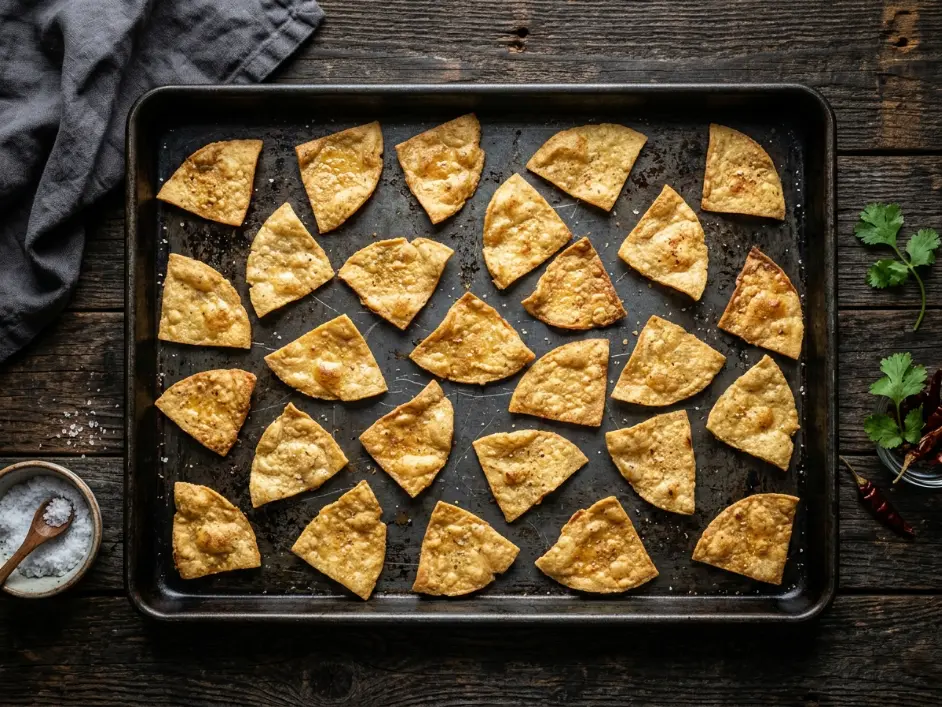
Spread your thick stone-ground tortilla chips in a single, even layer across the entire surface of the sheet pan. You want minimal overlap—each chip should have direct contact with the hot pan surface. This is your foundation layer, and it needs to be structurally sound.
Slide the pan into the oven and bake the bare chips for exactly 5 minutes. Do not skip this step. During this time, the residual moisture inside the chips evaporates, and the surface starch granules re-crystallize into a tighter, less permeable network. This creates a temporary moisture barrier that will resist absorption from the wet toppings you are about to add.
When you pull the pan out, the chips should feel slightly warmer and crisper to the touch, but they should not be browned or toasted. You are not cooking them—you are transforming their surface chemistry.
Step 2: The Unified Protein and Legume Distribution
While the chips are par-baking, heat a heavy skillet over medium-high heat. Add your ground beef and break it into small crumbles with a wooden spoon or spatula. Season with your homemade taco spice blend—cumin, chili powder, garlic powder, smoked paprika, salt, and a pinch of cayenne.
Cook the beef until deeply browned and no pink remains, about 6 to 8 minutes. The Maillard reaction creates hundreds of savory flavor compounds during this browning process, transforming bland ground meat into a complex, aromatic topping.
Drain the beef thoroughly in a fine mesh strainer or colander, pressing gently to remove excess rendered fat. This step is critical—residual grease will pool under your chips and create sogginess.
While the beef drains, open your can of black beans and pour them into a fine mesh strainer. Rinse under cold running water for at least 30 seconds to remove the starchy packing liquid. Transfer the beans to a layer of paper towels and press gently to absorb surface moisture. The drier your beans, the less moisture they will introduce to your nachos.
Once your par-baked chips are out of the oven, scatter the drained ground beef evenly across the entire chip layer in small, dispersed clusters. Do not pile it in the center—distribute it like you are seasoning a dish, not building a mountain. Follow the same pattern with the dried black beans, scattering them into the gaps between beef clusters.
Top the entire assembly with your freshly grated Monterey Jack cheese, covering the chips, beef, and beans in a uniform blanket. This cheese layer will melt and act as a binder, holding all the components together during the final bake.
Step 3: Engineering the Velvet Queso Blanco Emulsion
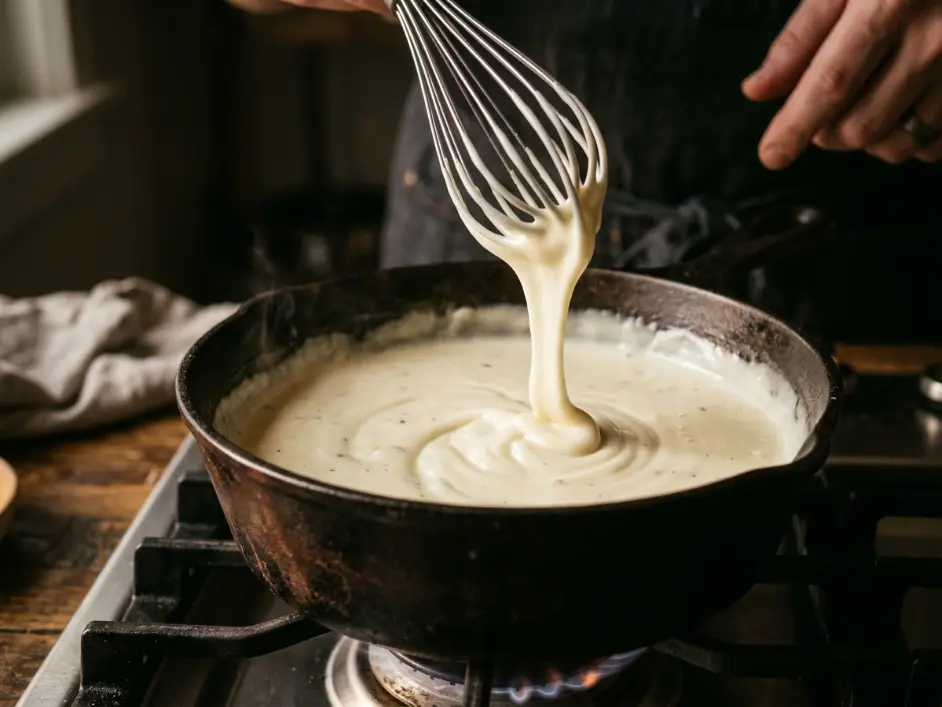
While your loaded chip tray waits, make the queso blanco. In a small nonstick saucepan over low heat, combine your cubed white American deli cheese, whole milk, and diced green chiles. Stir constantly with a silicone whisk as the cheese begins to soften.
The emulsifying salts in the American cheese will activate as the temperature climbs, creating stable channels through which the milk fat can flow without separating. You will see the mixture transform from chunky curds floating in liquid to a unified, glossy sauce.
As discussed in acid balance methods shared over at Serious Eats, folding fresh pickled jalapeño brine directly into the warm cheese matrix completely enhances flavor depth and adds a bright, tangy note that cuts through the richness.
Once the sauce is completely smooth and pourable—about 4 to 5 minutes of gentle stirring—remove it from the heat. The queso should coat the back of a spoon in a thick, creamy layer without breaking or separating. If it seems too thick, whisk in an additional tablespoon of milk. If it seems too thin, let it sit off the heat for a minute—it will thicken as it cools slightly.
Step 4: The Strategic Multi-Level Convection Layering
Increase your oven temperature to 400°F / 204°C. Slide your loaded chip tray—now topped with beef, beans, and shredded Monterey Jack—back into the oven. Bake for 8 to 10 minutes, until the shredded cheese melts completely and begins to bubble around the edges.
You are not trying to brown the cheese or crisp the toppings—you are creating a unified bond between all the layers. The melted Monterey Jack acts as an adhesive, binding the beef and beans to the chip foundation so nothing slides off when you try to pick up a loaded chip.
When you pull the tray from the oven, it should look cohesive, with the cheese fully melted and the toppings visibly bonded to the chips. Let it rest for about 2 minutes to allow the cheese to set slightly.
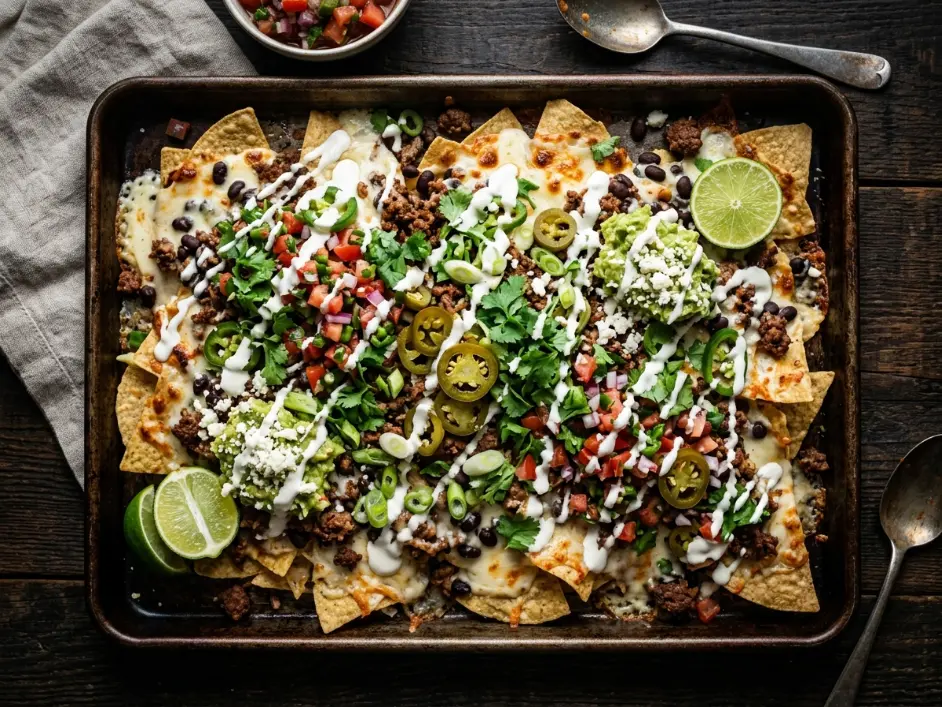
Now comes the moment of truth. Ladle your warm, velvety queso blanco sauce in steady, even ribbons across the entire surface of the nachos. Do not pour it all in one spot—move your ladle back and forth, creating a web of white cheese that reaches every corner of the tray.
Immediately garnish with diced fresh tomatoes, sliced pickled jalapeños, and a generous handful of finely chopped fresh cilantro. The fresh, bright toppings provide textural and flavor contrast against the rich, creamy base.
Serve immediately while the chips are still crisp and the cheese is warm and flowing.
Chef Joseph’s Insight
“Cooking is not just chemistry — it is memory made edible. When others gather around a table and tear off that first piece of warm, crunchy bread to plunge it into a bubbling, velvety center, the science fades away and pure connection takes over. The most powerful moves in the kitchen are almost always the quiet ones. The overnight rest. The proper preheat. The two-minute wait before you plate. It is the patience to wring out every last drop of moisture from your greens, and the care you take in picking the right cheese. Take your time, respect the process, and your kitchen will always reward you.”
— Chef Joseph | Expert Palate
When building a complete party spread around these nachos, think about balancing rich, heavy elements with bright, acidic sides and crisp, refreshing beverages.
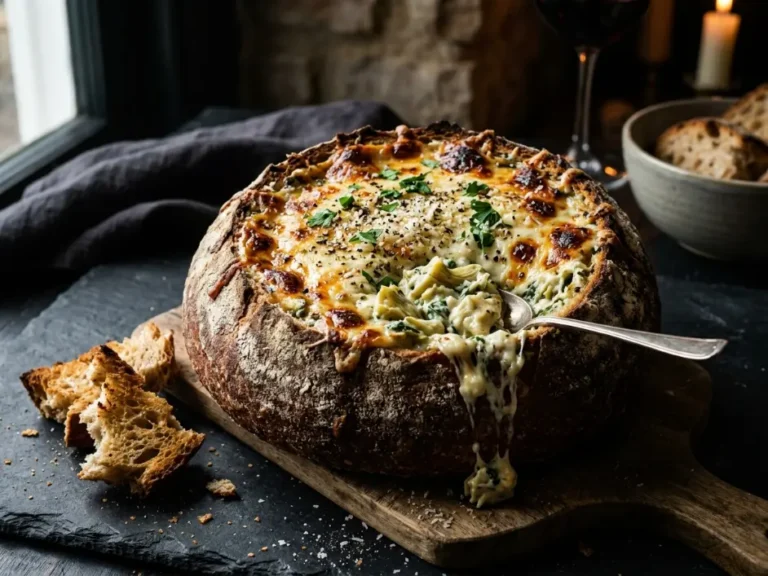
5 Culinary Secrets to the Ultimate Cheesy Spinach Artichoke Dip in a Bread Bowl
Technical Data & Nutrition Table
Per Serving (approximately 1.5 cups):
| Nutrient | Amount |
|---|---|
| Calories | 485 kcal |
| Protein | 24g |
| Total Fat | 28g |
| Saturated Fat | 13g |
| Carbohydrates | 32g |
| Sodium | 820mg |
| Cholesterol | 68mg |
Note: Nutritional values are careful kitchen estimates based on standard ingredient databases and may vary depending on specific brands and preparation methods used.
Food Safety & Thermal Management
Because these nachos contain both ground beef and dairy-based cheese sauces, proper thermal management is essential. The safe minimum internal holding temperature for any ground meat and cheese combination is 165°F / 74°C, which ensures that any potential pathogens are destroyed.
The danger zone for bacterial growth spans 40°F to 140°F / 4°C to 60°C. Cooked nachos left at room temperature for more than two hours enter this zone and should be discarded to prevent foodborne illness risk.
Planning a larger festive gathering around warm dairy elements requires following broad party appetizer frameworks from the Food Network to ensure safety and ideal holding practices. During parties or buffet service, keep the assembled nacho tray warm in a low oven set to 200°F / 93°C if it will be out for extended periods.
If the nachos cool below 140°F / 60°C, either reheat them back above this threshold or refrigerate any leftovers promptly. Never leave protein and dairy compositions sitting at room temperature for extended periods, especially in warm weather or crowded indoor environments.
Storage & Reheating Matrix
| Item State | Fridge Storage Limit | Freezer Safety Option | The Absolute Best Reheating Method |
|---|---|---|---|
| Separate Leftover Queso Blanco Sauce | 5 days in airtight container in refrigerator | Up to 2 months in freezer-safe container; thaw in fridge overnight | Reheat gently in a small saucepan over low heat, whisking constantly and adding milk 1 tablespoon at a time to restore smooth consistency |
| Unserved Assembled Topping Prep Trays | Store cooked beef, beans, and cheese separately in airtight containers for up to 3 days | Cooked beef and beans freeze well individually for up to 3 months; cheese does not freeze well | Assemble fresh chips with reheated toppings rather than attempting to reheat assembled nachos; stale baked chips cannot be saved by microwave |
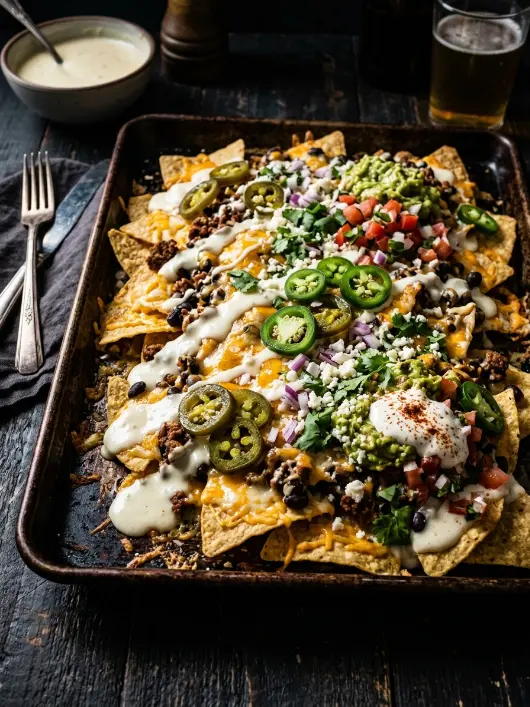
Ultimate Loaded Sheet Pan Nachos with Queso Blanco
Ingredients
Equipment
Method
- Preheat the oven to 350 degrees Fahrenheit and spread the thick corn tortilla chips evenly across a large rimmed baking sheet in a single layer without crowding.
- Bake the bare chips alone for five minutes to crystallize surface starch structures and create a temporary moisture barrier against wet toppings.
- Brown the seasoned ground beef inside a hot skillet over medium high heat, breaking it into small crumbles and cooking until no pink remains.
- Drain the cooked meat thoroughly in a fine mesh strainer and press gently to remove all excess rendered fats completely.
- Rinse the canned black beans under cold running water in a strainer, then compress gently on paper towels to remove surface moisture.
- Scatter the drained beef and dried beans evenly across the par baked chip layer in small distributed clusters rather than piling in the center.
- Top the entire assembly with freshly grated Monterey Jack cheese in a uniform blanket covering chips, beef, and beans.
- Melt the cubed white American cheese with whole milk and diced green chiles in a small saucepan over low heat, whisking constantly until completely smooth and unified.
- Increase the oven temperature to 400 degrees Fahrenheit and return the loaded sheet pan to bake for eight to ten minutes until the shredded cheese melts and bonds all layers together.
- Remove the tray from the oven, let rest for two minutes, then ladle the warm emulsified queso blanco sauce in steady ribbons over the entire nacho surface.
- Garnish immediately with diced fresh tomatoes, sliced pickled jalapeños, and chopped cilantro before serving while chips remain crisp and cheese stays warm.
Notes
Frequently Asked Culinary Questions
Why does my cheese sauce turn grainy after it sits for twenty minutes?
Cheese sauces turn grainy when the casein proteins contract and squeeze out fat, creating separation. This happens when you use low-fat cheese or skip the emulsifying agents. Always use full-fat white American cheese, which contains sodium citrate that stabilizes the protein-fat emulsion. If your sauce sits too long and begins to thicken, whisk in warm milk one tablespoon at a time to restore smooth consistency.
Can I use restaurant style white tortilla chips or do blue corn chips offer better moisture resistance?
White, yellow, and blue corn chips all have similar starch structures and moisture resistance when they are equally thick. The key is chip density, not color. Restaurant-style thick-cut chips of any color will outperform thin, airy supermarket brands. Blue corn chips do have a slightly nuttier flavor and often come in artisanal thick-cut formats, making them an excellent choice if you can find quality versions.
How do I keep the meat toppings from rolling right off the chip layer?
The solution is strategic layering and adhesive melting. Distribute small, scattered clusters of meat across the entire chip surface rather than piling it in the center. Then cover everything with shredded cheese and bake until that cheese melts completely. The molten cheese acts as an edible glue, binding the meat to the chips so nothing slides off when you pick up a piece.
Can I assemble the sheet pan layers several hours in advance?
You can prep all components separately hours in advance—cook the beef, drain the beans, grate the cheese, make the queso blanco—but do not assemble the final nacho tray until 10 to 15 minutes before serving. Extended contact time between wet toppings and chips allows moisture migration even without heat, pre-softening the structure. Assemble fresh for maximum crispness.