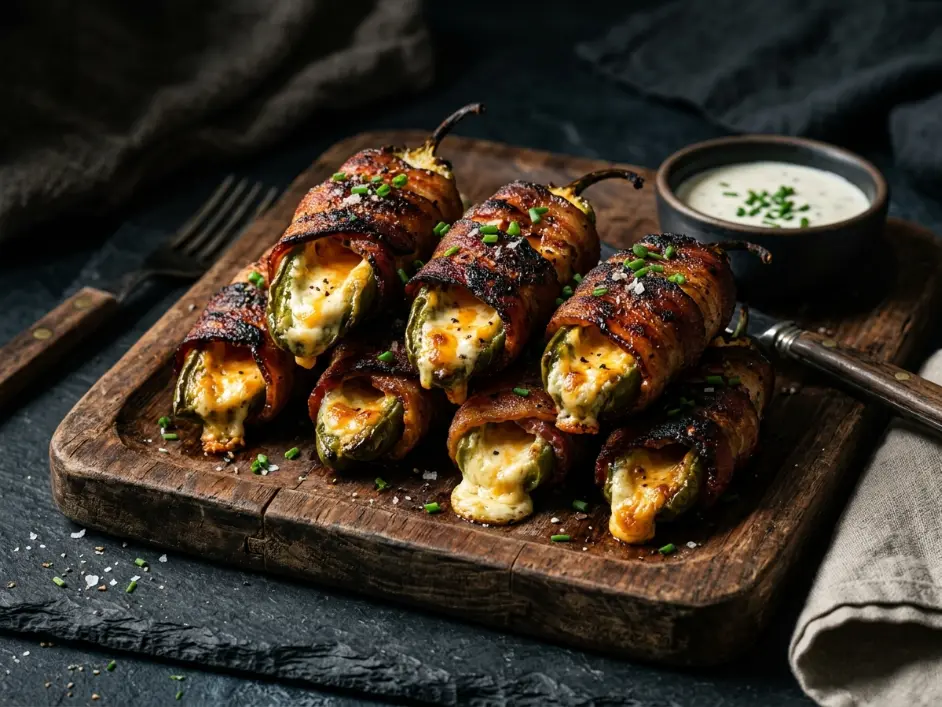
4 Elite Secrets to Flawless Crispy Bacon-Wrapped Jalapeño Poppers
You bite down through a shattering crust of smoky, caramelized pork that crackles audibly. The bacon gives way to tender green pepper walls filled with molten, tangy cream cheese that stretches as you pull the popper away from your mouth. Then you look down at the rest of the tray and your heart sinks. Limp, pale bacon strips floating in a greasy pool of water released by overheated jalapeños, their cheese filling bubbling out the sides like volcanic overflow.
I have tested this method across dozens of batches in the Expert Palate test kitchen, adjusting one variable at a time to isolate exactly what makes the difference between a split, oily mess and a perfectly bound, velvety emulsion. Crispy Bacon-Wrapped Jalapeño Poppers are a study in thermal choreography—balancing the slow render of pork fat against the rapid structural breakdown of pepper cell walls while keeping a dairy filling stable under convection heat.
This is not just about wrapping bacon around peppers. This is about understanding lipid rendering rates, managing vegetable moisture release, and leveraging elevated heat circulation to achieve simultaneous crispness and creaminess.
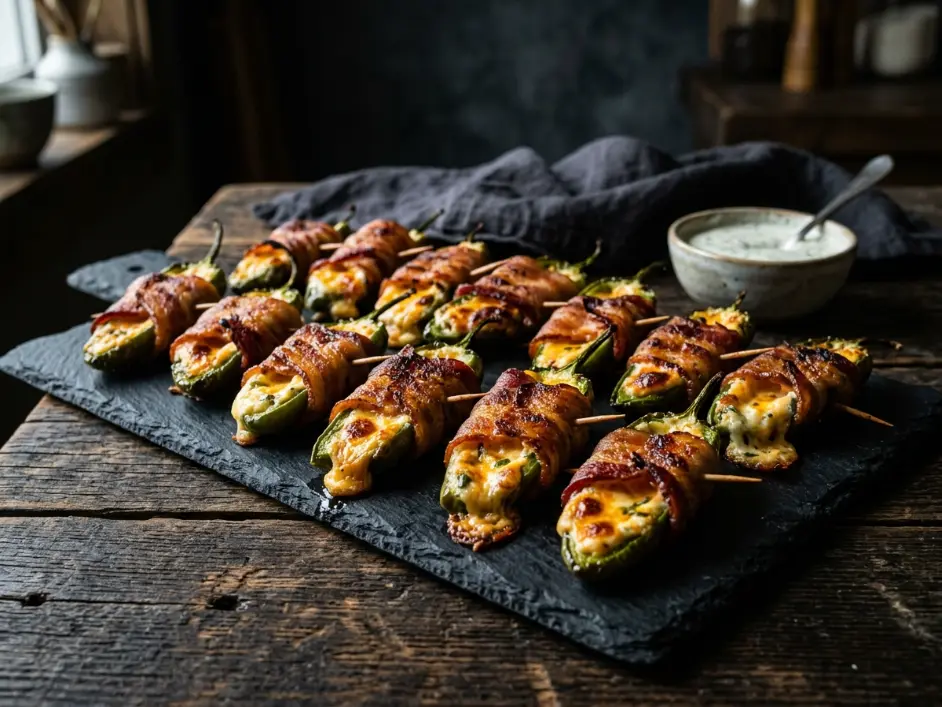
When planning finger food spreads for gatherings, the textural contrast between smoky, crispy exteriors and creamy, spicy interiors creates an addictive eating rhythm that keeps people coming back.
5 Culinary Secrets to the Ultimate Cheesy Spinach Artichoke Dip in a Bread Bowl
The Science of Lipid Rendering and Thermal Balance
Bacon is approximately 40 to 50 percent fat by weight, most of it residing in a thick subcutaneous layer beneath the skin. When you apply heat, that solid fat begins to melt into liquid lipid at around 130°F / 54°C, but it does not crisp the protein matrix until the water content inside the meat evaporates and the temperature climbs past 300°F / 149°C.
Jalapeños, on the other hand, are about 92 percent water. When you heat them, their cell walls begin to soften and collapse rapidly, releasing internal moisture. If that moisture has nowhere to escape, it pools underneath the bacon, preventing the fat from rendering cleanly and turning your carefully wrapped appetizers into steamed, rubbery disappointments.
The key is creating an elevated cooking environment where hot air can circulate completely around each popper, allowing bacon fat to drip away from the meat while the pepper releases its moisture as steam that evaporates instead of pooling.
In simple terms: you need gravity and airflow working together. The bacon drips its fat downward while hot convection air crisps the exposed protein. The pepper releases steam upward and outward, keeping the interior tender without waterlogging the exterior.
Subcutaneous Fat Layer+Convection Heat→Rendered Liquid Lipid+Crispy Protein Matrix
This is why setting poppers directly on a flat baking sheet produces soggy results. The bacon sits in its own rendered fat and the pepper’s expelled water, never achieving the textural transformation you need.
Pro Sourcing & Ingredient Selection
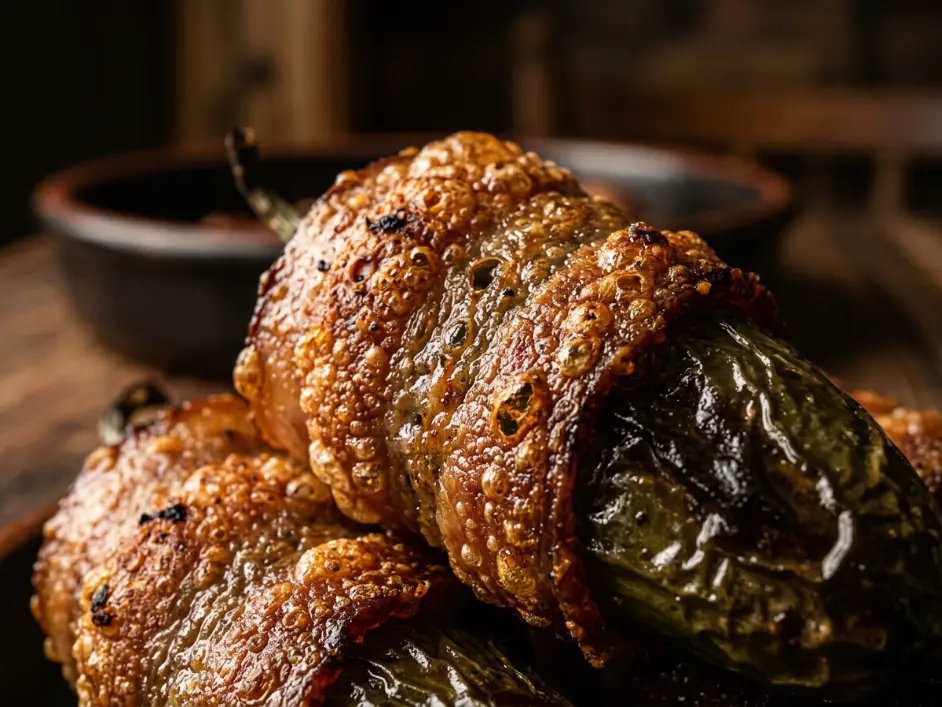
Not all bacon is built for wrapping. You want thin-to-medium cut center-cut bacon, preferably from a local butcher counter or premium grocer. Thick-cut varieties contain so much fat that they cannot fully render before the cheese filling begins to overflow and the pepper walls collapse from prolonged heat exposure.
Center-cut bacon also has a more balanced meat-to-fat ratio, which means you get structural integrity from the protein while still achieving that essential crispy texture. Avoid pre-cooked or maple-cured bacon—the added sugars caramelize too quickly and burn before the fat renders.
For the jalapeños, select firm, smooth, unblemished peppers of medium size. You want peppers with thick walls that can stand up to high heat without turning to mush. Organic produce sections tend to carry higher-quality peppers with better structural integrity. Avoid any with wrinkled skin, soft spots, or blemishes, as these indicate cellular breakdown that will accelerate under heat.
When it comes to the cheese filling, use full-fat brick cream cheese, not whipped varieties. Whipped cream cheese contains incorporated air that collapses under high heat, turning your filling into a thin, leaky mess. The dense, cold structure of brick cream cheese holds its shape much better during the bake.
Sharp cheddar adds a tangy, salty counterpoint to the richness of the cream cheese, but make sure you shred it fresh from a block. Pre-shredded cheese contains anti-caking agents that prevent smooth incorporation.
Ingredients Table
| Category | Ingredient | US Customary | Metric |
|---|---|---|---|
| The Pepper Vessel | Medium fresh jalapeño peppers, halved lengthwise | 12 peppers (24 halves) | 340g |
| The Rich Dynamic Filling | Full-fat brick cream cheese, softened | 8 oz | 225g |
| Sharp cheddar cheese, freshly shredded | 1 cup | 113g | |
| Garlic powder | ½ teaspoon | 1g | |
| Smoked paprika | ¼ teaspoon | 0.5g | |
| Fresh chives, finely minced | 2 tablespoons | 6g | |
| Coarse sea salt | ¼ teaspoon | 1g | |
| Ground black pepper | ¼ teaspoon | 0.5g | |
| The Smoky Wrap | Center-cut thin bacon slices, halved | 12 slices (24 halves) | 454g |
Common Kitchen Blunders
| The Kitchen Blunder | What Actually Happens (Scientific Reality) | The Chef Joseph Fix |
|---|---|---|
| Using thick-cut bacon that stays rubbery | Excessive subcutaneous fat layer cannot fully render before pepper walls collapse and cheese overflows from prolonged heat | Select thin-to-medium cut center-cut bacon that renders cleanly in 20-25 minutes at 400°F without overcooking the pepper |
| Failing to scoop out the pale internal placental ribs | White ribs contain 80% of the capsaicin alkaloid compounds, creating overwhelming heat that masks the balanced flavor profile | Wear gloves and use a small spoon to scrape out all seeds and white membranes, leaving only the green pepper flesh |
| Crowding the baking sheet without elevation | Poppers sit in pooled rendered fat and expelled pepper water, preventing crispness and creating steamed, soggy bacon | Use an elevated wire rack over a sheet pan so fat and moisture drip away while hot air circulates completely around each piece |
| Using warm cream cheese that immediately liquefies | Softened-to-warm cheese loses structural density and leaks out during wrapping and early baking stages | Use cold brick cream cheese straight from the fridge, letting it soften only to spreadable firmness, not room temperature |
| Wrapping the bacon too loosely | Gaps between bacon and pepper allow filling to escape and prevent the bacon from making contact with heat for even rendering | Wrap bacon in a tight spiral with overlapping edges, securing with a toothpick if necessary to maintain tension during baking |
| Baking at temperatures below 375°F | Low heat causes bacon to render slowly without crisping, while peppers release moisture faster than it can evaporate, creating sogginess | Bake at 400°F to achieve rapid fat rendering and protein crisping while allowing pepper moisture to escape as steam |
Step-by-Step Method
Step 1: The Anatomical Capsaicin Extraction
Preheat your oven to 400°F / 204°C. Position the rack in the upper third of the oven for maximum convection airflow. Line a large rimmed baking sheet with aluminum foil for easy cleanup, then place an elevated wire cooling rack on top of the sheet.
Put on disposable kitchen gloves before handling the peppers. Capsaicin oils transfer easily to your skin and can cause painful burning if you touch your eyes or face afterward.
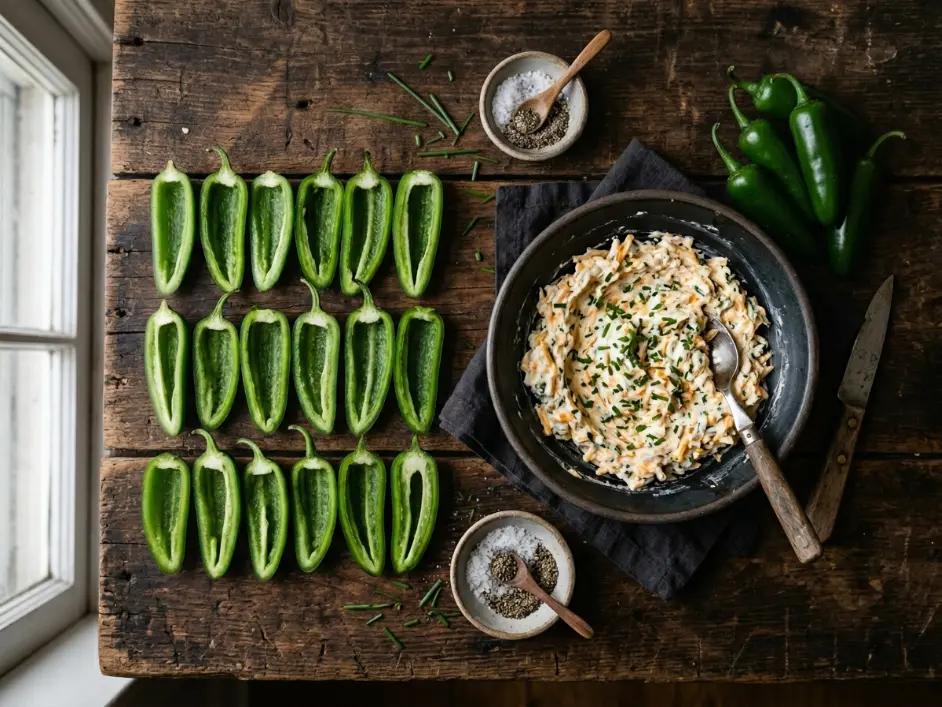
Rinse the jalapeños under cold water and pat them completely dry. Place each pepper on a cutting board and use a sharp knife to slice it in half lengthwise from stem to tip. You should have two equal boat-shaped halves.
Now comes the critical step: use a small spoon to scoop out all the seeds and white ribs inside each pepper half. The white placental tissue contains the vast majority of the capsaicin compounds that create heat. Removing it gives you the pepper’s bright, vegetal flavor without overwhelming burn. Scrape thoroughly, leaving only the green flesh.
Discard the seeds and membranes. Rinse your gloved hands and the peppers one more time, then pat everything dry again. Moisture on the pepper surface will steam instead of crisp during baking.
Step 2: Emulsifying the Multi-Cheese Core
In a medium mixing bowl, combine the cold brick cream cheese, freshly shredded sharp cheddar, garlic powder, smoked paprika, minced chives, sea salt, and black pepper. Use a sturdy fork or silicone spatula to press and fold the ingredients together until you have a uniform, cohesive paste.
The cream cheese should still be slightly firm—not warm and loose. This density is essential for keeping the filling in place during assembly and the early stages of baking.
Taste the mixture and adjust seasoning if needed. The filling should be tangy, savory, and slightly salty to balance the richness of the bacon and the vegetal sweetness of the roasted pepper.
Step 3: The Spiral Tension Wrap Protocol
Use a small spoon or offset spatula to fill each pepper half with the cheese mixture. Pack it in snugly, smoothing the top so it sits level with the rim of the pepper. Do not mound the filling above the edges—it will expand slightly during baking, and excess filling will overflow and burn.
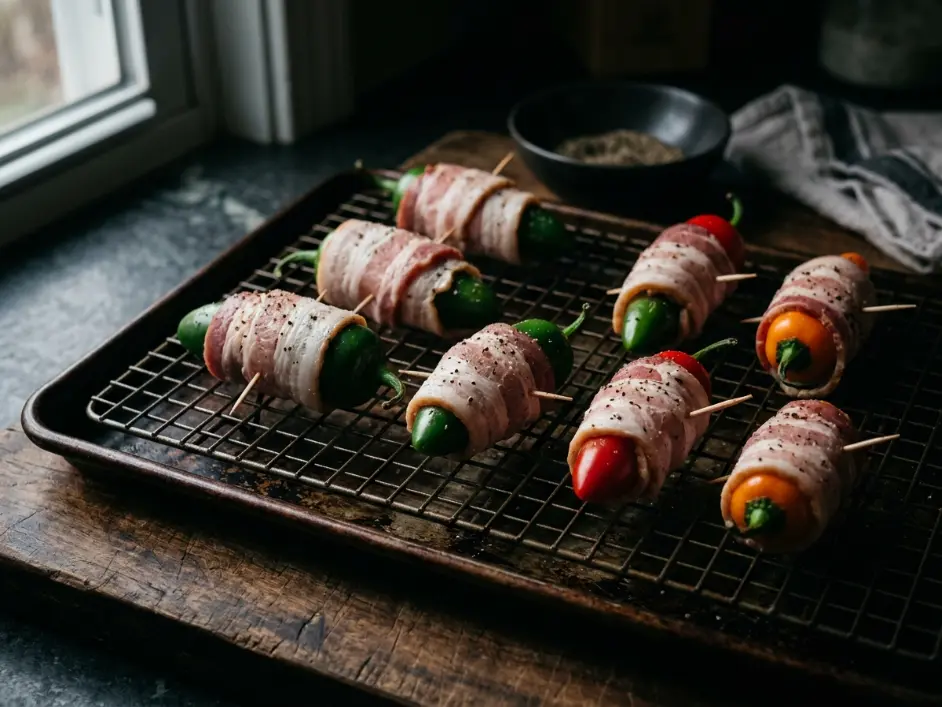
Take one half-slice of bacon and wrap it around the filled pepper in a tight spiral, starting at one end and overlapping the edges as you go. The bacon should cover the entire pepper with minimal gaps. Press the bacon firmly against the cheese filling to create good contact.
If the bacon feels loose or tends to unravel, secure it with a toothpick inserted horizontally through the bacon and pepper. This tension is important—loose bacon will not crisp evenly.
Place each wrapped popper skin-side down on the elevated wire rack. The direct contact between the rack and the bacon allows fat to render away from the meat while hot air circulates underneath, crisping the bottom as well as the top.
Space the poppers about an inch apart to ensure air can flow freely around each one.
Step 4: Elevated Convection Thermal Rendering
Slide the entire rack and sheet pan into the preheated oven on the upper rack. Bake for 22 to 25 minutes, rotating the pan halfway through for even heat distribution.
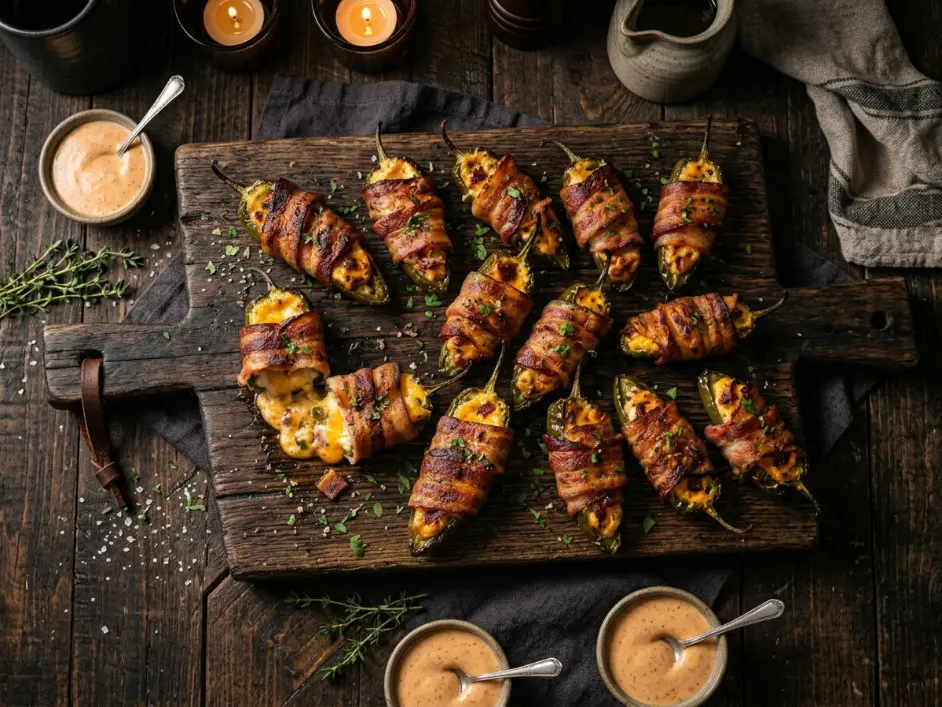
You are looking for deep golden-brown bacon with visible crispy edges and rendered fat dripping onto the foil below. The cheese filling should be bubbling gently at the edges but not overflowing. The pepper skin should have softened and developed a few blistered spots without collapsing into mush.
If the bacon is browning too quickly on top but still looks pale underneath, lower the oven temperature to 375°F / 190°C and continue baking for a few more minutes. If the bacon is crisp on top but the bottom remains soft, increase the oven temperature to 425°F / 218°C for the final 3 to 5 minutes.
Remove the pan from the oven and let the poppers rest on the rack for about 3 minutes. This allows the cheese filling to set slightly so it does not immediately spill out when you bite in, and it lets the bacon finish crisping as residual heat evaporates any remaining moisture.
Carefully remove the toothpicks if you used them, then transfer the poppers to a serving platter. Serve immediately while the bacon is still crackling and the cheese is warm and creamy.
Chef Joseph’s Insight
“Cooking is not just chemistry — it is memory made edible. When others gather around a table and tear off that first piece of warm, crunchy bread to plunge it into a bubbling, velvety center, the science fades away and pure connection takes over. The most powerful moves in the kitchen are almost always the quiet ones. The overnight rest. The proper preheat. The two-minute wait before you plate. It is the patience to wring out every last drop of moisture from your greens, and the care you take in picking the right cheese. Take your time, respect the process, and your kitchen will always reward you.”
— Chef Joseph | Expert Palate
When building a complete finger food spread around these poppers, think about balancing smoky, spicy richness with bright, cooling elements.
6 Culinary Rules for Incredible Pull-Apart Garlic Butter Pizza Sliders
Technical Data & Nutrition Table
Per Serving (3 poppers):
| Nutrient | Amount |
|---|---|
| Calories | 245 kcal |
| Protein | 12g |
| Total Fat | 20g |
| Saturated Fat | 9g |
| Carbohydrates | 4g |
| Sodium | 480mg |
| Cholesterol | 48mg |
Note: Nutritional values are careful kitchen estimates based on standard ingredient databases and may vary depending on specific brands and preparation methods used.
Food Safety & Thermal Management
Because these poppers contain both pork and dairy, proper thermal management is essential. The safe minimum internal holding temperature for any bacon and cream cheese combination is 165°F / 74°C, which ensures that any potential pathogens are destroyed.
The danger zone for bacterial growth spans 40°F to 140°F / 4°C to 60°C. Cooked poppers left at room temperature for more than two hours enter this zone and should be discarded to prevent foodborne illness risk.
During parties or buffet service, keep baked poppers warm in a low oven set to 200°F / 93°C if they will be out for extended periods. If they cool below 140°F / 60°C, either reheat them back above this threshold or refrigerate them promptly.
Never leave pork and dairy compositions sitting at room temperature for extended periods, especially in warm weather or crowded indoor environments where ambient temperatures can climb.
Storage & Reheating Matrix
| Item State | Fridge Storage Limit | Freezer Safety Option | The Absolute Best Reheating Method |
|---|---|---|---|
| Unbaked Assembled Poppers | Assemble and refrigerate up to 8 hours before baking; cover tightly with plastic wrap | Freeze individually on a tray, then transfer to freezer bags for up to 2 months; bake directly from frozen, adding 5-7 minutes to cook time | Bake from fridge or frozen state using standard elevated rack method at 400°F |
| Leftover Baked Crispy Poppers | 3 days in airtight container in refrigerator | Not recommended due to bacon texture degradation upon thawing | Reheat uncovered on a wire rack at 375°F for 8-10 minutes until bacon re-crisps; avoid microwave which makes bacon rubbery |
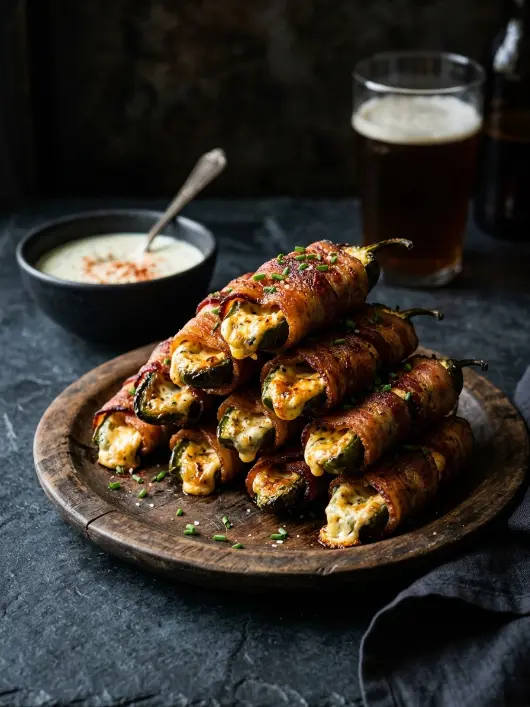
Crispy Bacon-Wrapped Jalapeño Poppers
Ingredients
Equipment
Method
- Preheat the oven to 400 degrees Fahrenheit and line a large rimmed baking sheet with aluminum foil, then place an elevated wire cooling rack on top to allow fat drainage and air circulation.
- Slice each clean jalapeño pepper cleanly in half lengthwise while wearing protective prep gloves to prevent capsaicin oil transfer to skin.
- Scoop out the hot internal seeds and white rib matrices with a small spoon to clear a smooth filling channel and reduce overall heat intensity.
- Combine softened brick cream cheese, freshly shredded sharp cheddar, garlic powder, smoked paprika, minced chives, sea salt, and ground black pepper into a uniform cohesive paste.
- Fill each empty pepper shell half snugly with the seasoned cheese blend without mounding the filling past the rim line to prevent overflow during baking.
- Wrap one half slice of bacon snugly around the filled pepper in a tight spiral path with overlapping edges to secure the cheese filling inside.
- Secure the bacon wrap layer with a toothpick if necessary to maintain tension, then position each popper skin side down on the elevated wire rack.
- Roast in the preheated oven for twenty two to twenty five minutes until the bacon fat renders out completely and the exterior crisps to a deep golden brown color.
- Let the poppers rest on the rack for approximately three minutes to allow the cheese filling to stabilize before carefully removing toothpicks and transferring to a serving platter.
Notes
Frequently Asked Culinary Questions
Can I make these in an air fryer instead of a conventional oven?
Absolutely, and the air fryer actually excels at this application. The high-velocity air circulation accelerates fat rendering and crisping. Preheat your air fryer to 375°F / 190°C, arrange the poppers in a single layer in the basket without overcrowding, and cook for 12 to 15 minutes, checking at the halfway point. The intense airflow may cause the bacon to crisp faster, so monitor closely to prevent burning.
How do I keep the cream cheese from leaking all over the baking pan?
Three keys: use cold brick cream cheese (not warm or whipped), do not overfill the pepper halves past the rim, and wrap the bacon tightly with overlapping edges. The bacon acts as a structural binder that holds the filling in place. If you still experience leakage, secure the bacon wrap with a toothpick and bake at a slightly lower temperature (375°F / 190°C) to give the filling time to set before it becomes too fluid.
Why is my bacon crisp on top but totally raw and slimy on the bottom?
This happens when poppers are baked directly on a flat sheet pan instead of an elevated rack. The bacon bottom sits in pooled rendered fat and expelled pepper water, which prevents it from crisping. Always use a wire rack elevated above a sheet pan so gravity pulls the fat and moisture away from the bacon, allowing hot air to circulate completely around each piece.
How do I scale back the heat of the jalapeño without losing the classic pepper flavor?
Remove all the seeds and white membranes—that is where 80 percent of the capsaicin resides. For even milder poppers, soak the hollowed pepper halves in a bowl of cold water with a tablespoon of salt for 15 minutes, then rinse and pat dry. This draws out additional capsaicin compounds. You will still get the bright, vegetal pepper flavor without the intense burn.
Curated External Resource Pairings
To deepen your understanding of ingredient composition and macro-nutrient profiles, explore the detailed raw data available through USDA FoodData Central, which provides verified nutritional breakdowns for every component in this recipe.
For broader guidance on balancing acidity and heat in finger food applications, the expert testing and editorial work at Serious Eats offers invaluable science-backed techniques.
If you are planning a full party spread and want to build a menu that balances textures and flavor intensities across multiple dishes, browse the curated appetizer collections at Food Network, where professional chefs demonstrate complementary pairing strategies.
🍺 Beverage Pairing: A cold, crisp lager or pale ale cuts through the richness of the bacon and cheese while refreshing the palate after the jalapeño heat.
🥗 Side Pairing: Serve alongside a cool, creamy ranch or blue cheese dipping sauce and a platter of fresh celery and carrot sticks for textural contrast.
🌶️ Flavor Boost: Offer small bowls of honey or agave syrup for drizzling—the sweetness creates a stunning contrast with the smoky, spicy, savory poppers.