Decoding the Science of a Perfectly Emulsified Creamy Buffalo Chicken Dip with Tortilla Chips
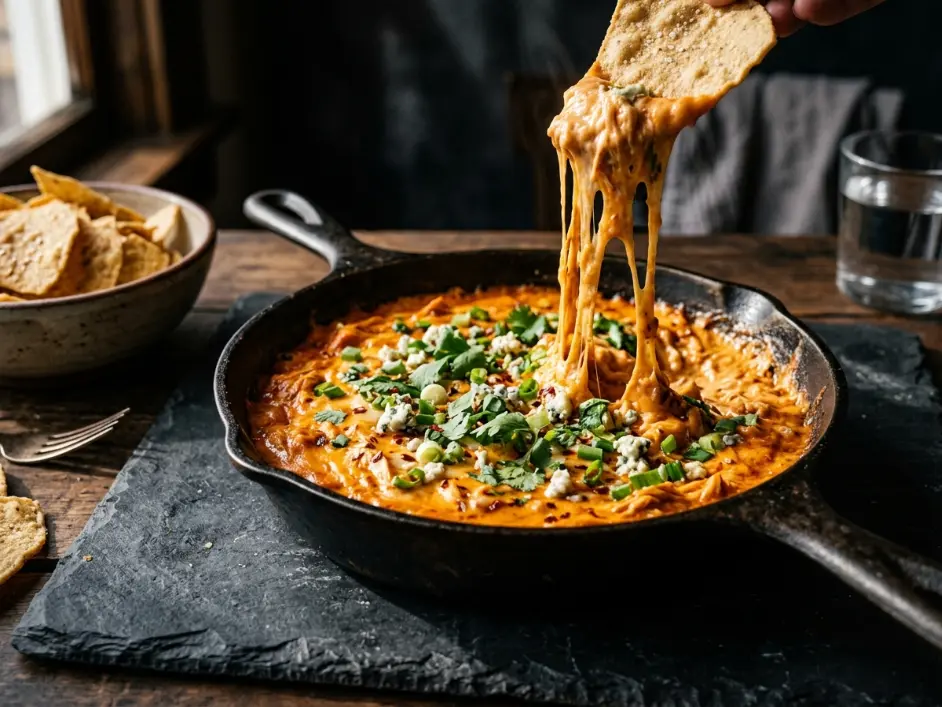
You plunge a thick, sturdy tortilla chip into a bubbling, brilliant orange surface, expecting that perfect marriage of creamy, spicy, and savory. Instead, the chip collapses under a split, heavy pool of broken poultry fat, sharp vinegar runoff, and curdled dairy solids floating like broken islands in a greasy sea. The promise of comfort food turns into a textural disaster that no amount of stirring can rescue.
I have tested this method across dozens of batches in the Expert Palate test kitchen, adjusting one variable at a time to isolate exactly what makes the difference between a split, oily mess and a perfectly bound, velvety emulsion. The Creamy Buffalo Chicken Dip with Tortilla Chips is a deceptively simple dish that demands precise understanding of acid-fat interactions, protein coagulation temperatures, and emulsification chemistry to achieve that restaurant-quality, crowd-pleasing consistency.
This is not just about mixing ingredients and heating them. This is about understanding how acetic acid in hot sauce threatens dairy proteins, how fat ratios determine stability under heat, and how strategic layering prevents structural collapse.
When planning game-day spreads or casual gatherings, the balance between bold flavors and smooth, cohesive textures creates appetizers that disappear before halftime.
5 Culinary Secrets to Ultimate Loaded Sheet Pan Nachos with Queso Blanco
The Science of Acidic Capsaicin Solutions and Casein Stabilization
Buffalo sauce is essentially a suspension of cayenne pepper capsaicin compounds in high-acidity vinegar, often with a small amount of fat from butter. The acetic acid content typically ranges from 4 to 7 percent—high enough to denature and curdle dairy proteins if introduced improperly.
Cream cheese and sour cream are stabilized emulsions of milk fat and casein proteins. When you introduce a strong acid like buffalo sauce into these dairy products, the acid lowers the pH, causing the casein proteins to lose their negative charge and clump together. This is what creates those unappetizing curds floating in separated whey.
The solution lies in three critical interventions: temperature control, fat buffering, and gradual incorporation. By analyzing specific fat-to-protein ratios across poultry foundations through verified data from the USDA FoodData Central database, we understand that the natural lipids in chicken breast provide additional emulsifying support when properly integrated.
In simple terms: you need enough fat to cushion the dairy proteins from the acid shock, and you need to introduce the acid gradually while the dairy is at room temperature—not straight from the fridge—so the proteins have time to adjust rather than seizing up instantly.
Acidic Capsaicin Solution+Casein Matrix+Lipid Emulsifiers→Homogeneous Velvety Suspension
The shredded cheese layer on top acts as both a flavor element and a protective blanket that prevents excessive moisture evaporation during baking, which would otherwise concentrate the acid and cause late-stage separation.
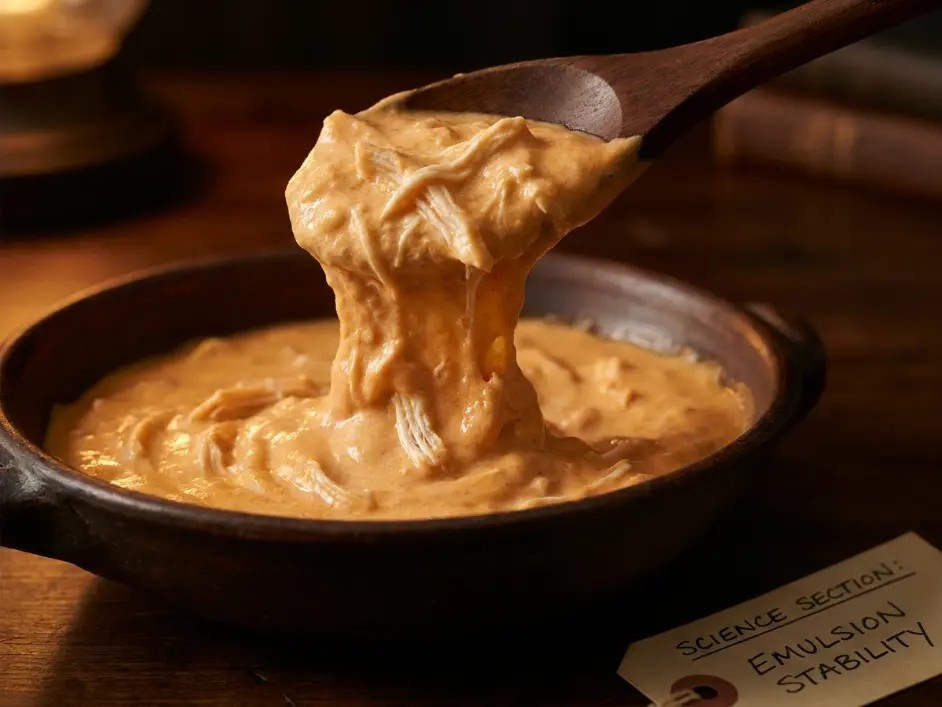
Pro Sourcing & Ingredient Selection
The quality of your chicken makes or breaks this dip. Select whole, plump rotisserie chickens from premium organic markets, or roast fresh chicken breasts bone-in at home. The bone-in roasting keeps the meat fibers juicy and provides natural gelatin that contributes to emulsion stability.
Avoid canned chicken meat entirely. Canned products are packed in salt-water processing liquid that thins out your emulsion and adds excessive sodium. The texture is also too soft and mushy—it dissolves into the cream base instead of maintaining distinct, tender shreds.
For the dairy foundation, source high-fat blocks of original cream cheese from quality deli counters. The brick form contains significantly less water than tub-spread varieties, and the higher fat content provides better emulsifying power. Look for cream cheese labeled “original” or “full fat”—never “light” or “whipped,” which contain added air and water that destabilize under heat.
Whole-milk pepper jack or Monterey jack from the deli counter is essential. Pre-shredded cheese contains cellulose and potato starch anti-caking agents that prevent smooth melting and create a grainy texture. Hand-shred a block yourself for superior melt quality and stretch.
The hot sauce matters too. Authentic Louisiana-style cayenne pepper sauces (like Frank’s RedHot or Crystal) have the right balance of acidity, heat, and butter content. Avoid ultra-thick sriracha or low-acid “wing sauces” that will throw off your emulsion chemistry.
Ingredients Table
| Category | Ingredient | US Customary | Metric |
|---|---|---|---|
| The Poultry Element | Shredded cooked chicken breast | 2 cups | 300g |
| The Acidic Emulsion Base | Full-fat block cream cheese, softened | 8 oz | 225g |
| Sour cream or thick cultured Greek yogurt | 1 cup | 240g | |
| Original cayenne pepper hot sauce | ½ cup | 120ml | |
| Grated garlic cloves | 2 cloves | 6g | |
| Monterey Jack deli cheese, hand-shredded | 2 cups | 226g | |
| Sharp blue cheese crumbles | ½ cup | 60g | |
| The Crunch Accompaniment | Thick restaurant-style corn tortilla chips | 12 oz | 340g |
Common Kitchen Blunders
| The Kitchen Blunder | What Actually Happens (Scientific Reality) | The Chef Joseph Fix |
|---|---|---|
| Mixing hot sauce directly into cold, un-softened cream cheese | Cold dairy proteins cannot absorb acid gradually; they seize and curdle immediately, creating visible white lumps in orange liquid | Bring cream cheese to full room temperature, then whisk hot sauce in gradually while stirring constantly to allow protein adjustment |
| Utilizing watery pre-shredded chicken without drying | Excess moisture from pre-packaged chicken dilutes the cream base and prevents proper emulsion formation, creating a soup-like consistency | Shred fresh-roasted chicken while warm, then press gently in paper towels to remove excess moisture before folding into dairy base |
| Boiling the dip at extreme temperatures causing whey separation | Temperatures above 375°F cause rapid protein coagulation and fat separation, breaking the emulsion into curds and grease | Bake at a controlled 350-375°F and avoid broiling until the final 2-3 minutes to prevent overheating the emulsion |
| Using flimsy thin chips that snap | Light, airy chips lack structural integrity and shatter under the weight of thick, heavy dip, creating frustration and mess | Choose thick-cut restaurant-style tortilla chips with visible corn texture and audible crunch that can support heavy dip loads |
| Skipping a sharp cheese element to cut the fat density | Without acidic or salty contrast, the dip tastes one-dimensionally heavy and rich, causing palate fatigue after a few bites | Fold in sharp blue cheese crumbles or aged white cheddar to provide tangy, mineralized contrast that cuts through the cream richness |
| Stirring the dip aggressively during baking | Mechanical shear breaks the delicate emulsion structure and releases trapped fat, causing it to pool on the surface | Spread the dip evenly before baking and resist the urge to stir; let convection heat work gently and evenly |
Step-by-Step Method
Step 1: The Cellular Shred and Fiber Alignment
If you are starting with whole chicken breasts, season them lightly with salt and pepper, then roast at 375°F / 190°C for 25 to 30 minutes until the internal temperature reaches 165°F / 74°C. Let them rest for 10 minutes before handling.
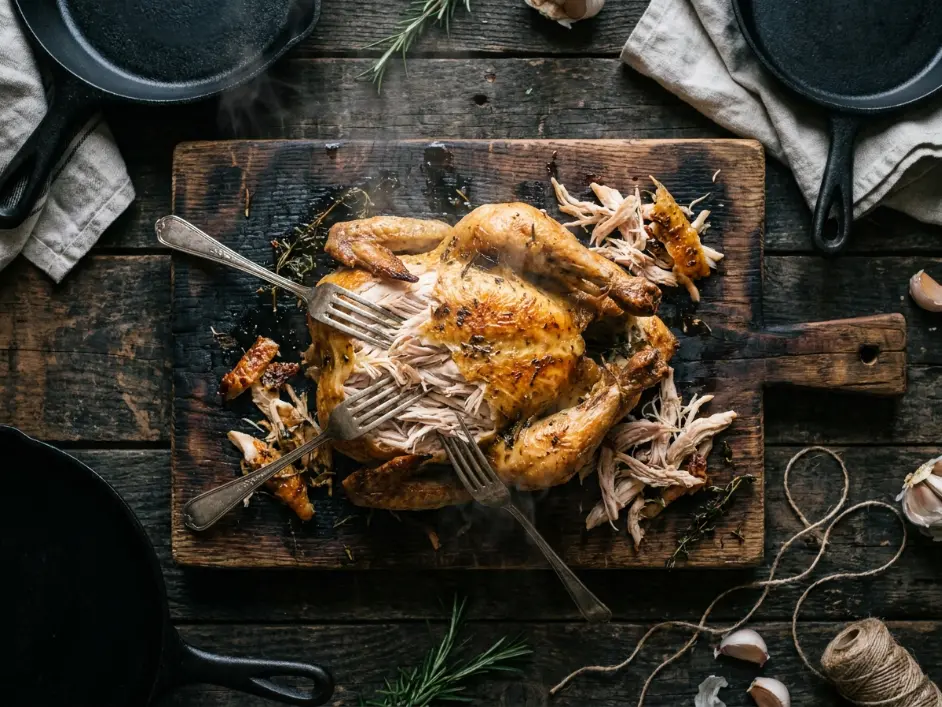
Use two forks to pull the warm chicken into fine, uniform shreds. Work with the grain of the meat, creating long, tender fibers rather than chopping into chunks. The shredding process should feel like unraveling a rope—gentle and directional.
If you are using rotisserie chicken, remove all the skin and bones, then shred only the white breast meat for the cleanest flavor and texture. Save the dark meat for another use.
Once shredded, spread the chicken on a layer of paper towels and press gently to absorb any excess moisture. This step is critical—water is the enemy of emulsification.
Step 2: Formulating the Low-Shear Acidic Suspension
In a deep mixing bowl, combine your room-temperature cream cheese, sour cream, and grated garlic. Use a sturdy hand whisk to blend these together until completely smooth—no visible lumps or streaks. This should take about 2 minutes of consistent whisking.
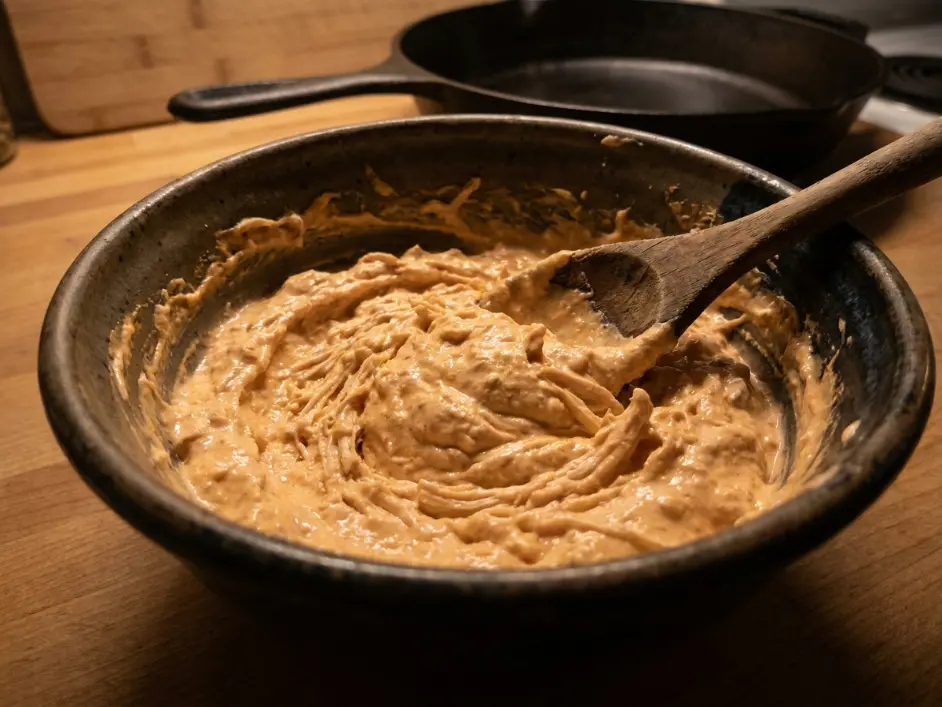
Now add your buffalo hot sauce gradually, whisking constantly. Do not dump it all in at once. Add a quarter cup, whisk until fully incorporated, then add the remaining quarter cup. This gradual introduction allows the casein proteins to adjust to the acidic environment without curdling.
The mixture should transform into a smooth, pastel-orange cream with a pourable but thick consistency. If you see any curdling or separation, the cream cheese was too cold. You can rescue it by whisking in an additional tablespoon of sour cream to re-emulsify.
As discussed in depth balancing principles shared over at Serious Eats, folding in a sharp, pungent blue cheese crumble structure provides a brilliant contrast to the heavy cream profile and adds complexity that keeps people coming back for more.
Taste the base and adjust seasoning. It should be tangy, creamy, and noticeably spicy—but not face-meltingly hot, since the heat will concentrate slightly during baking.
Step 3: Integrating the Multi-Tiered Melted Lipids
Add your dried, shredded chicken to the cream mixture, along with three-quarters of the hand-shredded Monterey Jack cheese. Use a silicone spatula to fold everything together gently. You want the chicken evenly distributed throughout the cream base, with each shred coated in the orange emulsion.
Do not stir aggressively or use a mixer. Mechanical shear can break the delicate emulsion you have just created. Fold slowly and deliberately, scraping the bottom and sides of the bowl to ensure even distribution.
The mixture should look cohesive and thick—almost like a chunky orange mousse. If it seems too loose or soupy, you either added too much hot sauce or did not dry your chicken properly. You can thicken it slightly by folding in an extra quarter cup of shredded cheese.
Preheat your oven to 375°F / 190°C. Lightly grease a seasoned cast-iron skillet or deep ceramic baking dish with a thin layer of neutral oil or cooking spray.
Spread the chicken mixture evenly into the prepared dish, smoothing the top with your spatula. Press down gently to eliminate air pockets, which can cause uneven heating and separation.
Top the entire surface with the remaining shredded Monterey Jack, creating an even blanket that covers all the exposed dip. Scatter the blue cheese crumbles evenly over the shredded cheese layer.
Step 4: The Controlled Convection Maillard Finish
Slide the dish into the preheated oven on the center rack. Bake for 18 to 20 minutes, until the edges are bubbling actively and the top cheese layer has melted completely.
For the final 2 to 3 minutes, you can switch to the broiler setting to create golden-brown spots on the cheese surface. Watch carefully during this stage—broilers are aggressive and can burn the top in seconds.
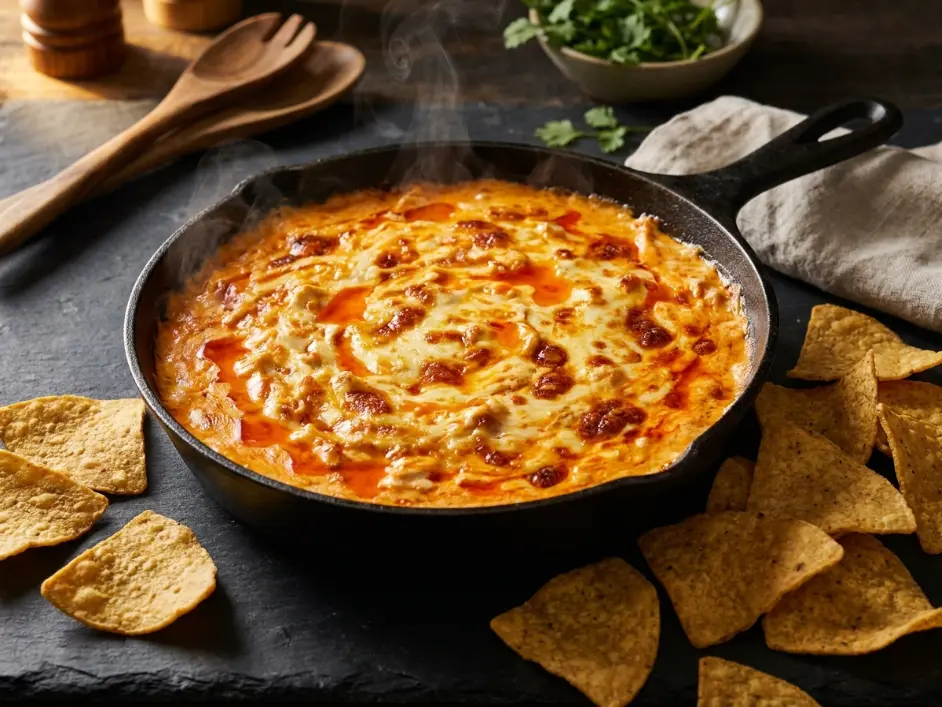
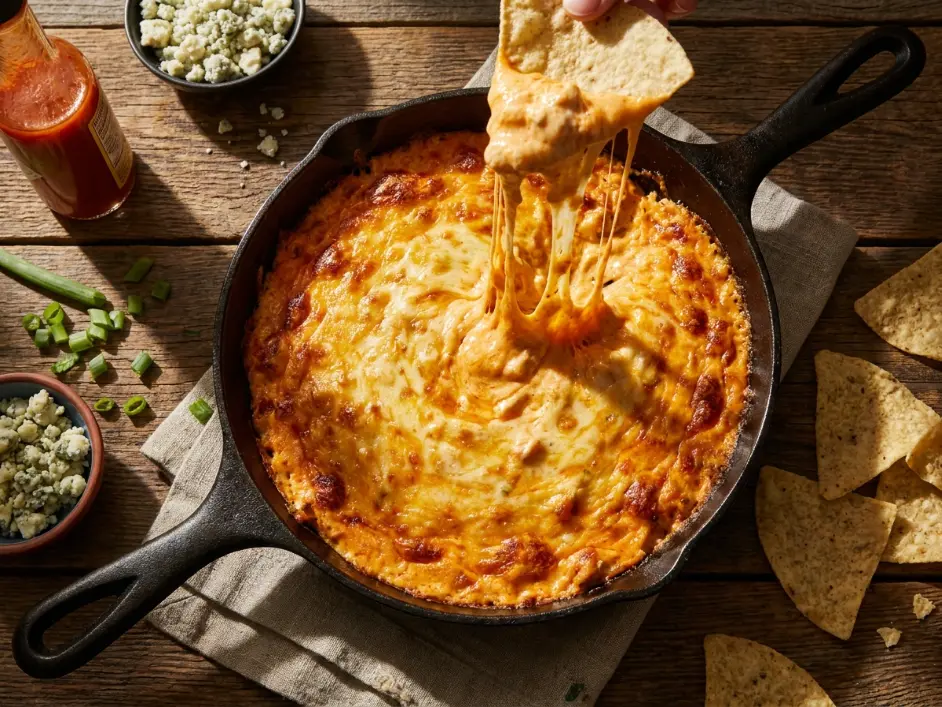
You are looking for a surface that is bubbly, with scattered darker brown spots indicating caramelization. The edges should be bubbling vigorously, with visible orange oil swirls mixing into the melted cheese.
Remove the dish from the oven and let it rest for 5 minutes before serving. This resting period allows the emulsion to stabilize as it cools slightly, preventing a complete molten blowout when you dig in with a chip.
The dip should be thick enough to cling to a chip without dripping excessively, but still creamy and smooth. If you see a pool of clear orange grease on the surface, your oven temperature was too high or you used low-fat dairy—make note for next time.
Serve hot, surrounded by thick restaurant-style tortilla chips. The dip will stay warm and fluid for about 30 minutes out of the oven, making it perfect for immediate serving at gatherings.
Chef Joseph’s Insight
“Cooking is not just chemistry — it is memory made edible. When others gather around a table and tear off that first piece of warm, crunchy bread to plunge it into a bubbling, velvety center, the science fades away and pure connection takes over. The most powerful moves in the kitchen are almost always the quiet ones. The overnight rest. The proper preheat. The two-minute wait before you plate. It is the patience to wring out every last drop of moisture from your greens, and the care you take in picking the right cheese. Take your time, respect the process, and your kitchen will always reward you.”
— Chef Joseph | Expert Palate
When building a complete game-day spread around this dip, think about balancing rich, heavy elements with bright, acidic sides and refreshing beverages.
4 Elite Secrets to Flawless Crispy Bacon-Wrapped Jalapeño Poppers
Technical Data & Nutrition Table
Per Serving (approximately ½ cup):
| Nutrient | Amount |
|---|---|
| Calories | 285 kcal |
| Protein | 16g |
| Total Fat | 22g |
| Saturated Fat | 11g |
| Carbohydrates | 4g |
| Sodium | 620mg |
| Cholesterol | 65mg |
Note: Nutritional values are careful kitchen estimates based on standard ingredient databases and may vary depending on specific brands and preparation methods used.
Food Safety & Thermal Management
Because this dip contains both chicken and dairy, proper thermal management is essential. The safe minimum internal holding temperature for any cooked poultry and cheese combination is 165°F / 74°C, which ensures that any potential pathogens are destroyed.
The danger zone for bacterial growth spans 40°F to 140°F / 4°C to 60°C. Cooked buffalo chicken dip left at room temperature for more than two hours enters this zone and should be discarded to prevent foodborne illness risk.
Organizing broad catering spreads or game-day buffets with hot chicken elements necessitates following the proper temperature holding protocols found at Food Network. During parties or buffet service, keep the dip warm in a slow cooker set to the “warm” setting (approximately 200°F / 93°C) if it will be out for extended periods.
If the dip cools below 140°F / 60°C, either reheat it back above this threshold or refrigerate any leftovers promptly. Never leave poultry and dairy compositions sitting at room temperature for extended periods, especially in warm weather or crowded indoor environments.
Storage & Reheating Matrix
| Item State | Fridge Storage Limit | Freezer Safety Option | The Absolute Best Reheating Method |
|---|---|---|---|
| Leftover Unbaked Dip Mixture Base | 2 days in airtight container in refrigerator | Not recommended due to acid-induced protein breakdown during freezing and thawing | Bring to room temperature, then bake according to standard method for best texture and emulsion stability |
| Fully Baked Skillet Remnants | 4 days in airtight container in refrigerator | Up to 2 months if portioned into small freezer-safe containers; thaw in fridge overnight | Reheat gently in a 300°F oven covered with foil for 15-20 minutes; avoid microwave which causes rapid protein coagulation and grease separation |

Creamy Buffalo Chicken Dip with Tortilla Chips
Ingredients
Equipment
Method
- Shred the warm cooked chicken breasts into uniform thin fibers using two structural forks on a cutting board, then press gently on paper towels to remove excess moisture.
- Whisk the softened brick cream cheese, sour cream, and minced garlic together in a deep bowl until completely smooth with no visible lumps.
- Add the hot sauce gradually in two stages, whisking constantly between additions to allow the dairy proteins to adjust to the acidic environment without curdling.
- Fold the dried shredded chicken strands and three quarters of the hand grated Monterey Jack cheese into the orange cream base gently using a silicone spatula.
- Spread the uniform chicken mixture tightly inside a greased seasoned cast iron skillet or deep ceramic baking vessel, pressing down to eliminate air pockets.
- Top the surface evenly with the remaining shredded Monterey Jack cheese and scattered sharp blue cheese crumbles to create a protective blanket.
- Bake at 375 degrees Fahrenheit for eighteen to twenty minutes until the edges bubble actively and the top cheese layer reflects golden browning spots.
- Rest for five minutes after removing from the oven to allow the emulsion stability to lock before serving hot alongside thick stone ground tortilla chips.
Notes
Frequently Asked Culinary Questions
Can I substitute ranch dressing for blue cheese without making the dip too watery?
Ranch dressing contains significantly more water and less fat than blue cheese or sour cream, which will thin out your emulsion and create a soupy texture. If you want ranch flavor, use only 2 tablespoons of ranch seasoning powder mixed into the cream cheese base, not the liquid dressing itself. This gives you the flavor without compromising the structural integrity.
Why does a pool of clear orange grease separate on top of my dip after fifteen minutes in the oven?
This happens when the baking temperature is too high or when you use low-fat dairy products. High heat causes the casein proteins to contract rapidly, squeezing out the fat before the emulsion can stabilize. Always bake at a controlled 350-375°F and use full-fat cream cheese and sour cream. The fat content is not optional—it is what keeps the emulsion together.
How can I safely keep this dip warm at a party for several hours without it drying into a hard shell?
Transfer the baked dip to a slow cooker set on the “warm” setting, which maintains a gentle temperature around 200°F. Stir gently every 30 minutes to redistribute the oils and prevent a skin from forming. Cover with the lid between servings to trap moisture. Never hold the dip on a warming tray or chafing dish without a lid—the exposed surface will dry out and form a tough crust.
Should I use white breast meat or dark thigh meat for the ultimate tender fiber texture?
White breast meat provides a cleaner, milder flavor and firmer texture that holds its shape better in the dip. Dark thigh meat is more flavorful and tender, but it releases more fat during baking, which can overwhelm the emulsion and create greasiness. For the best balance, use 75% white breast meat and 25% dark thigh meat—you get tenderness and flavor without excess fat.