The Molecular Caramelization Secrets Behind Honey Garlic Glazed Meatball Skewers
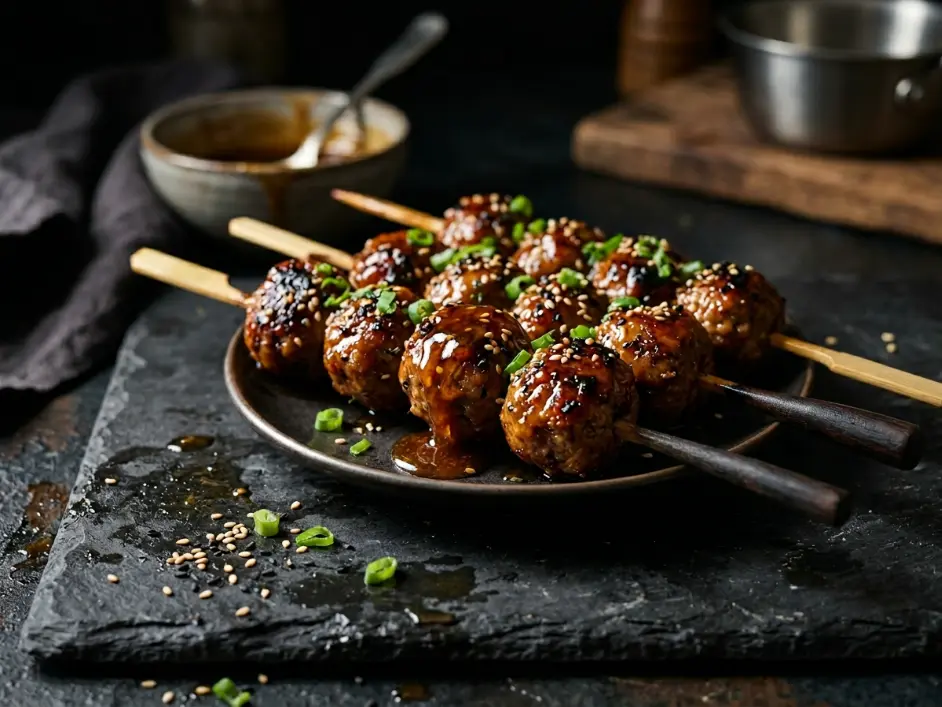
You slide a tender, sizzling protein sphere off a hot skewer, its surface entirely wrapped in a sticky, glossy amber coating that catches the light. The first bite releases a rush of sweet, savory, garlicky complexity balanced against perfectly seasoned, juicy meat. Then you look at the rest of the batch and your heart sinks. Tough, rubbery meatballs that either fell completely apart on the grill or got coated in a bitter, black scorched glaze because the honey sugars burned before the meat center reached safety.
I have tested this method across dozens of batches in the Expert Palate test kitchen, adjusting one variable at a time to isolate exactly what makes the difference between a split, oily mess and a perfectly bound, velvety emulsion. Honey Garlic Glazed Meatball Skewers are a masterclass in protein chemistry, thermal sugar control, and strategic layering—transforming simple ground meat into restaurant-quality appetizers that disappear faster than you can plate them.
This is not just about mixing meat and brushing on sauce. This is about understanding how myosin cross-linking creates structural integrity, how fructose behaves differently than sucrose under heat, and how timing your glaze application prevents carbonization while achieving that signature sticky coating.
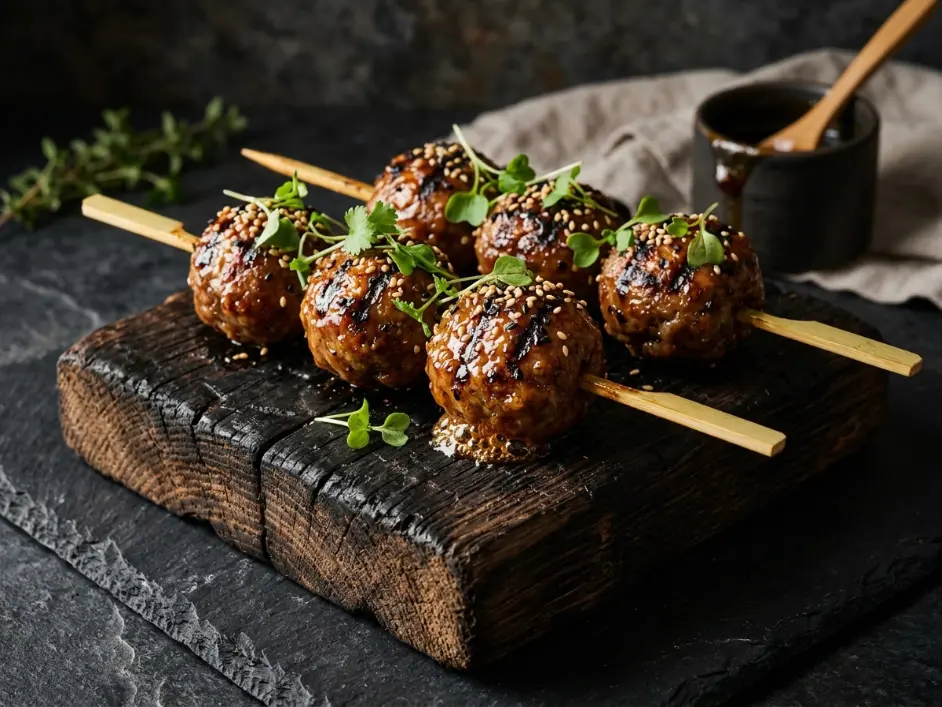
When planning party spreads or casual gatherings, the balance between sweet, savory, and umami in these skewers creates finger food that appeals to every palate.
5 Culinary Secrets to the Ultimate Cheesy Spinach Artichoke Dip in a Bread Bowl
The Science of Myosin Cross-Linking and Fructose Thermal Breakdown
Ground meat is a collection of disrupted muscle fibers, connective tissue fragments, and fat globules. When you add salt and mechanically mix these components, you extract salt-soluble myosin proteins from the muscle cells. These proteins form long chains that cross-link with each other, creating a three-dimensional lattice that traps moisture and fat, giving the meatball structural integrity.
Without this cross-linking, you get a crumbly, dry meatball that falls apart at the slightest touch. The key is mechanical agitation in the presence of salt—not gentle folding, but active mixing that physically pulls the proteins out of the cells and encourages them to bond.
By calculating precise moisture-to-protein ratios across lean ground beef and pork combinations through verified nutritional benchmarks from the USDA FoodData Central database, we understand that an 80/20 blend provides enough fat for moisture without creating excessive grease that prevents glaze adhesion.
The second challenge is the honey garlic glaze. Honey is a complex mixture of fructose, glucose, water, and trace enzymes. Fructose has a lower caramelization point than sucrose—around 230°F / 110°C compared to 320°F / 160°C for table sugar. This means honey browns and burns much faster when exposed to direct heat.
In simple terms: if you brush honey glaze on raw meatballs and throw them directly into a hot pan or on a grill, the sugars will scorch black before the meat even reaches a safe internal temperature. The solution is dual-stage cooking—sear the meatballs first to develop a crust and cook the interior, then apply the glaze during the final minutes when the surface temperature is controlled and the sugars can caramelize without burning.
Fructose-Glucose Matrix+Controlled Surface Heat (320∘F)→Complex Caramel Polymers+Glossy Viscous Glaze
This controlled caramelization creates the signature sticky, glossy coating without the bitter, acrid flavors of burnt sugar.
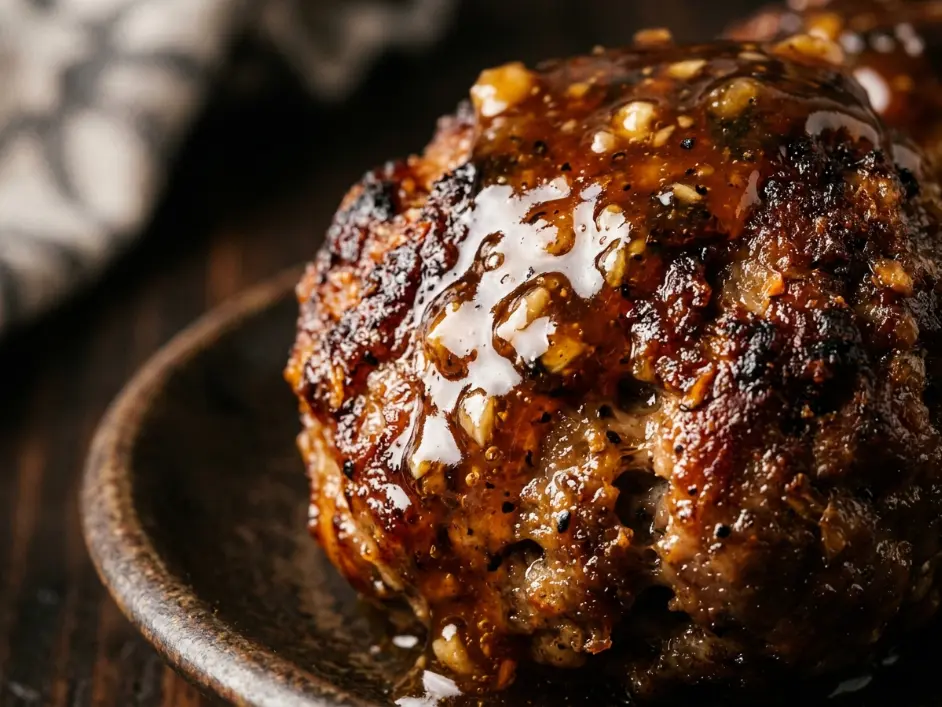
Pro Sourcing & Ingredient Selection
The meat blend is your foundation. Choose a balanced 80/20 blend of ground chuck, or better yet, a combination of heritage pork and beef from premier butcher counters. The pork adds sweetness and fat, while the beef contributes savory depth and structure.
Avoid ultra-lean ground meat (90/10 or 93/7)—it does not contain enough intramuscular fat to keep the meatballs moist during high-heat cooking. The rendered fat also plays a critical role in helping the glaze adhere to the surface rather than sliding off.
For the honey, source raw, unfiltered clover or wildflower honey from artisan producers or farmers markets. Processed, ultra-filtered honey has had most of its enzymes and pollen removed, which affects viscosity and flavor complexity. Raw honey has better enzymatic behavior that improves glaze texture and creates a more nuanced sweetness.
The soy sauce matters enormously. Track down premium, naturally brewed soy sauce or tamari at specialty grocers. These products are fermented for months, creating deep umami compounds and a balanced sodium profile. Avoid cheap, chemically hydrolyzed soy sauces that taste harsh and one-dimensional.
Fresh garlic is non-negotiable. Microplane or finely mince fresh cloves—jarred garlic or garlic powder cannot replicate the sharp, aromatic punch of fresh garlic that mellows into sweet, caramelized notes during cooking.
For the panade (the breadcrumb-milk mixture that keeps meatballs tender), use panko breadcrumbs rather than standard dried breadcrumbs. Panko creates a lighter, fluffier texture because of its larger, airier crumb structure.
Ingredients Table
| Category | Ingredient | US Customary | Metric |
|---|---|---|---|
| The Structural Meatball Base | Ground beef chuck (80/20) | ½ lb | 227g |
| Ground pork | ½ lb | 227g | |
| Large whole egg, beaten | 1 egg | 50g | |
| Fine sea salt | 1 teaspoon | 5g | |
| Ground black pepper | ½ teaspoon | 2g | |
| The Panade Binder | Panko breadcrumbs | ½ cup | 30g |
| Whole milk | ¼ cup | 60ml | |
| The Honey Garlic Glaze Matrix | Artisanal raw wildflower honey | ½ cup | 170g |
| Fresh garlic cloves, finely microplaned | 4 cloves | 12g | |
| Premium soy sauce or tamari | 3 tablespoons | 45ml | |
| Rice wine vinegar | 1 tablespoon | 15ml | |
| Fresh green scallions, sliced thin | ¼ cup | 15g | |
| Toasted white sesame seeds | 2 tablespoons | 18g |
Common Kitchen Blunders
| The Kitchen Blunder | What Actually Happens (Scientific Reality) | The Chef Joseph Fix |
|---|---|---|
| Over-working the meat dough causing cell breakage and rubbery textures | Excessive mechanical mixing ruptures fat globules and creates a dense, bouncy texture like commercial hot dogs instead of tender meatballs | Mix only until ingredients are just combined and proteins are evenly distributed; avoid prolonged kneading or machine processing |
| Applying the high-sugar glaze at the very beginning of cooking causing instant burning | Fructose in honey caramelizes at 230°F, well below the surface temperature of searing meat, creating black, bitter carbonization before the interior cooks | Sear meatballs completely first to develop crust and cook interior, then brush glaze only during the final 3 minutes of cooking |
| Using stale dry breadcrumbs without a hydrating liquid panade | Dry breadcrumbs absorb moisture from the meat without providing any back, creating a dense, dry, crumbly texture that falls apart | Soak panko in milk to create a hydrated panade that adds moisture and creates a lighter, more tender meatball structure |
| Skipping the essential chilling step which allows the meatball to fall off the skewers | Warm, freshly formed meatballs have not developed structural set and will deform or slide off skewers during handling and cooking | Refrigerate threaded skewers for 15-20 minutes to firm up the protein matrix and allow the meat to grip the skewer securely |
| Crowding the pan during the searing phase | Overcrowding drops pan temperature and creates steam instead of a proper Maillard reaction crust, resulting in gray, steamed meatballs | Cook skewers in batches with space between each one, allowing proper heat circulation and browning on all sides |
| Using a thin, watery glaze that slides off the meat | Insufficiently reduced glaze lacks viscosity and does not contain enough concentrated sugars to create proper adhesion and caramelization | Simmer glaze until it reduces by one-third and coats the back of a spoon in a thick, syrupy layer before brushing onto meatballs |
Step-by-Step Method
Step 1: Engineering the Hydrated Starch Panade
In a small bowl, combine the panko breadcrumbs with the whole milk. Stir gently and let the mixture rest for 5 minutes. The breadcrumbs will absorb the milk and form a thick, porridge-like paste.
This panade is your moisture insurance policy. During cooking, the starches in the breadcrumbs gelatinize and trap water molecules, preventing them from evaporating and keeping the meatballs tender. Without this hydration step, the breadcrumbs act as a desiccant, pulling moisture out of the meat and creating dry, crumbly meatballs.
While the panade rests, prepare your skewers. If using bamboo skewers, soak them in water for at least 20 minutes to prevent charring during cooking. Metal skewers do not require soaking but will get extremely hot—handle with care.
Step 2: Mechanical Myosin Protein Cross-Linking
In a large mixing bowl, combine the ground beef, ground pork, beaten egg, salt, and pepper. Add the hydrated panade and use your hands to mix everything together with firm, deliberate motions.
You are not gently folding ingredients—you are mechanically working the mixture to extract salt-soluble proteins and encourage cross-linking. Mix for about 2 minutes, until the mixture becomes slightly sticky and cohesive. You should feel the texture change from loose and crumbly to unified and tacky.
This tackiness is the myosin network forming. It is what keeps your meatballs from falling apart during cooking.
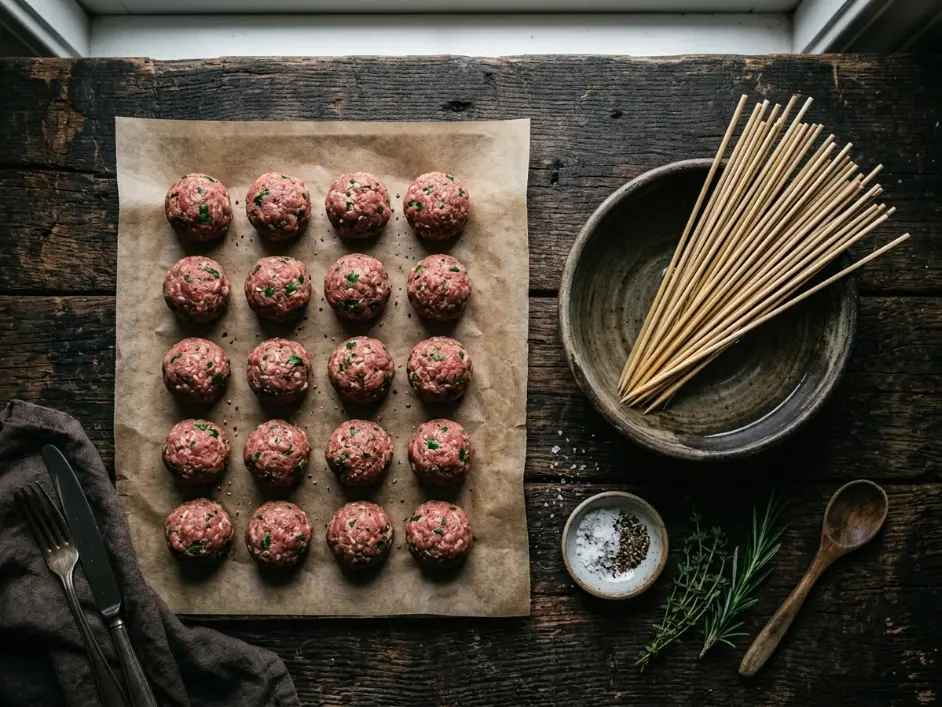
Using a small cookie scoop or spoon, portion the meat mixture into uniform balls about 1.5 inches in diameter. Wet your hands lightly with cold water between rolls to prevent sticking. You should get approximately 16 meatballs from this batch.
Roll each portion between your palms to create smooth, round spheres with no cracks or rough spots. Cracks are weak points that will split open during cooking.
Step 3: Skewer Threading and Structural Pre-Chilling
Thread 4 meatballs onto each skewer, leaving about half an inch of space between each one to allow heat circulation. Press the skewer through the center of each meatball, piercing it securely without crushing or deforming the shape.
Arrange the threaded skewers on a parchment-lined tray and refrigerate uncovered for 15 to 20 minutes. This chilling step is critical—it allows the protein matrix to firm up and grip the skewer securely, preventing the meatballs from spinning or sliding during cooking.
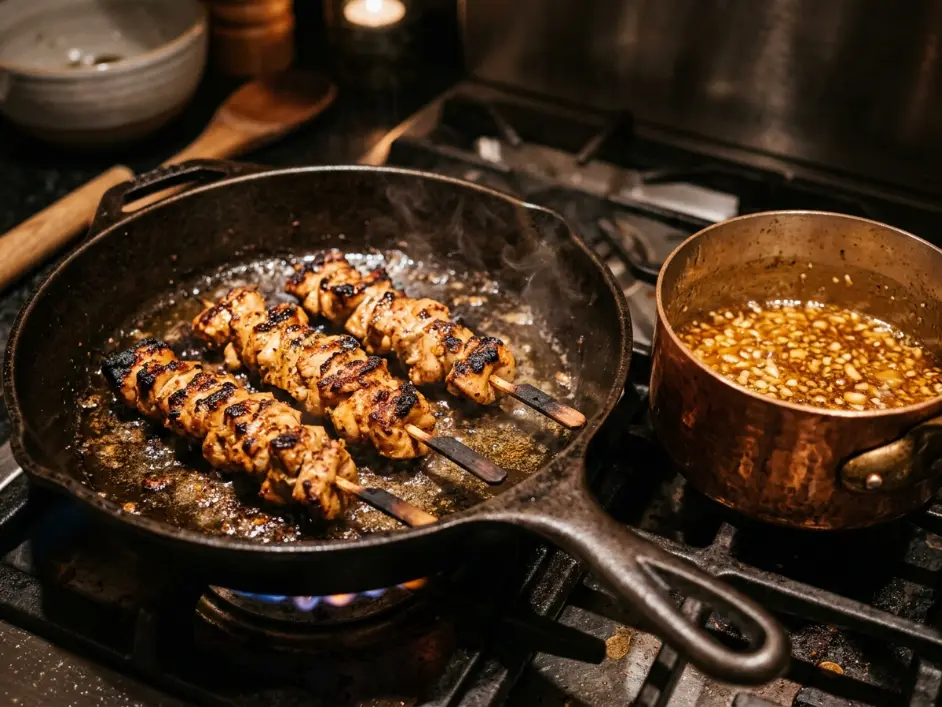
While the meatballs chill, make the honey garlic glaze. In a small saucepan, combine the honey, microplaned garlic, soy sauce, and rice vinegar. Bring to a gentle simmer over medium heat, stirring occasionally.
As discussed in depth-building techniques shared over at Serious Eats, adding a small splash of rice vinegar balances out the cloying sweetness of concentrated cooked honey bases and adds a bright, acidic note that cuts through the richness.
Simmer the glaze for 5 to 7 minutes, until it reduces by about one-third and becomes thick and syrupy. It should coat the back of a spoon in a glossy layer that does not immediately drip off. Remove from heat and set aside.
Step 4: Dual-Stage Thermal Searing and Glaze Reduction
Heat a large, heavy skillet over medium-high heat. Add a thin layer of neutral oil with a high smoke point (canola, vegetable, or grapeseed).
Remove the chilled skewers from the refrigerator and place them carefully in the hot skillet, working in batches to avoid crowding. You should hear an immediate, satisfying sizzle.
Sear the meatballs for 3 to 4 minutes per side, turning the skewers to brown all surfaces evenly. You are looking for a deep, caramelized crust with visible Maillard browning—not pale gray steaming.
Use an instant-read thermometer to check the internal temperature. When the center of the meatballs reaches 160°F / 71°C, they are nearly done.
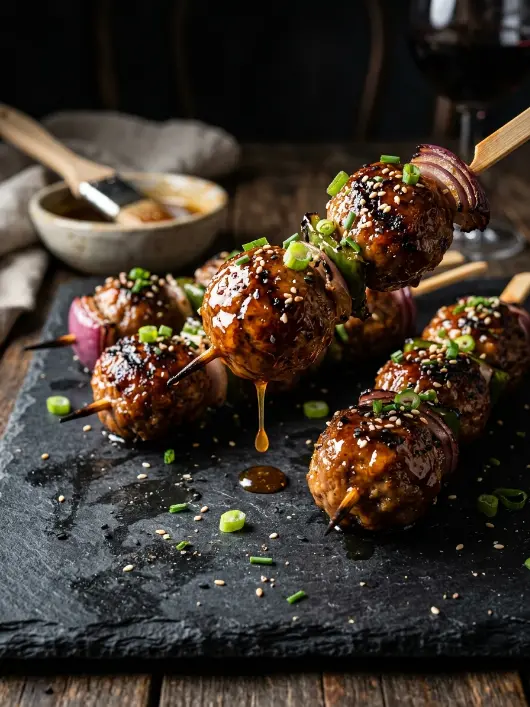
Now comes the glaze application. Use a silicone basting brush to coat each meatball generously with the warm honey garlic glaze. Continue cooking for 2 to 3 more minutes, turning the skewers frequently to ensure the glaze caramelizes evenly on all sides.
The glaze will bubble and thicken, forming a glossy, sticky coating. You will see the sugars caramelize into a beautiful amber shell. Be careful not to let it sit too long on one side—it can go from perfectly caramelized to burnt in seconds.
Remove the skewers from the heat when the glaze is bubbling and deeply golden. Transfer to a serving platter and immediately garnish with sliced scallions and toasted sesame seeds.
Let the skewers rest for 2 to 3 minutes before serving. This allows the glaze to set slightly and the internal juices to redistribute, ensuring maximum tenderness.
Chef Joseph’s Insight
“Cooking is not just chemistry — it is memory made edible. When others gather around a table and tear off that first piece of warm, crunchy bread to plunge it into a bubbling, velvety center, the science fades away and pure connection takes over. The most powerful moves in the kitchen are almost always the quiet ones. The overnight rest. The proper preheat. The two-minute wait before you plate. It is the patience to wring out every last drop of moisture from your greens, and the care you take in picking the right cheese. Take your time, respect the process, and your kitchen will always reward you.”
— Chef Joseph | Expert Palate
When building a complete party spread around these skewers, think about balancing sweet, sticky elements with bright, acidic sides and refreshing beverages.
Decoding the Science of a Perfectly Emulsified Creamy Buffalo Chicken Dip with Tortilla Chips
Technical Data & Nutrition Table
Per Serving (1 skewer, 4 meatballs):
| Nutrient | Amount |
|---|---|
| Calories | 385 kcal |
| Protein | 22g |
| Total Fat | 18g |
| Saturated Fat | 6g |
| Carbohydrates | 32g |
| Sodium | 580mg |
| Cholesterol | 95mg |
Note: Nutritional values are careful kitchen estimates based on standard ingredient databases and may vary depending on specific brands and preparation methods used.
Food Safety & Thermal Management
Because these skewers contain ground beef and pork, proper thermal management is essential. The safe minimum internal cooking temperature for all ground meat varieties is 165°F / 74°C, which ensures that any potential pathogens are destroyed.
The danger zone for bacterial growth spans 40°F to 140°F / 4°C to 60°C. Raw or cooked meatballs left at room temperature for more than two hours enter this zone and should be discarded to prevent foodborne illness risk.
Orchestrating larger interactive outdoor catering spreads or party buffet lines with minced poultry or beef skewers requires following safe hot-holding blueprints available at the Food Network. During parties or buffet service, keep cooked skewers warm in a low oven set to 200°F / 93°C on a wire rack.
If the skewers cool below 140°F / 60°C, either reheat them back above this threshold or refrigerate any leftovers promptly. Never leave ground meat compositions sitting at room temperature for extended periods.
Storage & Reheating Matrix
| Item State | Fridge Storage Limit | Freezer Safety Option | The Absolute Best Reheating Method |
|---|---|---|---|
| Raw Uncooked Skewered Meatball Trays | 24 hours in airtight container on parchment | Up to 3 months if frozen on a tray then transferred to freezer bags; cook directly from frozen, adding 5 extra minutes | Cook from refrigerated or frozen state in skillet; do not thaw raw ground meat at room temperature |
| Fully Glazed Cooked Leftover Skewers | 4 days in airtight container in refrigerator | Up to 2 months if individually wrapped in foil; thaw in fridge overnight | Reheat gently in a covered skillet over low heat or in a 300°F oven for 10-12 minutes; microwave separates honey fats into greasy puddles |
Honey Garlic Glazed Meatball Skewers
Ingredients
Equipment
Method
- Combine the panko breadcrumbs and whole milk inside a small bowl to form a thick hydrated panade paste and let rest for five minutes.
- Blend ground beef, ground pork, beaten egg, salt, pepper, and the hydrated panade together in a large bowl, mixing firmly for about two minutes until protein cross-linking creates a sticky, cohesive texture.
- Shape the meat mixture into uniform small rounds about one and a half inches in diameter using a wet scoop to keep sizes consistent.
- Thread four meatballs carefully onto each soaked bamboo skewer, leaving space between each one, then chill the tray for fifteen to twenty minutes to set the protein structure.
- Whisk honey, microplaned garlic, soy sauce, and rice vinegar together inside a small saucepan and simmer over medium heat for five to seven minutes until reduced and thickened.
- Heat a large skillet with oil over medium high heat and sear the chilled meatball skewers in batches, turning frequently until a deep brown crust develops on all sides.
- When the internal temperature reaches 160 degrees Fahrenheit, brush the thickened honey garlic glaze heavily over all meatball surfaces.
- Continue cooking for two to three more minutes, turning continuously until the sugars caramelize completely into a glossy amber coating.
- Remove from heat and garnish immediately with sliced scallions and toasted sesame seeds before serving warm.
Notes
Frequently Asked Culinary Questions
Should I soak my wooden skewers in water before threading the raw meatballs?
Yes, soak bamboo skewers in water for at least 20 minutes before use. This prevents the exposed wood from charring and catching fire during high-heat cooking. The water saturates the wood fibers, raising the ignition point. However, do not over-soak for hours—this can cause the wood to split when you thread the meatballs. Metal skewers do not require soaking but conduct heat aggressively, so handle them with care.
Why do my meatballs keep cracking and falling off the skewers into the pan?
This happens when the protein matrix is not properly developed or when the meatballs are not chilled before cooking. Mix the meat firmly to extract myosin proteins and create cross-linking, then refrigerate the threaded skewers for 15-20 minutes. This firms up the structure and allows the meat to grip the skewer securely. Also ensure you are not rolling the meatballs with cracks or rough spots—smooth, uniform surfaces hold together better.
Can I use garlic powder instead of fresh minced garlic without ruining the glaze texture?
Fresh garlic is strongly preferred because it provides aromatic complexity and texture that garlic powder cannot replicate. However, if you must substitute, use 1 teaspoon of garlic powder in place of the 4 fresh cloves. Add it to the glaze early so it has time to hydrate and bloom in the liquid. The flavor will be flatter and less nuanced, but the glaze will still function.
How do I keep the honey glaze from turning into a hard, unchewable candy shell as it cools down?
Honey glaze hardens as it cools because the sugars crystallize. To prevent this, add a small amount of acid (the rice vinegar in this recipe) and fat (from the meat drippings) to interrupt crystallization. Serve the skewers while still warm, or reheat gently before serving to restore glaze liquidity. If the glaze does harden, a quick pass under the broiler or a few seconds in a hot skillet will melt it back to a sticky consistency.