5 Culinary Secrets to the Ultimate Cheesy Spinach Artichoke Dip in a Bread Bowl
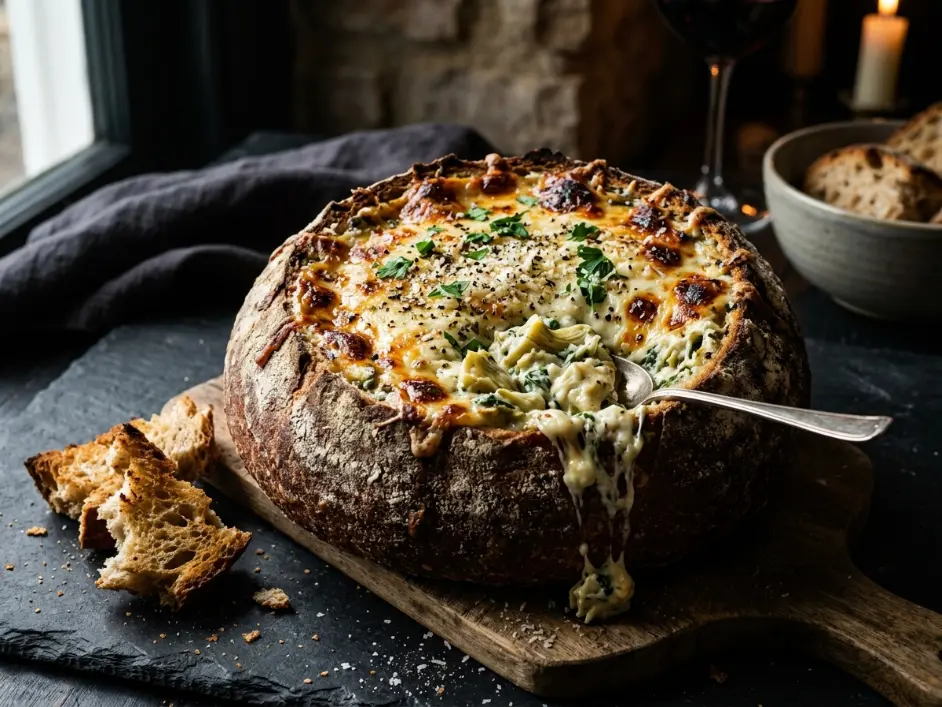
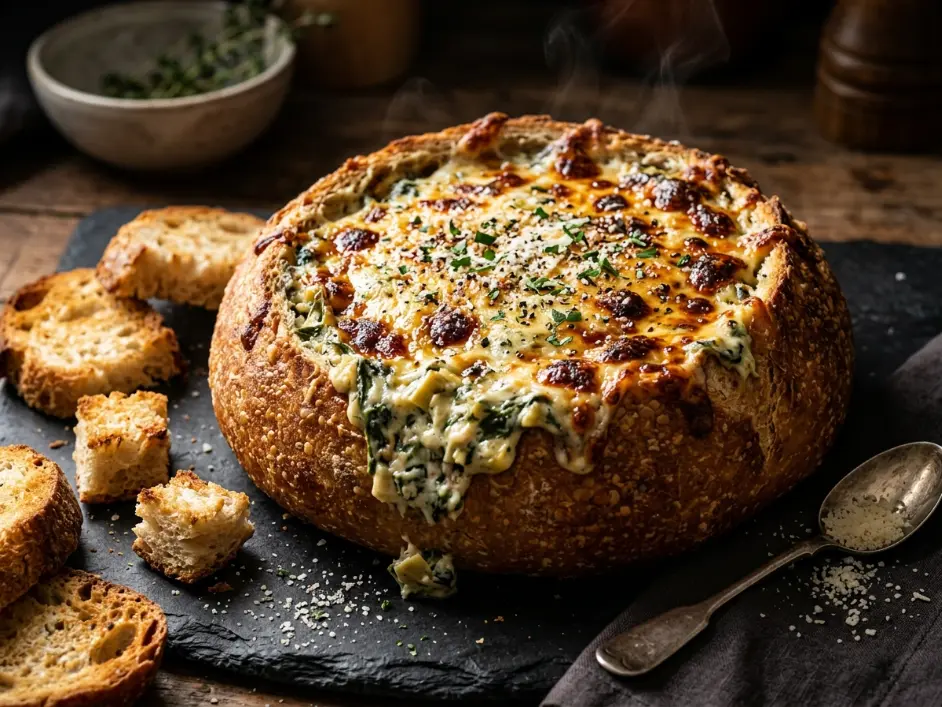
The smell hits you before you even open the oven door. That intoxicating wave of browning cheese mingling with roasted garlic and the faint herbal sweetness of wilted greens. You pull out your perfectly bronzed sourdough boule, its cratered top bubbling with molten golden rivers of dairy. Then you dig in with the first torn piece of crust, and instead of velvety resistance, you hit a slick, separated pool of grease floating on top of grainy, broken curds.
I have tested this method across dozens of batches in the Expert Palate test kitchen, adjusting one variable at a time to isolate exactly what makes the difference between a split, oily mess and a perfectly bound, velvety emulsion. The Cheesy Spinach Artichoke Dip in a Bread Bowl is a technical marvel disguised as casual party food. It demands respect for dairy physics, moisture management, and structural engineering. When you understand the science, you stop guessing and start controlling outcomes with surgical precision.
This is not just another dip recipe. This is a masterclass in emulsification stability, lipid binding under convective heat, and architecting an edible vessel that holds its integrity under saturated fat loading.
The Science of Dairy Emulsification
Cheese does not simply melt. It undergoes a complex phase transition governed by casein protein networks, suspended fat globules, and the critical role of moisture as a stabilizing bridge. When you apply heat to aged or fresh dairy, the protein matrices begin to relax and the fat trapped inside those grids starts to mobilize.
If the temperature climbs too aggressively past 150°F / 65°C, the casein proteins contract violently, squeezing out fat faster than the surrounding moisture can re-emulsify it. You end up with a broken sauce: curds floating in a greasy slick. The fix lies in controlled, gradual heating and the introduction of hydrocolloid starches that physically trap fat droplets in a stable gel network.
In simple terms: you need enough moisture and gentle heat to keep the fat molecules from clumping together and separating out. Cream cheese and sour cream are your moisture-rich allies here, creating a buffered environment where mozzarella and parmesan can melt into a unified, glossy matrix instead of splitting into oil and solids.
This is the emulsification equation at work:
Casein Matrix+Moisture+Fat Globules→Stable Emulsified Creamy Gel
When you respect this balance, the dip stays cohesive from the first scoop to the last scrape of the bowl. When you rush it or use the wrong cheese blend, the fat separates and pools, leaving you with a textural disaster that no amount of stirring can rescue.
Pro Buying Guide
Not all cheese is created equal, and your supermarket choices directly impact the structural integrity of your final dip. Pre-shredded cheese sold in bags at Walmart or Kroger contains cellulose powder and potato starch as anti-caking agents. These additives coat each shred and prevent proper melting, leaving you with a grainy, gritty texture that never fully integrates.
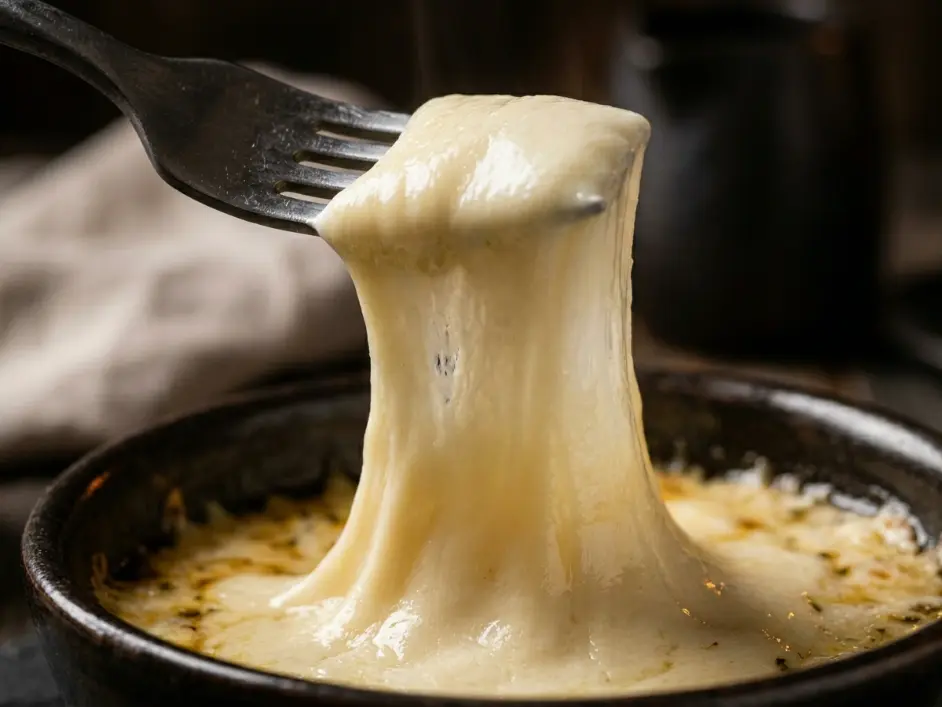
Instead, head to Whole Foods or Trader Joe’s and buy a block of whole-milk, low-moisture mozzarella or aged Fontina. Grate it by hand on a box grater just before assembly. The difference in melt quality is night and day. Fresh-grated cheese releases its fat and protein in a clean, unobstructed flow, creating that coveted restaurant-quality stretch.
For the bread vessel, skip the soft sandwich loaves entirely. You need a structurally sound, thick-crusted artisan sourdough boule. The bakery sections at Panera Bread or Target often carry these daily. Look for a dense crumb with a hard, audibly crisp exterior. This bread will hold the weight of a fully loaded, saturated dip without collapsing or leaking through the bottom during the bake.
If you are working with frozen spinach, the 365 Whole Foods brand or Trader Joe’s organic chopped spinach tends to have less ice crystal formation and better structural integrity post-thaw compared to generic bulk options. The quality of your greens affects how much residual water you are fighting against during assembly.
Ingredients Table
| Category | Ingredient | US Customary | Metric |
|---|---|---|---|
| The Bread Vessel | Large sourdough boule (artisan crusty round) | 1 loaf (approx. 1 lb) | 450g |
| The Creamy Base | Full-fat block cream cheese, softened | 8 oz | 225g |
| Sour cream, heavy cultured | 1 cup | 240ml | |
| Whole milk mozzarella, hand-grated | 1½ cups | 170g | |
| Parmigiano-Reggiano, grated | ¾ cup | 85g | |
| The Greens & Aromatics | Frozen chopped spinach, thawed and drained | 10 oz | 283g |
| Canned artichoke hearts, chopped | 14 oz (1 can) | 400g | |
| Fresh garlic cloves, minced | 4 cloves | 12g | |
| Sea salt | 1 teaspoon | 5g | |
| Coarse black pepper | ½ teaspoon | 2g |
Common Kitchen Blunders
| The Kitchen Blunder | What Actually Happens (Scientific Reality) | The Chef Hamid Fix |
|---|---|---|
| Using pre-shredded bagged cheese | Cellulose anti-caking powder prevents clean melt, creating grainy texture and broken emulsion | Hand-grate block cheese fresh; fat and protein integrate smoothly without coating interference |
| Skipping the spinach drainage step | Residual vegetable water dilutes the fat base, lowering viscosity and causing separation during baking | Thaw spinach completely, then wring aggressively through cheesecloth until completely dry to touch |
| Overmixing or high-speed blending | Mechanical shear breaks fat globules into micro-droplets that cannot re-coalesce into stable emulsion | Fold ingredients gently by hand with a silicone spatula to preserve fat structure |
| Choosing a soft, airy bread bowl | Weak gluten structure collapses under saturated fat load, causing leaks and structural failure | Select a dense, thick-crusted sourdough boule with audible crust resistance when tapped |
| Baking at temperatures above 400°F | Excessive convective heat causes rapid casein contraction and fat expulsion before moisture can stabilize | Bake at a controlled 375°F / 190°C to allow gradual, even heat penetration |
| Assembling hours in advance without refrigeration | Moisture from the dip migrates into the bread crumb via osmosis, creating a soggy, structurally compromised vessel | Assemble no more than 30 minutes before baking, or refrigerate tightly wrapped if prepping ahead |
Step-by-Step Method
Step 1: The Architectural Prep of the Boule
Start by selecting your sourdough loaf carefully. Place it on a stable cutting board and use a long serrated bread knife to slice horizontally across the top, about one inch down from the crown. Lift off this lid and set it aside—it will serve as your dippable crown piece later.
Now comes the excavation. Use your hands or a sturdy spoon to hollow out the interior crumb, leaving walls that are at least three-quarters of an inch thick all around. The base should be even thicker, closer to a full inch, to prevent any leakage during the bake. Save those torn interior pieces in a bowl. They are pure gold for dipping.
The structural integrity of this vessel is non-negotiable. If the walls are too thin, saturated fat will migrate through the porous crumb during baking and leak onto your pan. If the base is weak, the whole bowl can collapse under its own loaded weight.
Step 2: The Moisture Evacuation of the Greens
Thaw your frozen spinach completely, either overnight in the fridge or using the defrost function on your microwave. Do not skip this. Frozen greens trapped in ice crystals cannot release their water effectively.
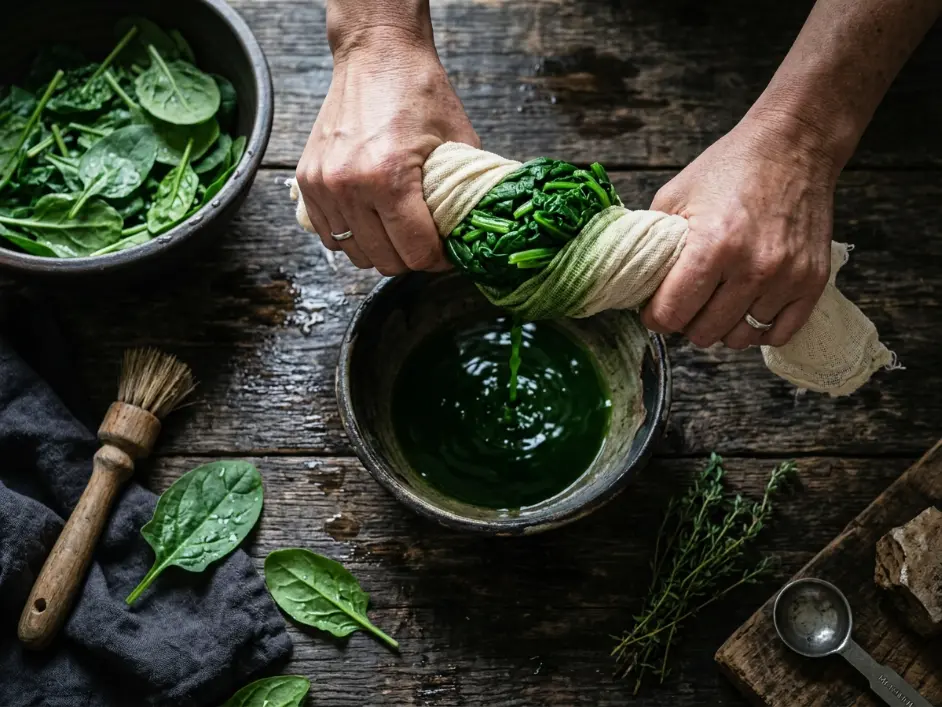
Once thawed, dump the spinach into the center of a double layer of cheesecloth or a clean, lint-free kitchen towel. Gather the edges and twist tightly, wringing out every possible drop of green-tinted water. You should extract at least a quarter cup of liquid. This is the single most important step in preventing a watery, separated dip.
Residual vegetable water dilutes the emulsified fat base and lowers the viscosity of your cheese matrix. It also introduces plant cell fluid that does not bind chemically with dairy lipids, creating pockets of separation during the bake.
Step 3: Low-Temperature Lipid Binding
In a large mixing bowl, combine your softened block cream cheese, sour cream, minced garlic, sea salt, and black pepper. Use a sturdy silicone spatula to fold and press these ingredients together until you have a uniform, pale base with no visible cream cheese lumps.
The fat content in cream cheese and sour cream creates a moisture-rich environment that buffers the mozzarella and parmesan from direct high heat. This is your emulsification insurance policy. The cultured acids in sour cream also help denature casein proteins gently, promoting a smoother melt.
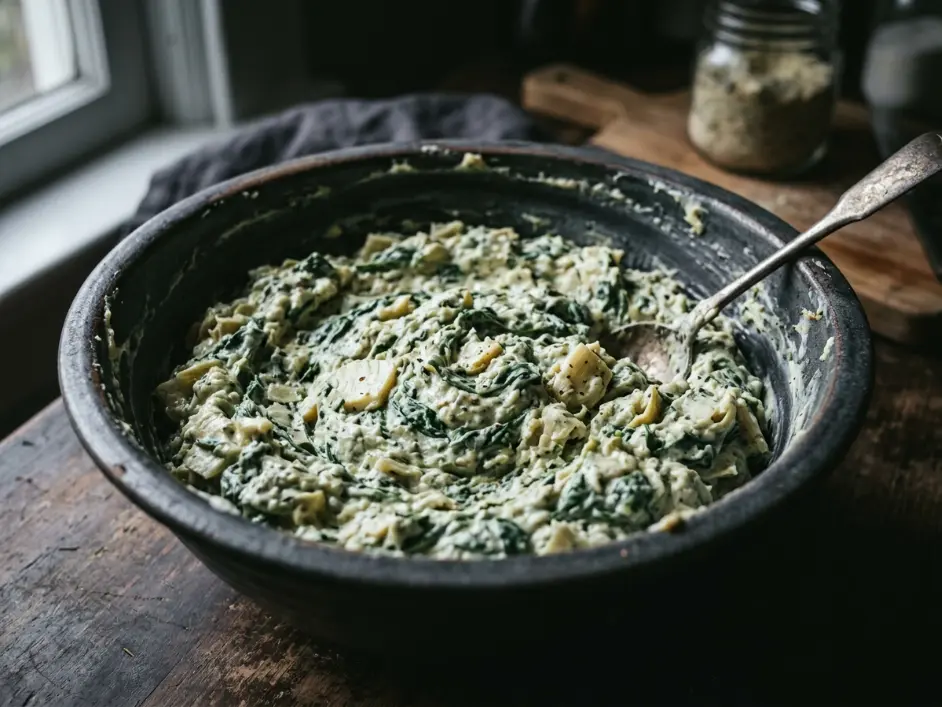
Add your bone-dry spinach and chopped artichoke hearts into this creamy base. Fold gently—do not beat or whip. Mechanical shear can rupture fat globules prematurely. Finally, fold in about three-quarters of your hand-grated mozzarella and parmesan, reserving the rest for the topping layer.
The mixture should look thick, cohesive, and almost paste-like. If it appears runny or soupy, you did not drain your spinach enough, and you are at high risk for separation during baking.
Step 4: The Convection Bake and Browning Stage
Preheat your oven to 375°F / 190°C. This moderate temperature allows the dip to heat through gradually without shocking the dairy proteins into contraction and fat expulsion.
Place your hollowed bread bowl on a rimmed sheet pan or inside a cast iron skillet for stability. Spoon the prepared dip mixture into the cavity, pressing down gently to eliminate air pockets. Mound it slightly above the rim—it will settle as it bakes.
Scatter the reserved grated mozzarella and parmesan generously over the top. This layer will brown and caramelize, creating a textural contrast against the creamy interior.
Bake uncovered for 20 to 25 minutes, rotating the pan halfway through for even heat distribution. You are looking for an internal temperature of 165°F / 74°C at the center of the dip, and a visibly bubbling, golden-brown cheese crust on top with scattered darker spots of caramelization.
Let the bread bowl rest for about three minutes after pulling it from the oven. This brief resting period allows the emulsion to stabilize as the temperature drops slightly, reducing the risk of a fat blowout when you dig in.
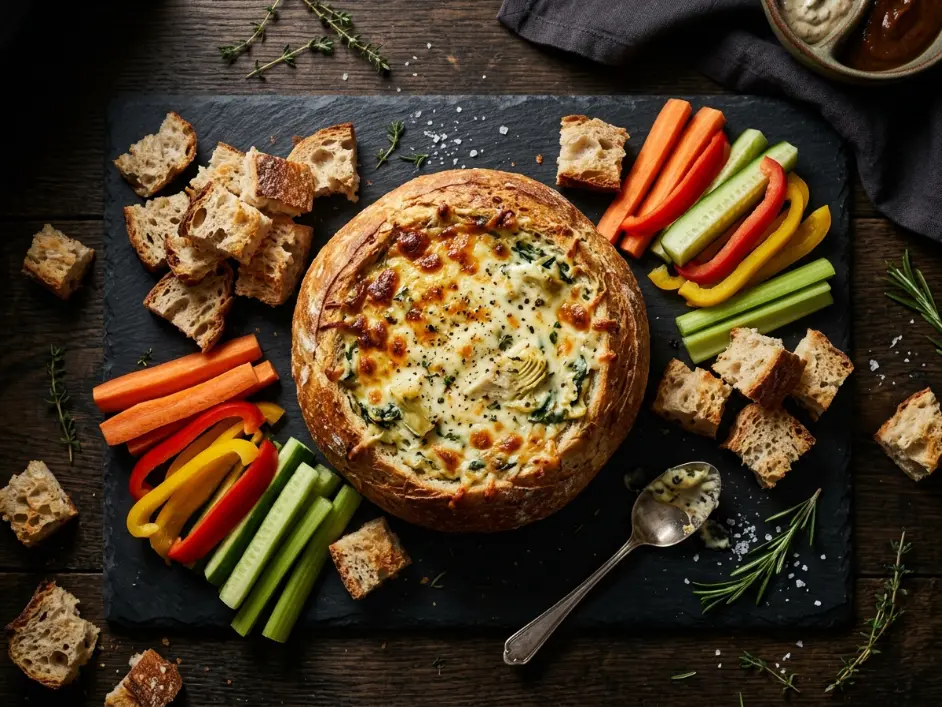
Serve immediately, surrounded by the torn interior bread pieces, raw vegetable sticks, or sturdy crackers.
Chef Joseph Insight
“Cooking is not just chemistry — it is memory made edible. When others gather around a table and tear off that first piece of warm, crunchy bread to plunge it into a bubbling, velvety center, the science fades away and pure connection takes over. The most powerful moves in the kitchen are almost always the quiet ones. The overnight rest. The proper preheat. The two-minute wait before you plate. It is the patience to wring out every last drop of moisture from your greens, and the care you take in picking the right cheese. Take your time, respect the process, and your kitchen will always reward you.”
— Chef Joseph | Expert Palate
6 Culinary Rules for Incredible Pull-Apart Garlic Butter Pizza Sliders
Technical Data & Nutrition Table
Per Serving (based on 10 servings):
| Nutrient | Amount |
|---|---|
| Calories | 285 kcal |
| Protein | 12g |
| Total Fat | 21g |
| Saturated Fat | 12g |
| Carbohydrates | 14g |
| Sodium | 520mg |
| Cholesterol | 58mg |
Note: Nutritional values are careful kitchen estimates based on standard ingredient databases and may vary depending on specific brands and preparation methods used.
Food Safety & Thermal Management
The USDA establishes clear thermal guidelines for dairy-based hot dips. The safe minimum internal holding temperature for any cream cheese or sour cream-based preparation is 165°F / 74°C. This ensures that any potential pathogenic bacteria introduced during handling are destroyed.
Equally critical is understanding the USDA Danger Zone: the temperature range between 40°F and 140°F / 4°C and 60°C where bacterial growth accelerates exponentially. Cream-based dips left at room temperature for more than two hours enter this danger zone and should be discarded to prevent foodborne illness risk.
During service, if your dip cools below 140°F / 60°C, either reheat it back above this threshold or refrigerate it promptly. Never allow dairy-heavy dishes to linger in the thermal danger zone during extended gatherings.
For more detailed food safety data on dairy components, consult the USDA FoodData Central database for exact macronutrient profiles and safe handling protocols.
Storage & Reheating Matrix
| Item State | Fridge Storage Limit | Freezer Safety Option | The Absolute Best Reheating Method |
|---|---|---|---|
| Leftover Unbaked Dip Mixture | 3 days in airtight container | Up to 2 months in freezer-safe container; thaw in fridge overnight before baking | Bake fresh at 375°F for 25–30 minutes until bubbly |
| Fully Baked Dip Inside Bread Bowl | 2 days covered tightly with plastic wrap | Not recommended due to bread texture degradation | Transfer dip to oven-safe dish, cover with foil, reheat at 325°F for 15 minutes; avoid microwave to prevent oil separation |
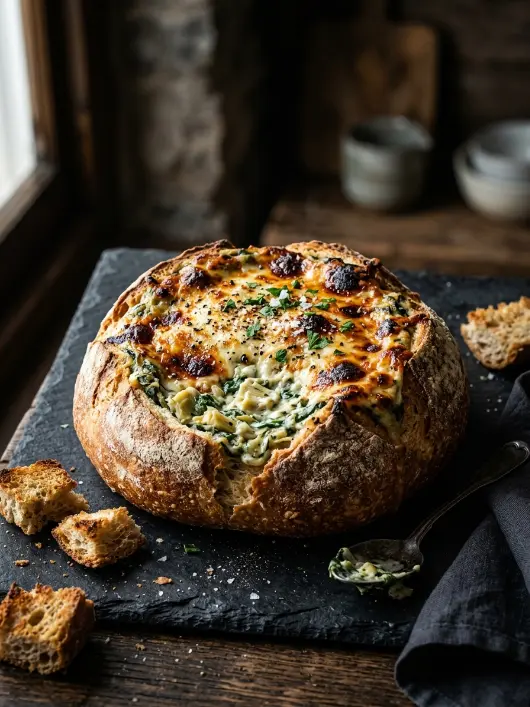
Cheesy Spinach Artichoke Dip in a Bread Bowl
Ingredients
Equipment
Method
- Slice the top crown off the sourdough boule using a long serrated knife and carefully hollow out the soft interior crumb, leaving thick stable walls of about three quarters of an inch all around to hold the saturated fat load without leaking.
- Thaw the frozen chopped spinach completely, then transfer it into a double layer of cheesecloth and wring it aggressively over the sink until every drop of green tinted water has been extracted and the spinach feels almost dry to the touch.
- In a large mixing bowl, fold together the softened block cream cheese, cultured sour cream, freshly minced garlic, sea salt, and cracked black pepper using a silicone spatula until you achieve a uniform pale creamy base with no visible lumps.
- Gently fold the bone dry spinach, chopped artichoke hearts, and three quarters of the hand grated mozzarella and parmesan into the creamy base, taking care not to overmix or apply mechanical shear that could rupture fat globules.
- Spoon the cohesive mixture tightly inside the hollowed bread bowl cavity, pressing down to eliminate air pockets, and top generously with the remaining reserved cheese for a golden brown caramelized crust.
- Place the assembled bread bowl onto a parchment lined sheet pan or inside a cast iron skillet and bake in a preheated oven at 375 degrees Fahrenheit (190 degrees Celsius) for 20 to 25 minutes, until the internal temperature reaches 165 degrees Fahrenheit (74 degrees Celsius) and the cheese crust bubbles with deep brown caramelized spots.
- Rest the baked bread bowl on the counter for approximately three minutes to allow the dairy emulsion to stabilize, then serve immediately surrounded by the reserved torn bread cubes and crisp fresh vegetable dippers.
Notes
Frequently Asked Culinary Questions
Can I use fresh spinach instead of frozen?
Yes, but you will need significantly more volume. Fresh spinach wilts down to about one-tenth of its raw volume when cooked. For every 10 ounces of frozen chopped spinach, you would need approximately 1 pound of fresh baby spinach, which you must sauté first to collapse the structure, then cool completely and wring dry. Frozen spinach is pre-blanched and structurally consistent, making it the more reliable choice for this application.
Why did my dip turn greasy and watery?
Two primary culprits: inadequate moisture removal from the greens, and using pre-shredded cheese with anti-caking agents. Residual vegetable water dilutes the emulsion, while cellulose coatings prevent clean fat integration. Always hand-grate block cheese and wring spinach bone-dry through cheesecloth.
Can I assemble the bread bowl the night before without it getting soggy?
Assemble the dip mixture separately and store it in the fridge. Hollow out your bread bowl and store it loosely wrapped at room temperature. Combine them no more than 30 minutes before baking. If you must assemble fully in advance, wrap the filled bread bowl tightly in plastic wrap and refrigerate, but expect some moisture migration into the crumb.
What is the best substitute for artichokes if someone has an aversion?
Roasted red peppers, diced and drained, provide a similar textural contrast and mild sweetness. You could also use sautéed mushrooms, finely chopped and moisture-cooked until dry. Both options maintain the vegetable-forward profile without the distinct artichoke flavor.
How do I prevent the bread bowl from burning on the bottom?
Place the filled bread bowl on a sheet pan lined with parchment paper, or nestle it inside a cast iron skillet for even heat distribution and insulation. Baking at a moderate 375°F instead of a high roast temperature also prevents premature crust carbonization.
Curated Menu Pairings
To balance the luxurious fats of this cream base, pair it alongside a vibrant veggie platter utilizing the raw crop data from USDA FoodData Central, or complement your party spread with a refreshing zesty beverage pairing designed over at Serious Eats.
For a complete appetizer spread that balances richness with acidity and crunch, browse curated party platter ideas at Food Network, where expert chefs build menus around textural and flavor contrast.
🍷 Wine Pairing: A crisp, high-acid Sauvignon Blanc or a dry Prosecco cuts through the dairy richness and refreshes the palate between bites.
🥖 Additional Dippers: Beyond the bread itself, serve with endive spears, celery sticks, bell pepper strips, and sturdy pita chips for varied textures.
🧂 Flavor Boost: A final sprinkle of flaky Maldon sea salt and a drizzle of good extra-virgin olive oil just before serving amplifies the savory depth.