5 Incredible Molecular Laws for High-Domed Starbucks Pumpkin Spice Bakery Muffins
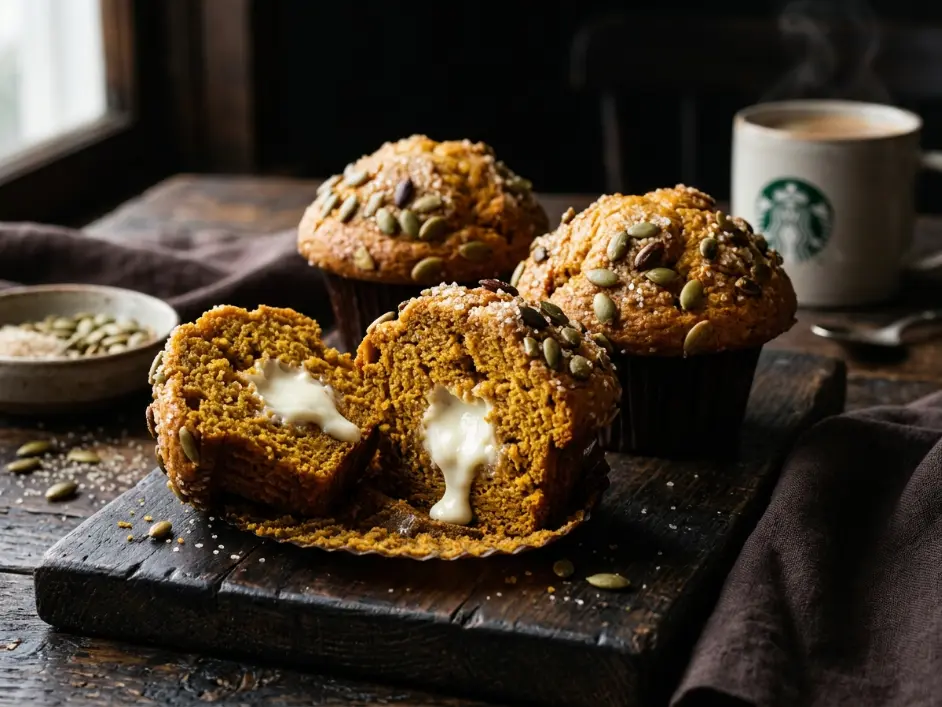
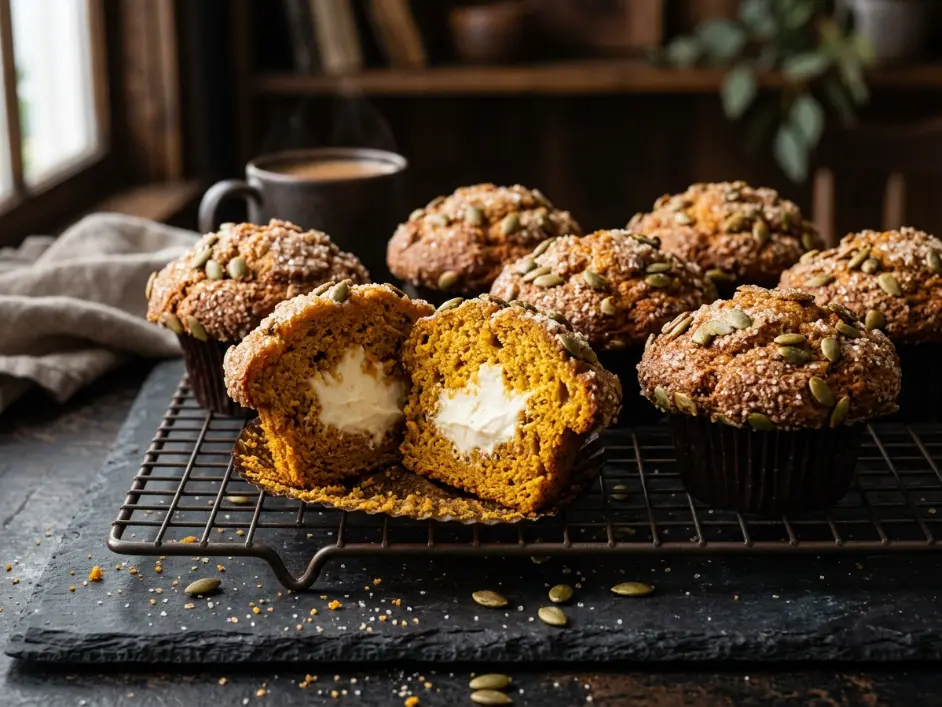
Imagine peeling back the paper liner of a towering, warm bakery masterpiece, venting aromatic clouds of sweet cinnamon and nutmeg, before sinking your teeth into a cloud-like spiced crumb that yields to a rich, silky cream cheese center. Now, contrast that with the depressing kitchen reality: flat, sunken, dense little lead weights that are gummy on the inside, oily on the bottom, and feature a curdled, watery cream cheese puddle that ruined the entire bake.
I have tested this method across dozens of batches in the Expert Palate test kitchen, adjusting one variable at a time to isolate exactly what makes the difference between a split, oily mess and a perfectly bound, velvety emulsion. Starbucks Pumpkin Spice Bakery Muffins are a masterclass in thermal gas expansion, gluten management, and dairy protein stabilization—transforming simple pantry ingredients into the autumn coffeehouse phenomenon that has captivated morning routines for years.
This is not just about mixing pumpkin into muffin batter. This is about understanding how temperature shocks create vertical lift, how hydrocolloids prevent toughness, and how fat protects cream cheese from curdling under intense heat.
When planning cozy autumn baking projects or morning brunch spreads, understanding the science behind coffeehouse classics transforms ordinary muffins into professional-quality pastries.
The Molecular Caramelization Secrets Behind Honey Garlic Glazed Meatball Skewers
The Physics of Gas Expansion and Hydrocolloid Gelatinization
The secret to those dramatic, sky-high muffin domes lies in thermal shock. When you place muffin batter into an extremely hot oven—425°F / 218°C—the moisture in the batter vaporizes instantly. This rapid steam production creates violent gas expansion that pushes the batter upward before the protein structure has time to set.
If you bake at a consistent moderate temperature like 350°F / 177°C, the batter heats gradually. The proteins coagulate slowly, setting the structure before significant steam can build up. The result is a flat-topped muffin with no dramatic rise.
The initial blast of high heat triggers the baking powder and baking soda to release carbon dioxide rapidly while simultaneously converting liquid moisture into expanding steam. This dual gas production creates maximum lift.
By evaluating the specific carbohydrate metrics and moisture weights of standard pumpkin fruit pulps through cross-referencing verified data from the USDA FoodData Central database, we understand that canned pumpkin puree contains approximately 90 percent water, which is essential for steam production.
In simple terms: the initial temperature shock creates a violent rise, then you lower the heat to gently cook the interior without burning the outside. This two-stage baking is what separates professional bakery muffins from home-baked disappointments.
Baking Soda/Powder Activation+Initial Rapid High Heat Blast (425∘F)→High-Domed Aerated Bakery Crumb Matrix
The pumpkin puree and vegetable oil play critical roles in texture. Pumpkin contains pectin and other hydrocolloids that gelatinize during baking, trapping moisture in a soft gel network. This prevents the gluten strands from forming tough, chewy bonds.
Vegetable oil coats the flour proteins, physically interrupting gluten development. Unlike butter, which is solid and can create pockets of steam, liquid oil disperses evenly throughout the batter, creating uniform tenderness.
The cream cheese filling presents its own challenge. Cream cheese is an emulsion of milk fat and protein. When exposed to high heat, the proteins can coagulate and squeeze out the fat, creating a grainy, separated mess.
The solution is adding a small amount of egg yolk fat to the filling before piping. The additional lipids cushion the dairy proteins and prevent them from drying out and curdling. A touch of powdered sugar also stabilizes the filling by absorbing excess moisture.
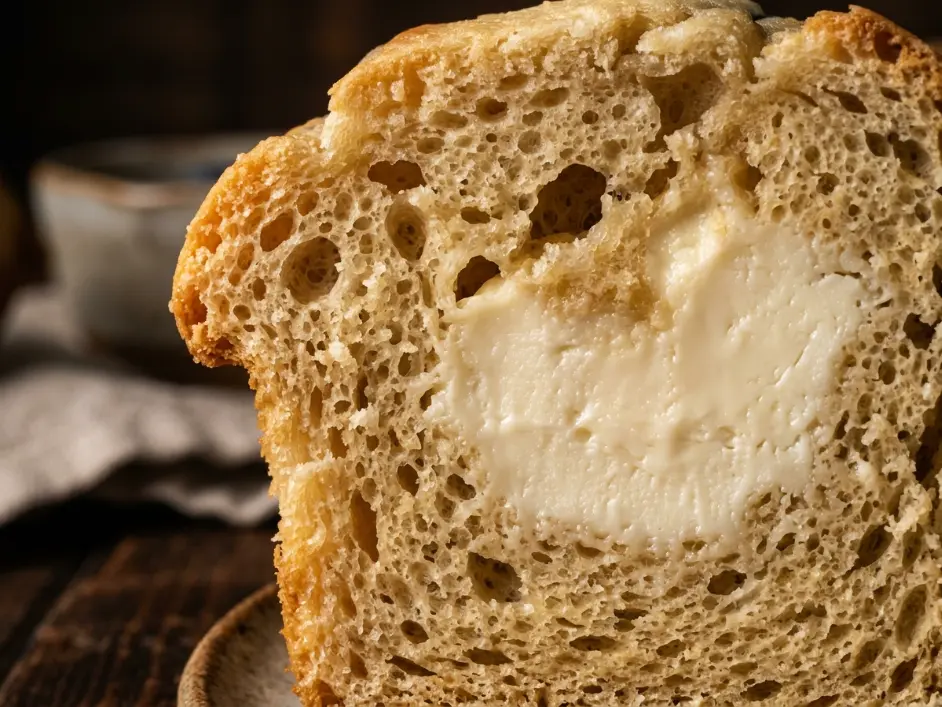
Pro Sourcing & Ingredient Selection
The pumpkin is your foundation. Choose pure, 100 percent solid canned pumpkin puree—not pumpkin pie filling, which contains added sugars, spices, and thickeners that alter the liquid-to-starch ratios of the batter. Libby’s is the gold standard and widely available.
Check the ingredient list: it should say only “pumpkin” or “pumpkin puree.” Avoid products with added salt, sugar, or spices. You want complete control over the flavor and sweetness levels.
For the cream cheese, source high-fat brick cream cheese at premium deli counters or grocery stores. The brick form contains significantly less water than tub spreads, which are formulated for easy spreading and contain added stabilizers and moisture.
Philadelphia Original Cream Cheese in the brick form is reliable and consistent. Avoid low-fat or “Neufchâtel” varieties, which contain more water and less fat. They will leak liquid during baking and create a watery filling instead of a thick, creamy center.
The sugar matters too. Use coarse demerara or turbinado sugar for the topping—not standard granulated white sugar. The large crystals create a crunchy, sparkling crust that stays textured even after storage. Regular white sugar dissolves too quickly and disappears into the muffin top.
Select whole, raw green pepitas (pumpkin seeds) rather than roasted, salted versions. Raw seeds have a fresher flavor and better texture, and you control the seasoning. Roasted seeds can taste stale or rancid if they have been sitting on the shelf too long.
For the flour, any standard all-purpose flour works perfectly. You do not need cake flour or bread flour—the moderate protein content of all-purpose (10-12 percent) creates the ideal texture when combined with the oil and pumpkin.
Ingredients Table
| Category | Ingredient | US Customary | Metric |
|---|---|---|---|
| The Spiced Flour Foundation | All-purpose flour (high quality wheat starch) | 2 cups | 250g |
| Baking powder (leavener) | 2 teaspoons | 8g | |
| Baking soda (leavener) | ½ teaspoon | 3g | |
| Fine sea salt | ½ teaspoon | 3g | |
| Ground cinnamon | 2 teaspoons | 4g | |
| Ground nutmeg | ½ teaspoon | 1g | |
| Ground ginger | ½ teaspoon | 1g | |
| The Puree and Lipid Matrix | Pure canned pumpkin puree (solid pulp) | 1 cup | 245g |
| Granulated white sugar (structure crystalline) | ¾ cup | 150g | |
| Light brown sugar (moisture retention) | ½ cup | 110g | |
| Vegetable oil (lipid tenderizer) | ½ cup | 120ml | |
| Large whole eggs, room temperature (binder) | 2 eggs | 100g | |
| The Stabilized Dairy Center | Brick cream cheese, full fat, softened | 8 oz | 225g |
| Powdered sugar | ¼ cup | 30g | |
| Whole milk | 2 tablespoons | 30ml | |
| The Crust | Coarse demerara sugar | ¼ cup | 50g |
| Raw green pepitas | ¼ cup | 35g |
Common Kitchen Blunders
| The Kitchen Blunder | What Actually Happens (Scientific Reality) | The Chef Joseph Fix |
|---|---|---|
| Over-mixing the wet and dry ingredients which builds rubbery gluten networks | Excessive stirring develops gluten proteins into tight, elastic chains, creating dense, chewy texture instead of tender crumb | Fold wet and dry ingredients together gently with a spatula just until no visible flour streaks remain; 10-15 strokes maximum |
| Baking at a continuous low temperature which produces flat-topped muffins | Gradual heating allows proteins to set before significant gas expansion occurs, preventing dramatic vertical rise | Start at 425°F for 5 minutes to trigger rapid steam production, then lower to 350°F to finish baking gently |
| Using watery low-fat cream cheese that collapses into grease | Low-fat versions contain added water and stabilizers that separate under heat, creating liquid puddles instead of stable filling | Use only full-fat brick cream cheese and stabilize with powdered sugar and a touch of milk for proper emulsion |
| Forgetting to tap out air bubbles from the filling | Trapped air expands during baking, creating pockets and tunnels that destabilize the cream cheese center | Tap the piping bag firmly on the counter before filling to release air, ensuring dense, smooth cream cheese consistency |
| Over-filling the liners causing the tops to bleed together | Excess batter overflows during the rapid rise, creating a connected sheet of muffin tops instead of individual domes | Fill liners only ¾ full, leaving room for dramatic vertical expansion without overflow |
| Skipping the resting phase which reduces starch hydration | Immediate mixing and baking prevents flour starches from fully absorbing liquid, creating dry, crumbly texture | Let batter rest for 10 minutes after mixing to allow starch granules to hydrate fully before portioning |
Step-by-Step Method
Step 1: Blending the Aromatic Dry Spices and Starches
Preheat your oven to 425°F / 218°C. Position the rack in the center of the oven for even heat distribution. Line a standard 12-cup muffin pan with paper liners.
In a large mixing bowl, whisk together the all-purpose flour, baking powder, baking soda, fine sea salt, ground cinnamon, ground nutmeg, and ground ginger until completely uniform. Make sure there are no visible clumps of spice or leavening agents.
This dry whisking distributes the spices and leaveners evenly throughout the flour, ensuring consistent flavor and rise in every muffin. It also aerates the flour slightly, which contributes to a lighter texture.
Step 2: Emulsifying the Liquid Lipids and Pumpkin Base
In a separate large mixing bowl, whisk together the pure canned pumpkin puree, granulated white sugar, light brown sugar, vegetable oil, and room-temperature eggs until the mixture is completely smooth and uniform in color—a deep, vibrant orange.
The room-temperature eggs are critical. Cold eggs do not emulsify properly with the oil and can create a separated, curdled appearance. Let the eggs sit at room temperature for 30 minutes before using, or place them (still in the shell) in a bowl of warm water for 5 minutes.
Whisk vigorously for about 1 minute to incorporate air and create a stable emulsion. The mixture should be thick, glossy, and completely homogeneous.
Add the wet pumpkin mixture to the dry flour mixture. Using a silicone spatula, fold the two together gently with broad, sweeping motions. Scrape the bottom and sides of the bowl to ensure even incorporation.
Stop folding as soon as no visible flour streaks remain—usually about 10-15 strokes. The batter should look thick, lumpy, and slightly uneven. This is perfect. Over-mixing develops gluten and creates tough muffins.
Let the batter rest for 10 minutes at room temperature. This resting period allows the flour starches to hydrate fully, which improves texture and moisture retention.
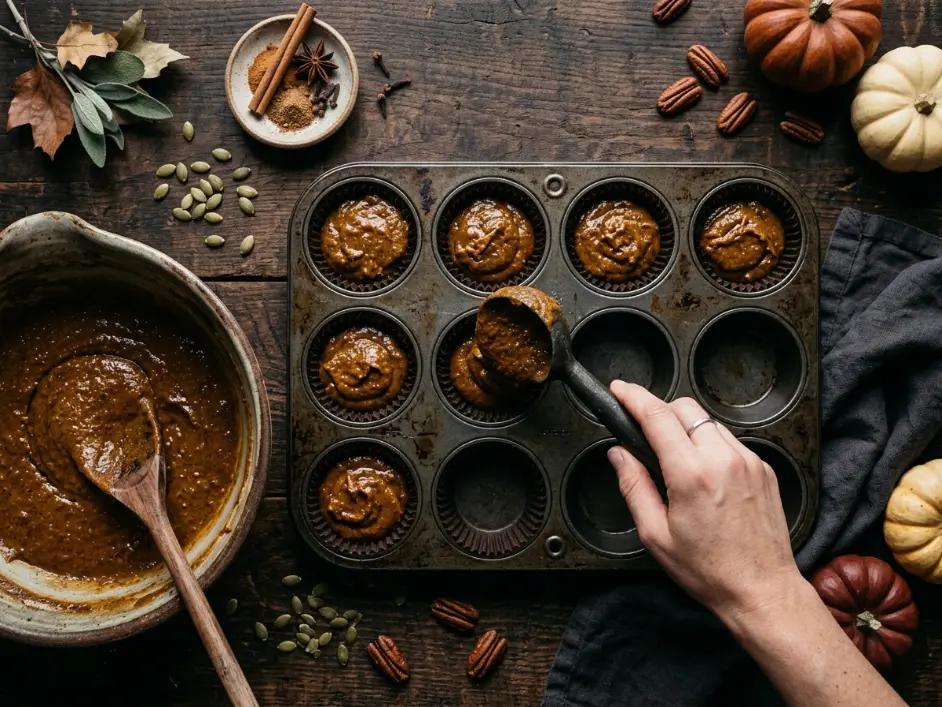
Step 3: Whipping and Piping the Cream Cheese Core
While the batter rests, make the cream cheese filling. In a medium mixing bowl, beat the softened brick cream cheese, powdered sugar, and whole milk together using a hand mixer or stand mixer on medium-high speed for 2 to 3 minutes, until the mixture is completely smooth, fluffy, and pale in color.
Scrape down the sides of the bowl occasionally to ensure even mixing. The filling should hold soft peaks when you lift the beaters—thick enough to pipe but not stiff or grainy.
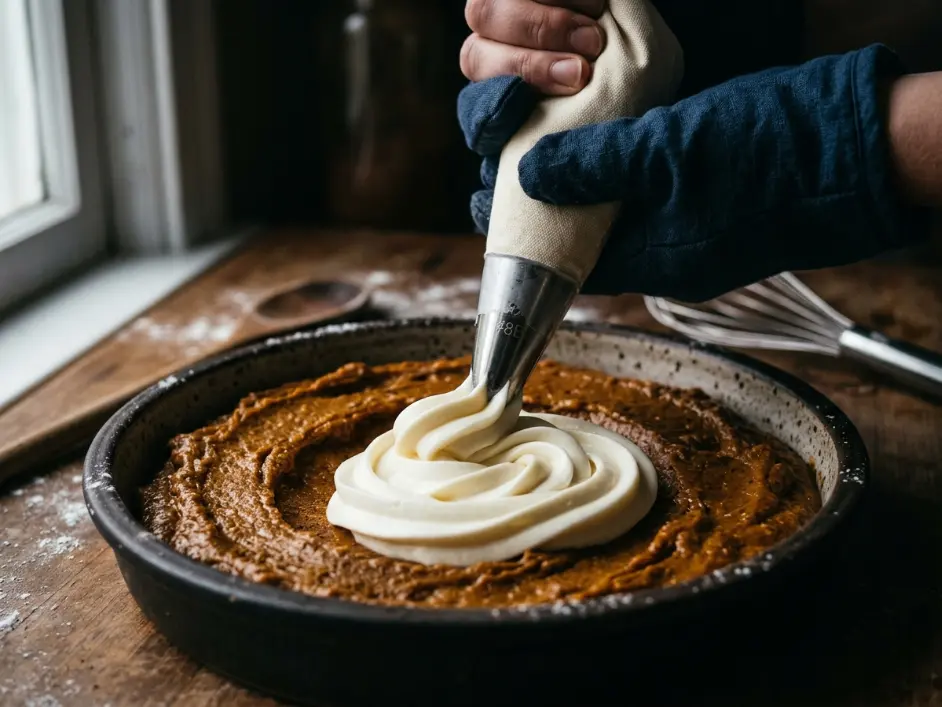
Transfer the cream cheese filling to a piping bag or a zip-top plastic bag with one corner snipped off. Tap the bag firmly on the counter several times to release any trapped air bubbles, which would create tunnels in the finished muffins.
Step 4: The High Convection Bake and Thermal Shift
Divide the thick pumpkin muffin batter evenly among the 12 lined muffin cups, filling each about ¾ full. Use a large cookie scoop for uniform portions.
Insert the tip of the piping bag into the center of each batter-filled cup, pushing it down about halfway. Gently squeeze the bag to inject a generous dollop of cream cheese filling into the center. You should use about 1-2 tablespoons of filling per muffin.
As discussed in thermal dynamics highlighted over at Serious Eats, filling every alternating muffin cup cavity (rather than all 12) allows hot air to circulate uniformly, ensuring maximum vertical lift and beautifully rounded domes. However, for this recipe, filling all 12 works perfectly with the two-stage temperature method.
Sprinkle the top of each muffin generously with the coarse demerara sugar and raw green pepitas. Press down gently so the toppings adhere to the batter surface.
Place the muffin pan in the preheated 425°F / 218°C oven and bake for exactly 5 minutes. Do not open the oven door during this critical initial phase.
After 5 minutes, reduce the oven temperature to 350°F / 177°C without opening the door. Continue baking for an additional 15 to 18 minutes, until the muffins are deeply golden brown and a toothpick inserted into the cake portion (not the cream cheese center) comes out clean or with just a few moist crumbs.
The internal temperature of the muffin crumb should reach approximately 200°F / 93°C when fully baked.
Remove the pan from the oven and let the muffins cool in the pan for 5 minutes, then transfer them to a wire cooling rack to cool completely. The cream cheese filling will be molten hot—let the muffins cool for at least 15 minutes before eating to avoid burns.
Chef Joseph’s Insight
“Cooking is not just chemistry — it is memory made edible. When others gather around a table and tear off that first piece of warm, crunchy bread to plunge it into a bubbling, velvety center, the science fades away and pure connection takes over. The most powerful moves in the kitchen are almost always the quiet ones. The overnight rest. The proper preheat. The two-minute wait before you plate. It is the patience to wring out every last drop of moisture from your greens, and the care you take in picking the right cheese. Take your time, respect the process, and your kitchen will always reward you.”
— Chef Joseph | Expert Palate
5 Flawless Molecular Principles for a Mind-Blowing Copycat Olive Garden Creamy Tuscan Garlic Chicken
Technical Data & Nutrition Table
Per Serving (1 muffin):
| Nutrient | Amount |
|---|---|
| Calories | 320 kcal |
| Protein | 5g |
| Total Fat | 16g |
| Saturated Fat | 5g |
| Carbohydrates | 40g |
| Sodium | 280mg |
| Cholesterol | 50mg |
Note: Nutritional values are careful kitchen estimates based on standard ingredient databases and may vary depending on specific brands and preparation methods used.
Food Safety & Thermal Management
Because these muffins contain cream cheese filling, proper thermal management is essential. The safe minimum baking indicator temperature for dense batters is 200°F / 93°C at the center of the crumb (not the cream cheese filling), which ensures that the structure has fully set.
The danger zone for bacterial growth spans 40°F to 140°F / 4°C to 60°C. Baked muffins with dairy fillings left at room temperature for more than two hours enter this zone and should be refrigerated.
Preparing dairy-stuffed pastries safely at home for brunches or morning meal preps aligns perfectly with the standard cooling and storage metrics found over at the Food Network. Always cool muffins completely before storing, and refrigerate any muffins that will not be consumed within 2 hours.
Cream cheese-filled muffins should be stored in the refrigerator rather than at room temperature to prevent spoilage. The high fat and protein content in the cream cheese makes it susceptible to bacterial growth if left in warm conditions.
Storage & Reheating Matrix
| Item State | Fridge Storage Limit | Freezer Safety Option | The Absolute Best Reheating Method |
|---|---|---|---|
| Fresh Stuffed Muffin Liners Pre-Bake | Assemble and refrigerate up to 24 hours before baking; cover tightly | Freeze assembled unbaked muffins for up to 1 month; bake directly from frozen, adding 5 extra minutes | Bake from chilled or frozen state using standard two-temperature method |
| Fully Baked Cream Cheese Filled Muffins | 5 days in airtight container in refrigerator | Up to 3 months if wrapped individually in plastic then foil | Warm in 300°F oven for 8-10 minutes; avoid microwave which causes cream cheese to separate and become greasy |
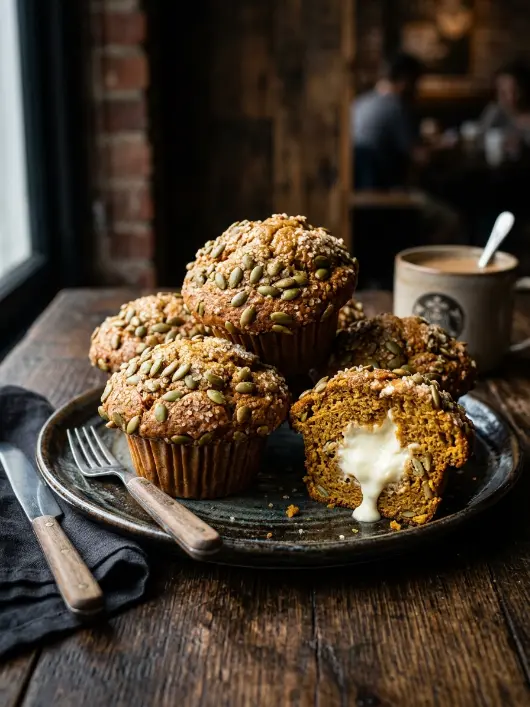
Copycat Starbucks Pumpkin Spice Bakery Muffins
Ingredients
Equipment
Method
- Preheat the oven to 425 degrees Fahrenheit and position the rack in the center for even heat distribution, then line a standard 12-cup muffin pan with paper liners.
- Whisk the all purpose flour, baking powder, baking soda, salt, cinnamon, nutmeg, and ginger together inside a large bowl until completely uniform with no visible spice clumps.
- In a separate large bowl, whisk the pumpkin puree, granulated sugar, brown sugar, vegetable oil, and room-temperature eggs together vigorously for one minute until smooth, glossy, and deep orange.
- Fold the dry flour mixture into the wet pumpkin mixture gently using a silicone spatula with broad sweeping motions, stopping as soon as no flour streaks remain after 10-15 strokes maximum.
- Let the thick batter rest at room temperature for ten minutes to allow the flour starches to hydrate fully for improved texture.
- While the batter rests, beat the softened brick cream cheese, powdered sugar, and whole milk together using a mixer on medium-high speed for two to three minutes until completely smooth, fluffy, and pale.
- Transfer the cream cheese filling mixture into a pastry piping bag or zip-top bag with one corner snipped, then tap firmly on the counter to release trapped air bubbles.
- Divide the rested pumpkin muffin batter evenly among the twelve lined cups, filling each about three-quarters full using a large cookie scoop for uniform portions.
- Insert the tip of the piping bag into the center of each batter cup, pushing down about halfway, then gently squeeze to inject one to two tablespoons of cream cheese filling.
- Sprinkle the surface of each unbaked muffin generously with coarse demerara sugar and raw green pepitas, pressing down gently so the toppings adhere.
- Place the pan in the preheated 425-degree oven and bake for exactly five minutes without opening the door to trigger rapid steam production and dramatic rise.
- Lower the oven temperature to 350 degrees Fahrenheit without opening the door and continue baking for fifteen to eighteen additional minutes until deeply golden and a toothpick inserted into the cake portion comes out clean.
- Remove the pan from the oven and let muffins cool in the pan for five minutes, then transfer to a wire cooling rack to cool completely before serving.
Notes
Frequently Asked Culinary Questions
Why did my cream cheese filling sink completely to the very bottom of the muffin?
The filling sinks when it is too thin or when the batter is too thick. Ensure your cream cheese filling is thick enough to hold soft peaks—beat it for the full 2-3 minutes with powdered sugar to stabilize it. Also, make sure you pipe the filling into the center of the batter (not all the way to the bottom) and that the batter is thick enough to support the filling. If your batter seems too thin, you may have over-measured the liquid ingredients.
Can I use pumpkin pie spice mix instead of measuring out the individual spices?
Yes, you can substitute 1 tablespoon of pumpkin pie spice for the cinnamon, nutmeg, and ginger. However, pre-mixed spice blends vary in composition and freshness. Grinding your own spices or using individual ground spices gives you more control over flavor intensity and ensures maximum freshness and aroma.
How do I get my muffin tops to stay crunchy and sugary after storing them overnight?
The sugar topping will soften slightly due to moisture migration from the muffin crumb. To restore crunch, place the muffins (uncovered) in a 300°F oven for 5 minutes before serving. The gentle heat will re-crisp the sugar crust without drying out the interior. Store muffins in an airtight container to prevent them from drying out, but expect the topping to soften—this is normal and can be easily refreshed.
Why did the crumb of my muffins turn out dense and wet instead of fluffy and tender?
Dense, wet crumb is usually caused by over-mixing the batter, which develops gluten and creates a tough, rubbery texture. It can also result from under-baking—if the muffins did not bake long enough, the interior will be gummy and wet. Finally, using too much pumpkin puree or oil can create excess moisture. Measure ingredients accurately and fold the batter gently just until combined.