6 Masterclass Thermodynamic Rules for Majestic Cava Honey Harissa Chicken Bowls
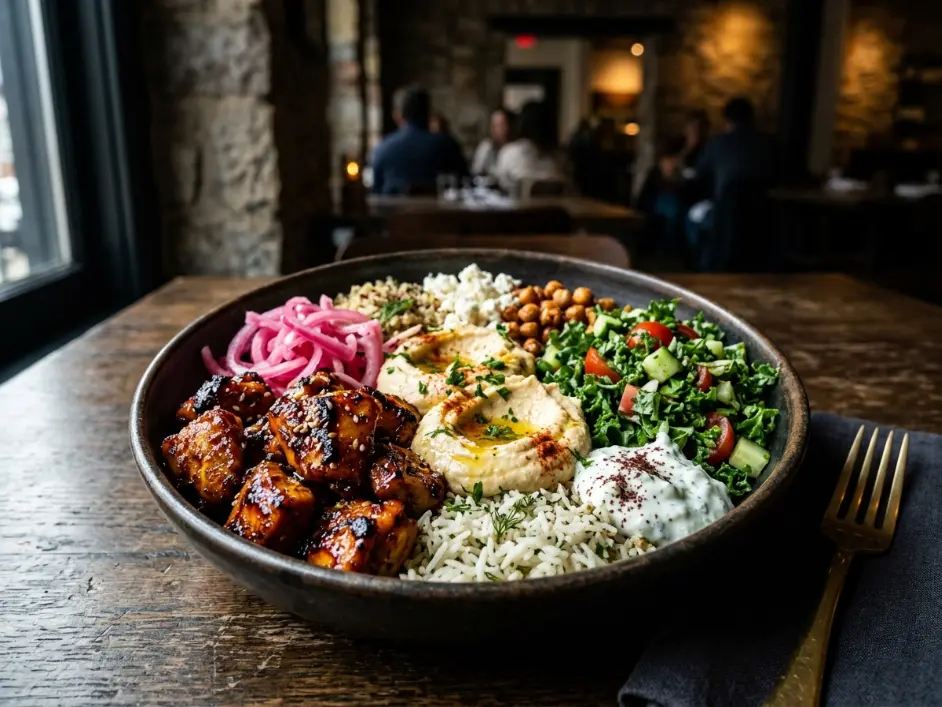
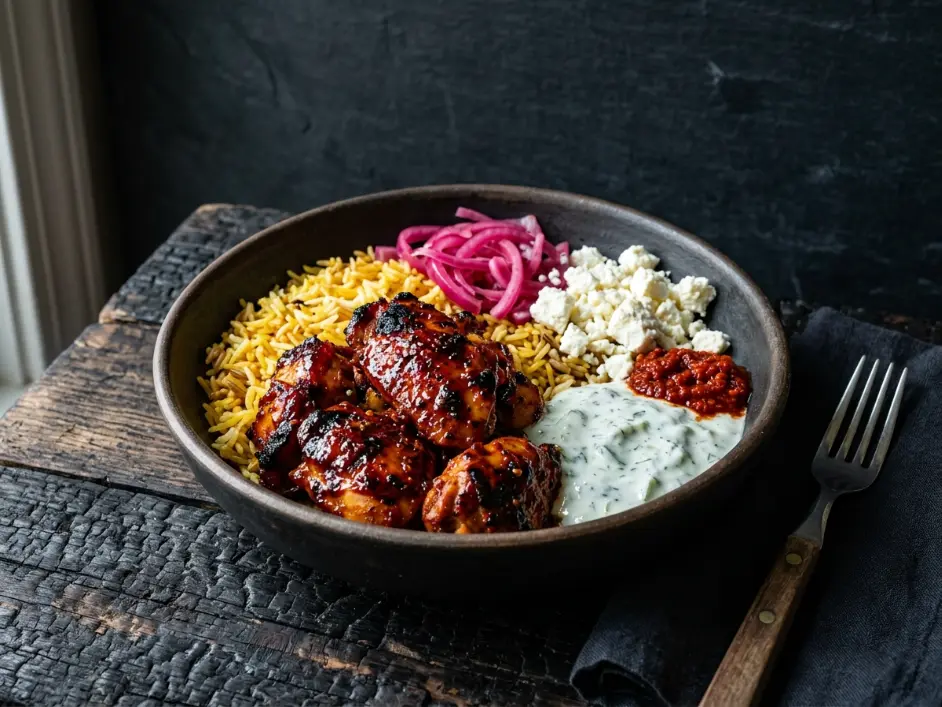
Imagine digging a fork into a vibrant, multi-layered Mediterranean feast where smoky, sweet-heat crimson glazed chicken thighs collapse with absolute tenderness alongside crisp pickled shallots and cool, herb-flecked tzatziki. Now, contrast that with the disastrous kitchen reality: dry, chalky white meat chicken choking under a bitter, grainy chili paste coat that burns to an unappealing black soot in the skillet before the sugars can even caramelize.
I have tested this method across dozens of batches in the Expert Palate test kitchen, adjusting one variable at a time to isolate exactly what makes the difference between a split, oily mess and a perfectly bound, velvety emulsion. Cava Honey Harissa Chicken Bowls are a masterclass in thermal sugar control, capsaicin dispersion, and protein moisture retention—transforming simple ingredients into the fast-casual Mediterranean phenomenon that has redefined healthy bowl culture.
This is not just about mixing chicken with hot sauce and honey. This is about understanding how fructose behaves under high heat, how fat-soluble capsaicin needs lipid carriers, and how dark meat structure prevents moisture loss during aggressive searing.
When planning Starbucks Pumpkin Spice Bakery Muffins, understanding the science behind restaurant classics transforms ordinary grain bowls into crave-worthy experiences.
5 Incredible Molecular Laws for High-Domed Starbucks Pumpkin Spice Bakery Muffins
The Thermodynamics of Maillard Reactions and Capsaicin-Lipid Solubilization
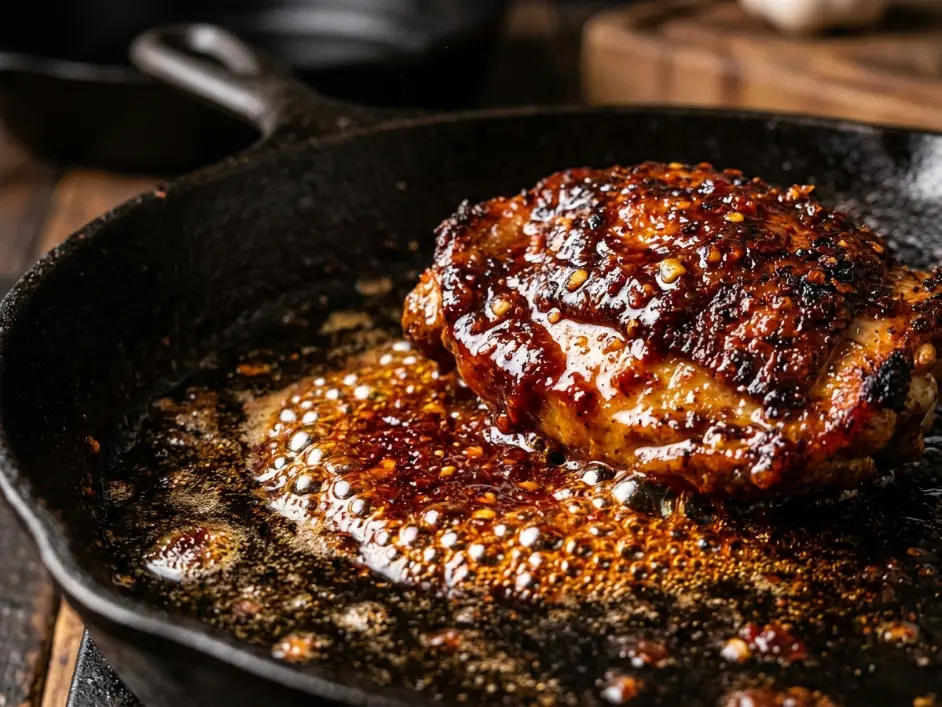
The secret to perfectly glazed Cava Honey Harissa Chicken Bowls lies in understanding sugar thermodynamics. Honey is primarily fructose, which caramelizes at a much lower temperature than sucrose (table sugar)—around 230°F / 110°C compared to 320°F / 160°C. This means honey-based glazes burn easily if your pan temperature is uncontrolled.
When you sear chicken in a honey-harissa marinade over high heat, the fructose sugars can scorch and turn bitter before the chicken develops proper Maillard browning. The solution is temperature modulation—start with medium-high heat to sear the protein, then reduce to medium once the glaze is applied to allow gentle caramelization without carbonization.
By analyzing the precise moisture retention profiles and enzyme breakdowns of skinless chicken thighs through verified analytical data from the USDA FoodData Central database, we understand that dark meat contains approximately 20 percent more intramuscular fat than breast meat, which acts as a moisture buffer during high-heat cooking.
In simple terms: the fat in chicken thighs keeps the meat juicy even when you crank up the heat to caramelize the glaze. Chicken breast, being leaner, dries out before the sugars can properly brown.
Poultry Amino Acids+Fructose Honey Sugars+High-Heat Cast Iron Pan Dynamics→Smoky Capsaicin Glaze Polymerization
Harissa paste contains capsaicin—the compound responsible for chili heat. Capsaicin is fat-soluble, not water-soluble, which means it disperses evenly when mixed with olive oil or the natural fats in chicken thighs. Without sufficient lipids, capsaicin molecules cluster together, creating harsh, localized heat pockets that overwhelm the palate instead of providing a balanced, pleasant warmth.
This is why authentic harissa paste is made with olive oil as a base—the fat carries the heat evenly across your tongue, preventing the harsh, one-dimensional burn of dried chili flakes or vinegar-based hot sauces.
Pro Sourcing & Ingredient Selection
The chicken is your foundation. Choose boneless, skinless chicken thighs over breasts at high-end butcher counters or premium grocery stores. Thighs contain more intramuscular fat and connective tissue, which prevents them from drying out during the aggressive searing required to caramelize the honey-harissa glaze.
Chicken breast is too lean—it becomes chalky and dry before the glaze can properly develop. If you must use breast meat, pound it to an even ½-inch thickness and reduce cooking time significantly to prevent moisture loss.
For the harissa, source authentic North African red harissa paste in tubes or jars at international specialty grocers like Whole Foods, Mediterranean markets, or Middle Eastern shops. Look for brands like Mina, Casablanca Market, or Le Phare du Cap Bon. The ingredient list should include roasted red peppers, chili peppers, garlic, olive oil, and spices—not just generic “chili powder” or excessive vinegar.
Avoid thin, liquid hot sauces labeled “harissa style”—these are usually vinegar-based condiments that lack the thick, paste-like consistency and complex fermented flavor of traditional harissa. The paste should be deep red, thick enough to cling to a spoon, and intensely aromatic with smoky, sweet pepper notes.
For the honey, choose thick, single-origin wildflower or clover honey from local beekeepers or premium grocery sections. The honey should be viscous and slow-pouring, not thin and watery like commercially processed varieties. Thick honey provides better adhesion to the chicken and a more robust sugar backbone for caramelization.
The olive oil matters too. Use extra virgin olive oil with a relatively high smoke point (around 375-405°F / 190-207°C)—look for varieties labeled “high-heat” or use a blend of olive oil and neutral oil like avocado oil to raise the smoke point slightly.
Ingredients Table
| Category | Ingredient | US Customary | Metric |
|---|---|---|---|
| The Sweet Heat Protein Core | Boneless, skinless chicken thighs, chopped into 2-inch pieces | 1.5 lbs | 680g |
| North African harissa paste (chili concentrate) | 3 tablespoons | 45ml | |
| Organic pure wildflower honey (viscous liquid) | 2 tablespoons | 30ml | |
| Extra virgin olive oil (emulsifier fluid) | 2 tablespoons | 30ml | |
| Fresh squeezed lemon juice (acid balance) | 1 tablespoon | 15ml | |
| Minced garlic cloves (aromatic sulfurs) | 3 cloves | 9g | |
| Dried oregano | 1 teaspoon | 2g | |
| Ground cumin | 1 teaspoon | 2g | |
| Fine sea salt | ½ teaspoon | 3g | |
| The Grain and Greens Foundation | Cooked basmati rice or fluffy quinoa grains | 3 cups | 555g |
| Mixed greens or chopped romaine | 2 cups | 100g | |
| Diced cucumber | 1 cup | 150g | |
| Cherry tomatoes, halved | 1 cup | 150g | |
| The Mediterranean Mezze Accents | Pickled red onions | ½ cup | 75g |
| Crumbled feta cheese | ½ cup | 75g | |
| Prepared tzatziki dip or thick hummus spread | ¾ cup | 180ml |
Common Kitchen Blunders
| The Kitchen Blunder | What Actually Happens (Scientific Reality) | The Chef Joseph Fix |
|---|---|---|
| Using chicken breasts which dry out instantly under high-heat glazes | Lean breast meat contains insufficient intramuscular fat to buffer moisture loss, becoming chalky and dry before glaze caramelizes | Use boneless, skinless chicken thighs which contain 20% more fat, providing moisture protection during aggressive searing |
| Pan-frying with cold meat which causes rapid temperature drops and boiling | Cold protein entering hot pan drops surface temperature below Maillard threshold, causing meat to release liquid and steam instead of sear | Bring chicken to room temperature for 20 minutes before cooking to minimize thermal shock and maintain pan heat |
| Overloading the pan which steams the chicken instead of searing it | Crowding releases excessive moisture that cannot evaporate quickly, creating steam environment that prevents browning and glaze adhesion | Cook chicken in two batches with space between pieces, allowing moisture to escape and surface contact for proper crust development |
| Letting the honey burn into bitter black carbon pieces | Fructose in honey caramelizes at low temperatures (230°F) and burns rapidly if heat is too high, creating acrid bitterness | Start searing over medium-high heat, then reduce to medium when basting with glaze to allow gentle caramelization without carbonization |
| Omitting acid like lemon juice to balance the heavy capsaicin heat | Without acidic counterpoint, capsaicin heat tastes one-dimensional and harsh, overwhelming the palate without flavor complexity | Add fresh lemon juice to marinade to brighten flavors and provide acidic contrast that balances sweet honey and spicy harissa |
| Using generic chili powder instead of complex fermented harissa paste | Dried chili powder lacks the fermented depth, olive oil emulsion, and roasted pepper sweetness of authentic harissa, creating flat heat | Source authentic North African harissa paste in tubes or jars with roasted peppers, garlic, and olive oil as primary ingredients |
Step-by-Step Method
Step 1: The Lipid-Harissa Emulsion and Emollient Infusion
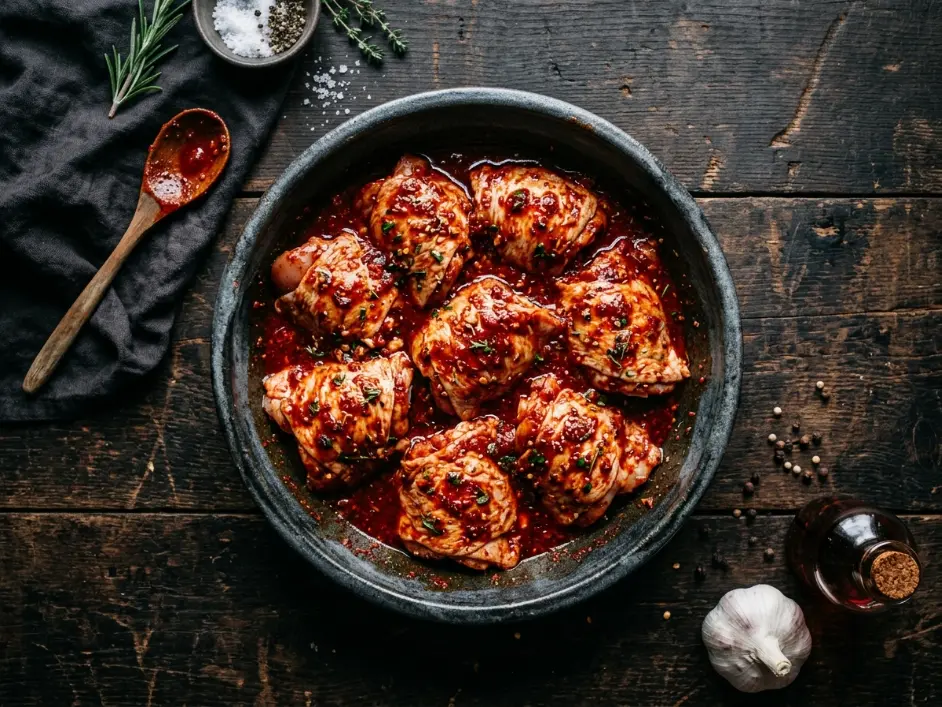
In a large glass or ceramic mixing bowl, whisk together the harissa paste, pure wildflower honey, extra virgin olive oil, fresh squeezed lemon juice, minced garlic, dried oregano, ground cumin, and fine sea salt until completely smooth and uniform in color—a deep, vibrant crimson-red.
The olive oil is critical here—it emulsifies the thick harissa paste and helps it coat the chicken evenly. Without enough oil, the paste clumps and creates uneven flavor distribution.
Add the chopped chicken thigh pieces to the marinade and toss thoroughly with your hands or a large spoon until every surface is completely coated in the glossy red mixture. Make sure there are no dry spots—the marinade should cling thickly to the meat.
Cover the bowl with plastic wrap and refrigerate for 30 minutes to 2 hours. This resting period allows the acids in the lemon juice and harissa to begin tenderizing the protein structure while the olive oil penetrates the surface.
Do not marinate for more than 4 hours—the acid will begin to “cook” the exterior of the chicken, creating a mushy texture.
Step 2: The High-Heat Skillet Sear and Sugar Searing
Remove the chicken from the refrigerator and let it sit at room temperature for 15-20 minutes before cooking. Cold meat causes rapid temperature drops in the pan, preventing proper searing.
Heat a heavy cast iron skillet or grill pan over medium-high heat until it is very hot—you should see faint wisps of smoke rising from the surface. Add a thin drizzle of neutral oil (avocado or grapeseed) and swirl to coat.
Working in batches to avoid crowding, lay the marinated chicken pieces flat in the pan, leaving at least an inch of space between each piece. Do not move them once they hit the pan—let them sear undisturbed for 4-5 minutes.
You will hear an aggressive sizzle. This is good. The high heat is creating Maillard browning on the protein surface while the marinade begins to caramelize.
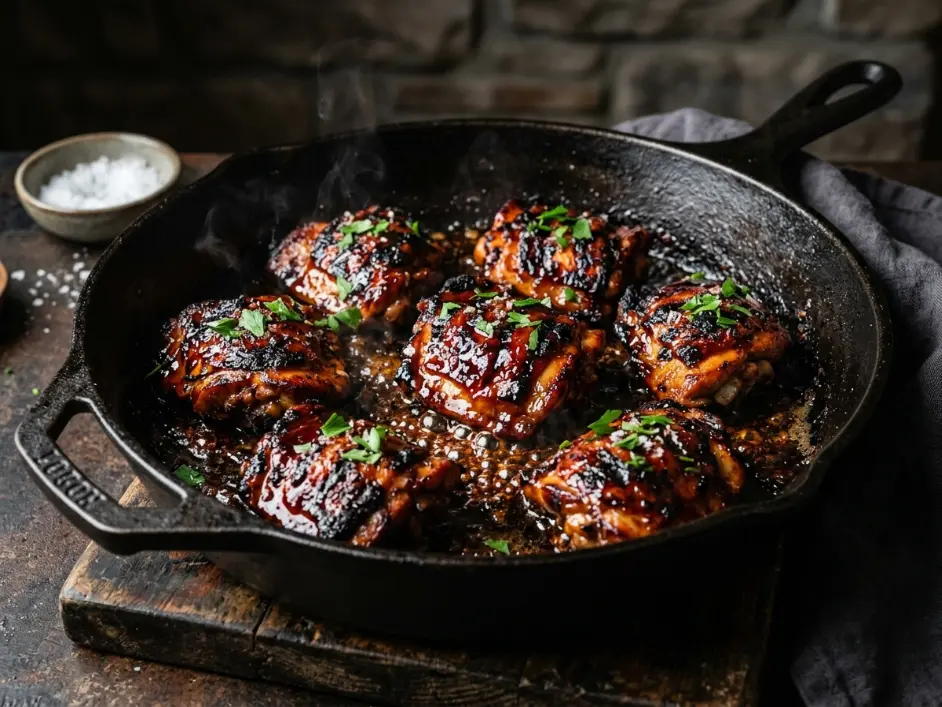
After 5 minutes, reduce the heat to medium to prevent the honey from burning. Use metal tongs to flip each piece over, revealing a deep, mahogany-brown crust with sticky, caramelized edges.
As discussed in flavor layer building concepts thoroughly detailed over at Serious Eats, allowing cooked meats to rest for seven full minutes redistributes essential moisture, keeping the interior juicy instead of allowing all the liquid to run out onto the cutting board.
Cook the second side for an additional 4-5 minutes, basting occasionally with any leftover marinade from the bowl using a silicone pastry brush. The glaze should be bubbling and thick, not watery or separated.
Check the internal temperature with an instant-read thermometer—the thickest part of the chicken should reach 165°F / 74°C. Remove the chicken from the pan and transfer to a clean plate. Tent loosely with foil and let rest for 5-7 minutes before serving.
Step 3: Fast-Assembling the Grains and Leafy Baselines
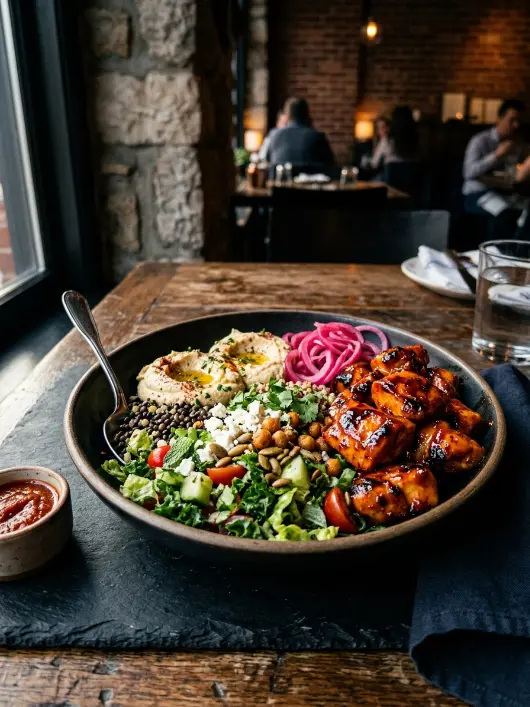
While the chicken rests, prepare your bowl foundations. Divide the cooked basmati rice or quinoa evenly among four serving bowls as the base layer.
Add a handful of mixed greens, chopped romaine, or arugula to one side of the rice. Layer diced cucumber and halved cherry tomatoes next to the greens, creating distinct color zones rather than mixing everything together.
This visual separation is part of the appeal—each component maintains its identity and texture, allowing diners to customize each bite.
Step 4: The Acid-Dairy Balancing Toppings Overlay
Slice the rested honey-harissa chicken into smaller pieces if desired, or leave whole for dramatic presentation. Arrange the glazed chicken pieces over the rice and greens.
Top with pickled red onions, crumbled feta cheese, and generous dollops of thick tzatziki or hummus. The cool, tangy dairy provides essential contrast against the sweet-spicy heat of the chicken.
Drizzle any remaining pan glaze over the chicken for extra flavor intensity. Garnish with fresh herbs like parsley, mint, or dill if desired.
Serve immediately while the chicken is still warm and the contrasts between hot protein, cool dairy, and crisp vegetables are most pronounced.
Chef Joseph’s Insight
“Cooking is not just chemistry — it is memory made edible. When others gather around a table and tear off that first piece of warm, crunchy bread to plunge it into a bubbling, velvety center, the science fades away and pure connection takes over. The most powerful moves in the kitchen are almost always the quiet ones. The overnight rest. The proper preheat. The two-minute wait before you plate. It is the patience to wring out every last drop of moisture from your greens, and the care you take in picking the right cheese. Take your time, respect the process, and your kitchen will always reward you.”
— Chef Joseph | Expert Palate
4 Flawless Thermodynamic Secrets to Ultimate Chipotle Cilantro-Lime Rice and Barbacoa Beef
Technical Data & Nutrition Table
Per Serving (1 complete bowl):
| Nutrient | Amount |
|---|---|
| Calories | 520 kcal |
| Protein | 32g |
| Total Fat | 18g |
| Saturated Fat | 5g |
| Carbohydrates | 58g |
| Sodium | 680mg |
| Cholesterol | 115mg |
Note: Nutritional values are careful kitchen estimates based on standard ingredient databases and may vary depending on specific brands and preparation methods used.
Food Safety & Thermal Management
Because these bowls contain chicken, proper thermal management is essential. The safe minimum internal cooking temperature for all poultry is 165°F / 74°C, which ensures that any potential pathogens are destroyed.
The danger zone for bacterial growth spans 40°F to 140°F / 4°C to 60°C. Cooked chicken left at room temperature for more than two hours enters this zone and should be discarded to prevent foodborne illness risk.
Hosting casual buffet style bowl-building lunch bars or family dinner setups safely requires sticking close to the strict temperature rules outlined by the Food Network. If serving buffet-style, keep hot components (chicken, rice) above 140°F / 60°C in chafing dishes and cold components (tzatziki, vegetables) below 40°F / 4°C on ice.
Never mix hot and cold components until the moment of serving, and never leave assembled bowls sitting at room temperature for extended periods.
Storage & Reheating Matrix
| Item State | Fridge Storage Limit | Freezer Safety Option | The Absolute Best Reheating Method |
|---|---|---|---|
| Marinated Raw Chicken Thigh Portions | 2 days in airtight container in refrigerator | Up to 3 months in freezer-safe bags; thaw in fridge overnight | Cook from refrigerated or thawed state using standard searing method |
| Fully Assembled Cooked Glazed Chicken Meat | 4 days in airtight container in refrigerator | Up to 2 months if separated from grains and vegetables | Reheat in covered skillet over low heat with 2 tablespoons water to loosen glaze; avoid microwave which hardens chicken fibers and makes glaze sticky |
Copycat Cava Honey Harissa Chicken Bowls
Ingredients
Equipment
Method
- Whisk the harissa paste, pure wildflower honey, extra virgin olive oil, fresh squeezed lemon juice, minced garlic, dried oregano, ground cumin, and fine sea salt together in a large glass mixing bowl until completely smooth and uniform in deep crimson-red color.
- Toss the chopped boneless chicken thigh pieces into the deep marinade bowl, coating every surface completely with the glossy red mixture, ensuring no dry spots remain.
- Cover the bowl tightly with plastic wrap and refrigerate for thirty minutes to two hours to allow the acids to begin tenderizing the protein structure.
- Remove the marinated chicken from the refrigerator and let it sit at room temperature for fifteen to twenty minutes before cooking to minimize thermal shock when it hits the hot pan.
- Preheat a heavy cast iron skillet or grill pan over medium-high heat until very hot with faint wisps of smoke rising from the surface, then add a thin drizzle of neutral oil.
- Lay the marinated chicken pieces flat in the hot skillet with at least one inch of space between each piece, working in batches if necessary to avoid crowding.
- Sear the chicken undisturbed for four to five minutes without moving to achieve optimal Maillard reaction crusting and caramelization development.
- Reduce the heat to medium to prevent honey from burning, then flip each piece over using metal tongs to reveal deep mahogany-brown crust with sticky caramelized edges.
- Cook the second side for an additional four to five minutes, basting occasionally with any leftover marinade from the bowl using a silicone pastry brush.
- Check the internal temperature with an instant-read thermometer to ensure the thickest part of the chicken reaches one hundred sixty-five degrees Fahrenheit for food safety.
- Remove the glazed chicken from the pan and transfer to a clean plate, tenting loosely with foil and letting rest for five to seven minutes to redistribute internal moisture.
- While the chicken rests, divide the cooked basmati rice or quinoa evenly among four serving bowls as the foundation layer.
- Add a handful of mixed greens or chopped romaine to one side of the rice, then layer diced cucumber and halved cherry tomatoes next to the greens in distinct color zones.
- Slice the rested honey-harissa chicken into smaller pieces if desired or leave whole, then arrange the glazed chicken pieces over the rice and greens.
- Top each bowl with pickled red onions, crumbled feta cheese, and generous dollops of thick tzatziki dip or hummus spread.
- Drizzle any remaining pan glaze over the chicken for extra flavor intensity and serve immediately while the chicken is still warm.
Notes
Frequently Asked Culinary Questions
Why did the honey glaze on my chicken burn to black soot before the meat cooked through?
This happens when the pan temperature is too high for too long. Honey contains fructose, which caramelizes at a much lower temperature than regular sugar (230°F vs 320°F). Start with medium-high heat to get a good sear, then immediately reduce to medium once you flip the chicken. This allows the glaze to caramelize gently without burning while the interior finishes cooking.
Can I swap out the chicken thighs for chicken breast without altering the marinade?
You can, but the results will be significantly different. Chicken breast is much leaner and dries out quickly under high heat. If you must use breast, pound it to an even ½-inch thickness, reduce cooking time by 2-3 minutes per side, and watch the internal temperature carefully. Remove it from heat as soon as it hits 160°F (it will carry over to 165°F while resting).
How do I fix the harissa marinade if the spice level turns out way too hot for my family?
Mix additional honey and Greek yogurt into the marinade to dilute the capsaicin concentration. Dairy fats bind to capsaicin molecules and make them less bioavailable to your heat receptors, effectively reducing perceived spiciness. Start by adding 1 tablespoon each of honey and yogurt, mix thoroughly, and taste again. Repeat until the heat level is tolerable.
What is the best grain alternative to basmati rice that matches the texture profile of Cava?
Fluffy couscous or quinoa are excellent alternatives with similar light, separated textures. For couscous, use the Israeli (pearl) variety, which has a larger grain size and better texture retention. For quinoa, rinse thoroughly before cooking to remove bitter saponins, and cook in a 1:2 ratio of quinoa to water (or broth) for maximum fluffiness. Farro and bulgur wheat also work well for a chewier, nuttier alternative.