5 Incredible Molecular Laws for Flawless Texas Roadhouse Cinnamon Honey Butter Rolls
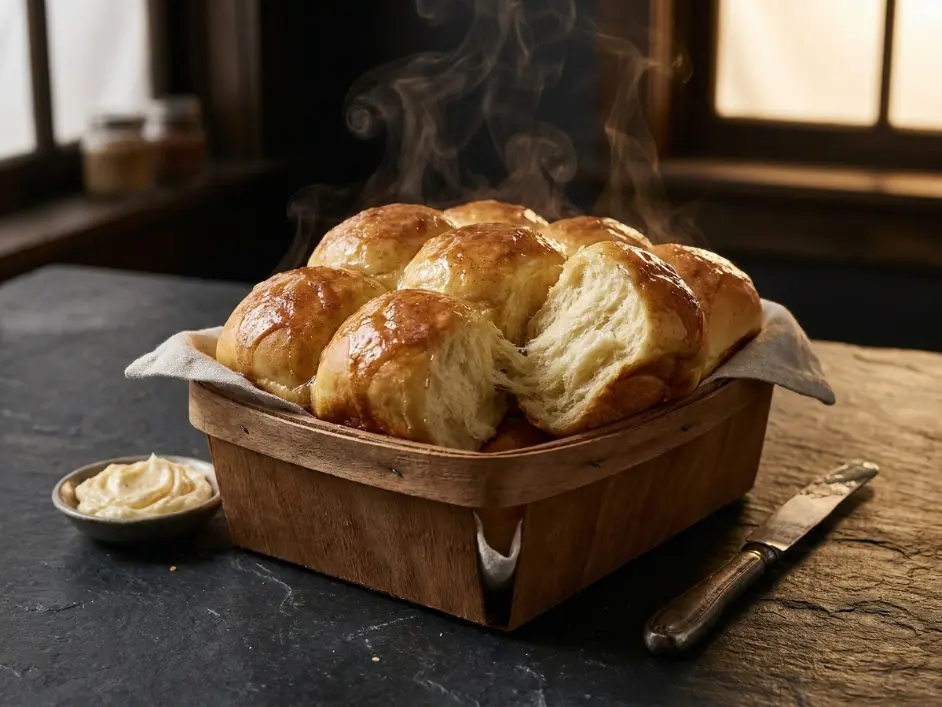
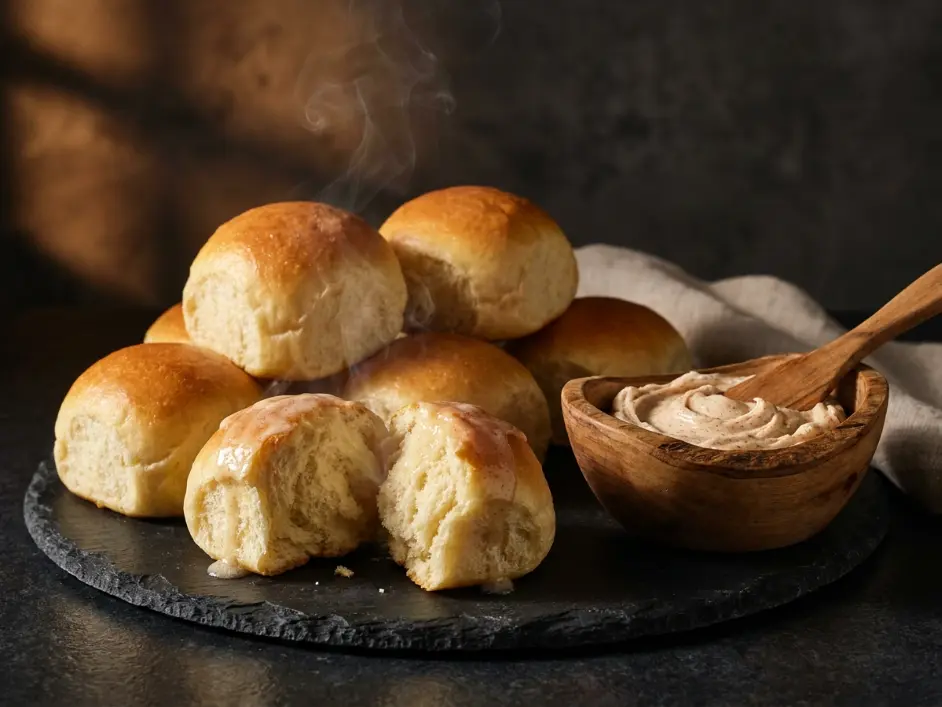
Imagine tearing into a warm, cloud-like yeasted pastry square that yields effortlessly, venting a sweet puff of steam before being slathered in a velvety, whipped spiced spread that melts into the crumb matrix. The honey-butter glides across every tender fiber, creating an experience that feels more like dessert than bread. Then reality hits: a heavy, dense, brick-like bread structure that fails to rise, paired with a grainy, separated honey-butter mix where liquid sweetener pools beneath a greasy lipid layer.
I have tested this method across dozens of batches in the Expert Palate test kitchen, adjusting one variable at a time to isolate exactly what makes the difference between a split, oily mess and a perfectly bound, velvety emulsion. Texas Roadhouse Cinnamon Honey Butter Rolls are a masterclass in gluten management, yeast fermentation control, and lipid emulsification—transforming simple pantry ingredients into the steakhouse phenomenon that has captivated diners for decades.
This is not just about mixing dough and whipping butter. This is about understanding how fat molecules interrupt protein bonding, how carbon dioxide creates structural expansion, and how mechanical aeration stabilizes honey suspensions.
When planning steakhouse-inspired menus or holiday baking projects, understanding the science behind iconic bread baskets transforms ordinary rolls into unforgettable centerpieces.
5 Flawless Molecular Principles for a Mind-Blowing Copycat Olive Garden Creamy Tuscan Garlic Chicken
The Biochemistry of Gluten Elasticity and Sugar-Lipid Emulsification
Bread dough is fundamentally a network of two proteins—glutenin and gliadin—that form elastic gluten strands when hydrated and kneaded. These strands trap carbon dioxide produced by yeast fermentation, creating the airy structure we associate with great bread. But in enriched doughs containing fat and sugar, the chemistry changes dramatically.
Lipids from whole milk and softened butter coat the gluten strands, physically interrupting the protein bonds and preventing them from forming long, tough networks. This creates a tender, cake-like crumb rather than the chewy texture of artisan bread. The sugar feeds the yeast but also weakens gluten development, further contributing to softness.
By analyzing the enzymatic performance and starch structures of standard baking flours through cross-referencing nutritional parameters from the USDA FoodData Central database, we understand that all-purpose flour with 10-12 percent protein creates the ideal balance—enough gluten for structure, but not so much that the fat cannot tenderize it.
In simple terms: the fat molecules slip between the protein strands like oil between gears, allowing them to slide past each other smoothly instead of forming tight, chewy bonds. This is what creates that signature pull-apart texture.
Yeast Starch Fermentation+Lipid Gluten Barriers+Carbon Dioxide Cavitation→Ultra Tender Expanded Crumb Matrix
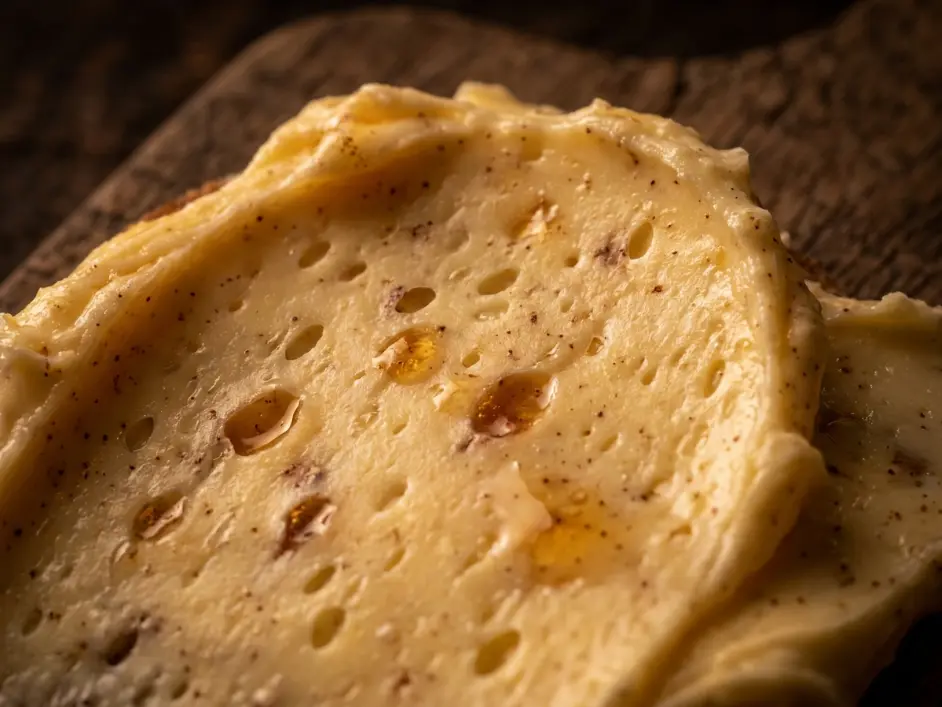
The whipped honey butter presents its own emulsification challenge. Honey is hygroscopic—it attracts and holds water molecules. When you try to mix it with pure fat (butter), the two substances naturally want to separate. The solution is mechanical aeration: whipping incorporates millions of tiny air bubbles that physically stabilize the suspension, preventing the honey from weeping out and the butter from turning greasy.
Temperature is critical here. Softened butter (around 65°F / 18°C) whips into a stable foam, while cold butter stays dense and hard, and melted butter cannot hold air at all.
Pro Sourcing & Ingredient Selection
The flour is your foundation. Choose high-grade unbleached bread flour or premium all-purpose flour at specialty markets. Bread flour (12-14 percent protein) creates slightly more structure, while all-purpose flour (10-12 percent protein) produces a softer, more tender roll. For authentic Texas Roadhouse Cinnamon Honey Butter Rolls texture, all-purpose is ideal.
Avoid bleached flour, which has been chemically treated to age it faster. Unbleached flour develops naturally and produces better flavor and texture.
For the yeast, instant yeast and active dry yeast both work, but instant yeast is more reliable because it does not require proofing and activates faster. If using active dry yeast, you must proof it in warm liquid first to verify it is alive.
The milk matters enormously. Use organic, pasteurized whole milk—not skim or low-fat alternatives. The milk fat contributes to the tender crumb and rich flavor. Whole milk is approximately 3.25 percent fat, which is enough to create noticeable tenderness without making the dough greasy.
For the butter, choose European-style cultured butter with a milkfat content above 82 percent. American butter is typically 80 percent fat, with the remaining 20 percent being water and milk solids. European butter has less water, which means richer flavor and better emulsification properties.
The honey is critical for the signature spread. Pick deep amber, raw clover or orange blossom honey from local apiaries. Raw honey has not been heat-treated or ultra-filtered, so it retains natural enzymes and complex flavor compounds. It is also thicker and less watery than processed honey, which helps the whipped butter hold together without separating.
For the cinnamon, use Saigon cinnamon (also called Vietnamese cinnamon) rather than standard cassia cinnamon. Saigon cinnamon has a higher oil content and more intense, sweet-spicy flavor that stands up beautifully against the richness of honey and butter.
Ingredients Table
| Category | Ingredient | US Customary | Metric |
|---|---|---|---|
| The Enriched Dough Foundation | High-grade all-purpose flour (wheat starch) | 4 cups | 500g |
| Warm whole milk (dairy liquid) | 1 cup | 240ml | |
| Unsalted sweet cream butter, melted warm | ¼ cup | 57g | |
| Large whole egg, beaten (structural binder) | 1 egg | 50g | |
| Fine sea salt (crystal minerality) | 1 teaspoon | 5g | |
| The Activation Elements | Active dry yeast or instant granules | 2¼ teaspoons | 7g |
| Granulated white sugar (fermentation fuel) | ¼ cup | 50g | |
| The Cinnamon Honey Emulsion | European-style unsalted butter, softened fat | ½ cup | 113g |
| Raw concentrated clover honey (sweetener) | ¼ cup | 85g | |
| Finely ground Saigon cinnamon (aromatic spice) | 2 teaspoons | 4g |
Common Kitchen Blunders
| The Kitchen Blunder | What Actually Happens (Scientific Reality) | The Chef Joseph Fix |
|---|---|---|
| Activating yeast in boiling milk which terminates the microorganisms instantly | Temperatures above 120°F kill yeast cells by denaturing their cellular proteins, preventing fermentation and resulting in flat, dense rolls | Use warm milk between 105-110°F, testing with a thermometer to ensure optimal yeast activation without cell death |
| Over-kneading the enriched dough into a rubbery bread structure | Excessive gluten development creates tight protein networks that cannot be fully tenderized by fat, producing chewy texture instead of soft | Knead only until dough is smooth and springs back slowly when poked—approximately 8-10 minutes by hand or 5-6 minutes in a stand mixer |
| Using cold butter for the spread which prevents proper aeration | Cold butter molecules are too rigid to trap air bubbles during whipping, resulting in a dense, hard spread that will not melt smoothly | Soften butter to 65°F (room temperature for 1-2 hours) so it whips into a light, fluffy foam that holds honey in suspension |
| Omitting a pinch of salt from the sweet butter compound | Without salt to balance sweetness and enhance flavor perception, the honey butter tastes one-dimensionally cloying and flat | Add ¼ teaspoon fine sea salt to the whipped butter to amplify the honey and cinnamon flavors through contrast |
| Rushing the secondary rising window leaving the baked product dense and heavy | Insufficient proofing means yeast has not produced enough carbon dioxide to expand the dough fully, creating tight, heavy crumb structure | Allow shaped rolls to rise for 30-40 minutes in a warm environment until nearly doubled in size before baking |
| Baking at too high a temperature causing hard crusts and raw centers | Temperatures above 375°F set the exterior too quickly, preventing full expansion and creating a thick, hard crust before the interior cooks through | Bake at 350°F to allow gradual, even heat penetration that sets structure while maintaining soft, golden-brown crust |
Step-by-Step Method
Step 1: Thermal Yeast Hydration and Activation
Warm the whole milk to 105-110°F / 40-43°C using a small saucepan over low heat or a microwave in 15-second increments. Test the temperature with an instant-read thermometer—it should feel warm but not hot when you dip your finger in.
Pour the warm milk into a large mixing bowl and add the granulated sugar and yeast. Whisk gently to combine, then let the mixture sit undisturbed for 5 to 10 minutes. The yeast will activate and you will see it foam and bubble on the surface, indicating that the microorganisms are alive and producing carbon dioxide.
If the mixture does not foam, your yeast is dead (either expired or killed by too-hot liquid) and you need to start over with fresh yeast and properly tempered milk.
Step 2: Lipid Enriched Dough Synthesis and Kneading
Add the melted butter (cooled to warm, not hot), beaten egg, and salt to the activated yeast mixture. Whisk to combine all the liquid ingredients thoroughly.
Add 2 cups of the flour and stir with a wooden spoon until a thick batter forms. This initial mixing hydrates the flour and begins gluten development.
Gradually add the remaining flour, ½ cup at a time, stirring after each addition, until a soft, shaggy dough forms that pulls away from the sides of the bowl. You may not need all the flour, or you may need a bit more—dough consistency varies based on humidity and flour protein content.
Transfer the dough to a lightly floured surface and knead by hand for 8 to 10 minutes, or use a stand mixer fitted with a dough hook on medium speed for 5 to 6 minutes. The dough should become smooth, elastic, and slightly tacky but not sticky.
As discussed in dough proofing principles detailed over at Serious Eats, maintaining an optimal environment between 80 and 85 degrees Fahrenheit accelerates yeast gas pocket production, creating the airy texture that defines Texas Roadhouse Cinnamon Honey Butter Rolls.
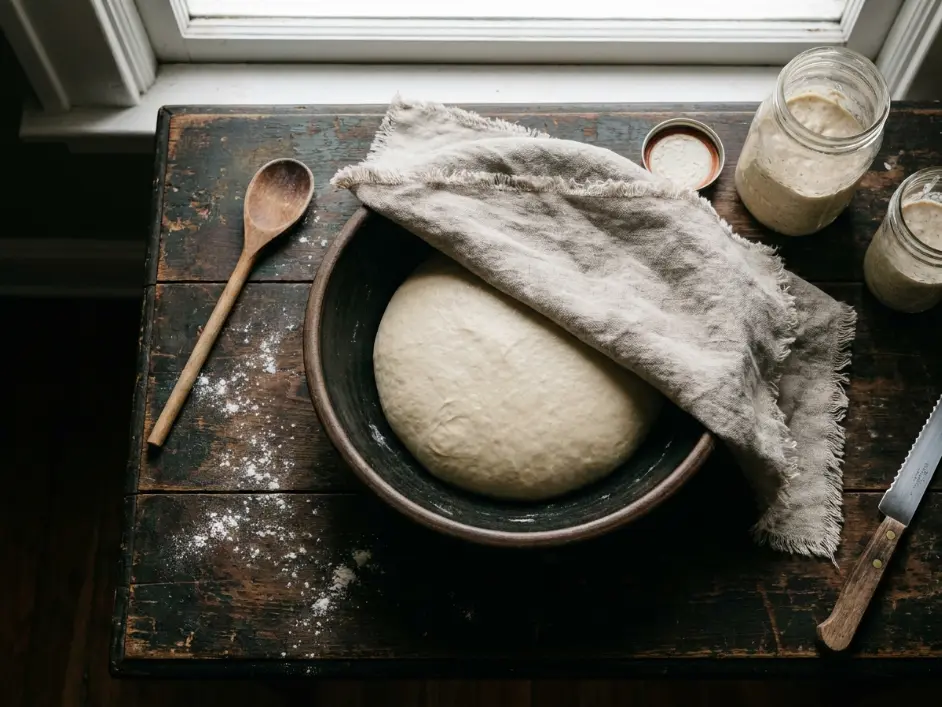
Form the dough into a smooth ball and place it in a large bowl greased with butter or neutral oil. Turn the dough to coat all sides with fat, then cover the bowl tightly with plastic wrap or a damp kitchen towel.
Let the dough rise in a warm, draft-free location for 1 hour, or until doubled in size. A turned-off oven with the light on is an ideal proofing environment.
Step 3: Square Cutting and Secondary Expansion
Once the dough has doubled, punch it down gently to release the accumulated gas. Turn it out onto a lightly floured surface.
Use a rolling pin to roll the dough into a large rectangle approximately 12 x 16 inches and about ½ inch thick. Try to maintain even thickness throughout—this ensures all the rolls bake at the same rate.
Using a sharp pastry wheel or pizza cutter, cut the dough into 16 equal squares. You can measure and mark with a knife first if you want perfectly uniform rolls, or eyeball it for a more rustic look.
Arrange the squares on a parchment-lined rimmed baking sheet, spacing them about 1 inch apart. They will expand during the second rise and touch slightly, which creates the signature soft sides.
Cover the pan loosely with plastic wrap or a clean kitchen towel and let the rolls rise for 30 to 40 minutes in a warm spot, until they look puffy and have nearly doubled in size.
Preheat your oven to 350°F / 177°C during the final 15 minutes of the second rise.
Step 4: High Convection Baking and Whipped Emulsification
Bake the risen rolls for 12 to 15 minutes, until the tops are golden brown and the internal temperature reaches 190-200°F / 88-93°C when measured with an instant-read thermometer inserted into the center of a middle roll.
The rolls should sound hollow when tapped on the bottom, and they should spring back when pressed gently.
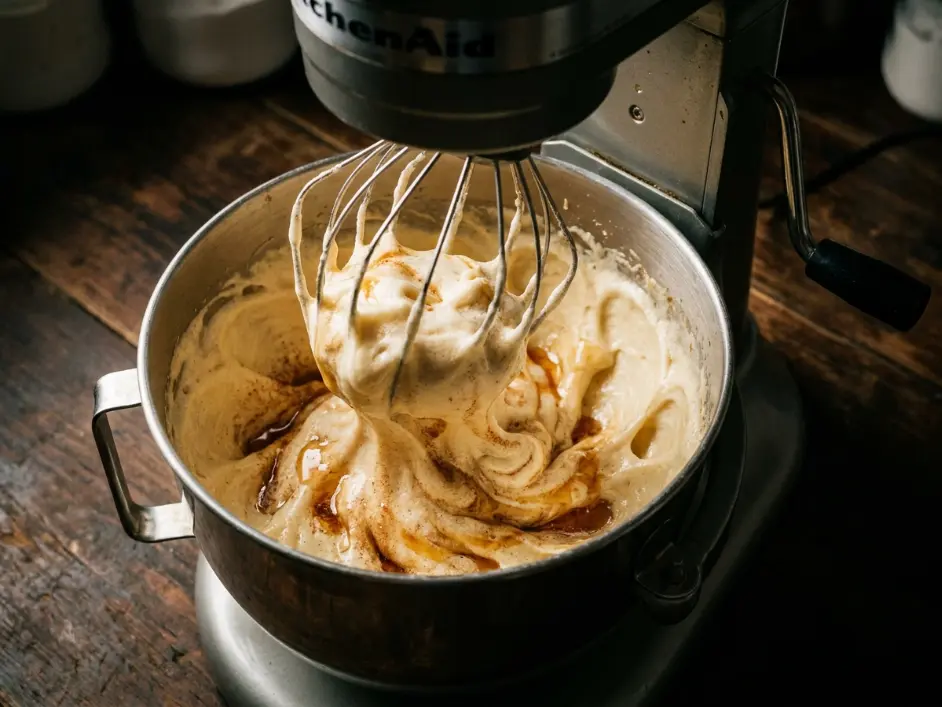
While the rolls bake, make the whipped cinnamon honey butter. In a stand mixer fitted with the whisk attachment (or using a hand mixer), combine the softened European-style butter, raw honey, and ground Saigon cinnamon.
Whip on medium-high speed for 3 to 5 minutes, until the mixture is light, fluffy, and pale in color. The texture should be cloud-like with visible air incorporation—not dense or greasy.
Scrape down the sides of the bowl occasionally to ensure even mixing. The finished spread should hold soft peaks when you lift the whisk.
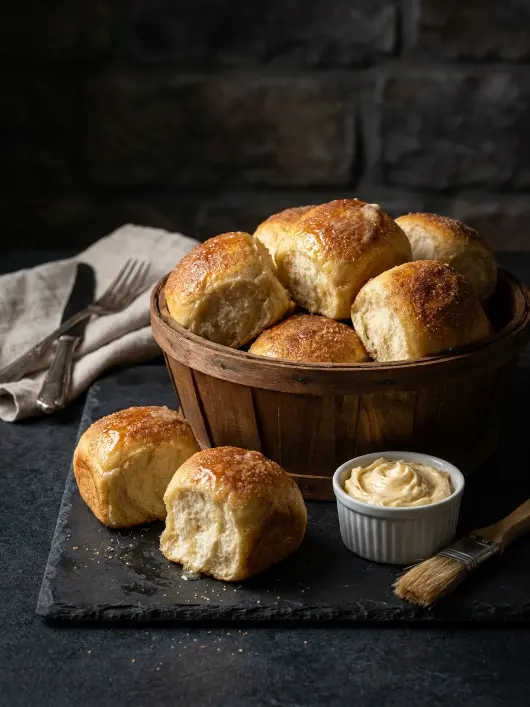
Remove the rolls from the oven and immediately brush the tops with additional melted butter while they are still hot. This creates a glossy, soft crust and adds extra richness.
Let the rolls cool on the pan for about 5 minutes, then transfer to a serving basket lined with a clean kitchen towel to keep them warm.
Serve immediately with the whipped cinnamon honey butter on the side. The rolls are at their absolute best when still warm from the oven.
Chef Joseph’s Insight
“Cooking is not just chemistry — it is memory made edible. When others gather around a table and tear off that first piece of warm, crunchy bread to plunge it into a bubbling, velvety center, the science fades away and pure connection takes over. The most powerful moves in the kitchen are almost always the quiet ones. The overnight rest. The proper preheat. The two-minute wait before you plate. It is the patience to wring out every last drop of moisture from your greens, and the care you take in picking the right cheese. Take your time, respect the process, and your kitchen will always reward you.”
— Chef Joseph | Expert Palate
When building a complete steakhouse-inspired menu around these rolls, think about balancing rich, buttery elements with bright, acidic sides and robust mains.
Technical Data & Nutrition Table
Per Serving (1 roll with 1 tablespoon honey butter):
| Nutrient | Amount |
|---|---|
| Calories | 245 kcal |
| Protein | 5g |
| Total Fat | 11g |
| Saturated Fat | 7g |
| Carbohydrates | 32g |
| Sodium | 180mg |
| Cholesterol | 35mg |
Note: Nutritional values are careful kitchen estimates based on standard ingredient databases and may vary depending on specific brands and preparation methods used.
Food Safety & Thermal Management
Because these rolls contain dairy and eggs, proper thermal management is essential. The safe minimum internal baking temperature for enriched yeast breads is 190-200°F / 88-93°C, which ensures that the dough structure has fully set and any potential pathogens are destroyed.
The danger zone for bacterial growth spans 40°F to 140°F / 4°C to 60°C. Raw dough left at room temperature for extended periods beyond the rising time enters this zone and should be discarded.
Executing bulk yeast baking projects at home for festive family events scales safely by adhering to the clean workspace and cooling protocols found at the Food Network. Always wash hands thoroughly after handling raw dough, and clean all surfaces and utensils with hot, soapy water.
Baked rolls can be left at room temperature for up to 2 hours before they should be refrigerated or discarded. The whipped honey butter, because it contains dairy, should be refrigerated if not consumed within 2 hours.
Never leave dairy-based spreads or enriched breads sitting at room temperature for extended periods, especially in warm weather or crowded indoor environments where ambient temperatures can climb.
Storage & Reheating Matrix
| Item State | Fridge Storage Limit | Freezer Safety Option | The Absolute Best Reheating Method |
|---|---|---|---|
| Fully Baked Un-Buttered Yeast Rolls | 5 days in airtight container at room temperature; 1 week in refrigerator | Up to 3 months if wrapped individually in foil then placed in freezer bags; thaw at room temperature | Wrap loosely in foil and warm in 300°F oven for 8-10 minutes until heated through; avoid microwave which makes bread rubbery |
| Whipped Cinnamon Honey Butter Compound | 2 weeks in airtight container in refrigerator | Up to 3 months in freezer-safe container; thaw in fridge overnight | Bring to room temperature for 1-2 hours before serving for optimal spreading consistency; re-whip briefly if separated |
Copycat Texas Roadhouse Cinnamon Honey Butter Rolls
Ingredients
Equipment
Method
- Warm the whole milk to 105-110 degrees Fahrenheit, then whisk together with sugar and yeast until foaming bubbles develop on the surface.
- Combine the activated yeast mixture with melted butter, beaten egg, salt, and half of the flour, stirring until a thick batter forms.
- Mix steadily using a dough hook while gradually incorporating the remaining flour until a soft, shaggy mass forms that pulls away from bowl sides.
- Knead the dough on a lightly floured surface for eight to ten minutes by hand or five to six minutes in a stand mixer until smooth, springy, and elastic.
- Place the kneaded dough ball inside an oiled bowl, turning to coat all sides, then cover tightly and allow a one hour primary rise in a warm environment.
- Punch down the doubled dough gently to release gas, then roll out into a large rectangle with a uniform thickness of one half inch.
- Cut the dough sheet symmetrically into sixteen square shapes using a sharp pastry wheel tool, arranging them on a parchment-lined baking sheet.
- Cover the squares loosely and allow a secondary rising window of thirty to forty minutes in a warm location until puffy and nearly doubled.
- Bake at 350 degrees Fahrenheit for twelve to fifteen minutes until the surface crust reflects a deep golden brown color and internal temperature reaches 190-200 degrees Fahrenheit.
- While rolls bake, whip the softened European butter, raw honey, and ground cinnamon inside a mixer on high speed for three to five minutes until light, fluffy, and pale.
- Brush the hot oven fresh roll tops with extra melted butter immediately after removing from oven, then serve warm alongside the whipped cinnamon honey spread.
Notes
Frequently Asked Culinary Questions
Why did my rolls turn out heavy and dense like biscuits instead of light and airy?
Dense rolls are almost always the result of insufficient rising time or dead yeast. Ensure your yeast is fresh (check the expiration date) and that your liquid is the correct temperature (105-110°F) when you activate it. Also, allow adequate time for both the first rise (1 hour until doubled) and second rise (30-40 minutes until puffy). Rushing these steps means the yeast has not produced enough carbon dioxide to create an airy structure.
Can I use active dry yeast instead of instant yeast without changing the liquid proportions?
Yes, but you must proof active dry yeast first. Dissolve it in the warm milk with the sugar and wait 5-10 minutes until it foams before proceeding with the recipe. Instant yeast can be mixed directly into the dry ingredients without proofing. Both types require the same amount (2¼ teaspoons) and produce identical results when handled correctly.
Why does my whipped cinnamon butter split and leak liquid honey after sitting out?
This happens when the butter is too warm (above 70°F) or when the honey contains too much water. Use softened but not melted butter (around 65°F) and raw, thick honey rather than processed, watery honey. Whip the mixture thoroughly to incorporate maximum air, which stabilizes the emulsion. Store the whipped butter in the refrigerator and bring to room temperature before serving to maintain stability.
Should I brush the tops of the rolls with melted butter before or after they go into the oven?
Brush them after baking, while they are still hot. Brushing before baking can interfere with browning and create an overly greasy surface. Brushing immediately after baking allows the butter to soak into the hot crust, creating a soft, glossy finish without excess grease