4 Flawless Thermodynamic Secrets to Ultimate Chipotle Cilantro-Lime Rice and Barbacoa Beef
You lift a forkful of incredibly tender, smoky shredded beef paired with bright, perfectly separated zesty grains of rice. The meat falls apart at the gentlest touch, coated in a rich, glossy adobo reduction. Then you look at the rest of the batch and your heart sinks. A tough, dry, rubbery meat braise swimming in a greasy pool next to a clumpy, mushy mound of overcooked rice that tastes bitter due to improperly handled lime acids.
I have tested this method across dozens of batches in the Expert Palate test kitchen, adjusting one variable at a time to isolate exactly what makes the difference between a split, oily mess and a perfectly bound, velvety emulsion. Chipotle Cilantro-Lime Rice and Barbacoa Beef is a masterclass in thermal collagen conversion, starch chemistry, and volatile compound preservation—transforming simple ingredients into the fast-casual phenomenon that has captured millions of palates.
This is not just about braising meat and cooking rice. This is about understanding how low, sustained heat dissolves tough connective tissue into luxurious gelatin, how washing rice removes excess surface starch, and how timing your acid and herb additions preserves bright, fresh flavors.
When planning fast-casual inspired spreads or build-your-own bowl buffets, understanding the science behind restaurant classics transforms ordinary ingredients into craveable experiences.
The Biochemistry of Collagen Cleavage and Volatile Herb Oils
Beef chuck roast is approximately 20 to 25 percent connective tissue by weight—primarily collagen, a tough, rope-like protein that makes raw meat chewy and unpleasant. When you apply low, sustained heat (between 180°F to 190°F / 82°C to 88°C) over several hours, the triple-helix structure of collagen molecules unwinds and dissolves into gelatin, a soft, moisture-binding protein that creates that signature fall-apart texture.
This transformation is time and temperature dependent. If you cook the meat too fast at high heat, the muscle fibers contract violently, squeezing out moisture before the collagen has time to dissolve. You end up with dry, stringy meat floating in a pool of expelled fat and water.
By analyzing the macro component breakdowns and moisture levels of specific braising meat cuts through verified nutritional values via the USDA FoodData Central database, we understand that cuts with higher collagen content (like chuck roast or beef cheeks) require extended cooking times but deliver exponentially more richness and body.
In simple terms: low and slow is not just tradition—it is the only way to convert tough collagen into tender, succulent gelatin without drying out the meat.
Tough Insoluble Collagen Structural Fibers+Low Cooking Heat (185∘F) +Time→Rich Soluble Moisture Retaining Gelatin
The rice presents a completely different challenge. Long-grain rice contains two types of starch: amylose (straight chains) and amylopectin (branched chains). When you cook rice, these starches absorb water and gelatinize, creating tender grains. But if you skip the rinsing step, excess surface starch creates a sticky, gluey texture.
Cilantro and lime contain highly volatile essential oils and acids that evaporate or degrade rapidly under heat. If you add them during cooking, you lose their bright, fresh character. The secret is folding them in at the very end, when the rice is still warm but off the heat, so the residual temperature releases their aromatics without destroying them.
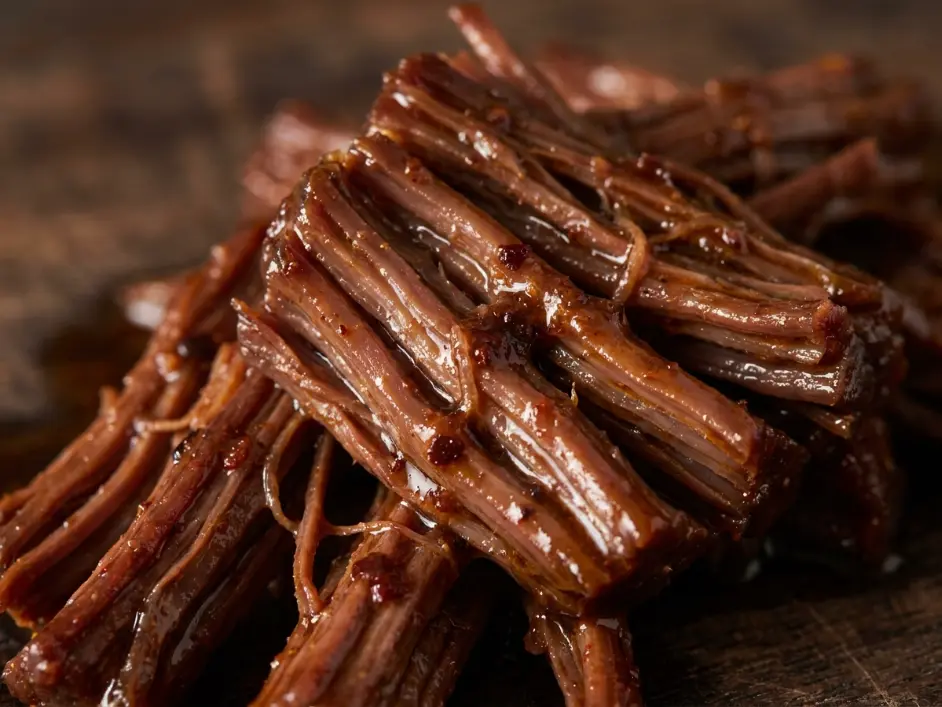
Pro Sourcing & Ingredient Selection
The meat is your foundation. Choose heavily marbled beef chuck roast or bone-in beef cheeks at high-end butcher counters. You want visible white streaks of fat running through the meat—this is intramuscular fat that melts during cooking and keeps the meat moist.
Avoid ultra-lean cuts like sirloin or eye of round. They lack the collagen and fat necessary for successful braising and will turn dry and tough no matter how long you cook them.
Beef cheeks are the gold standard if you can find them. They contain an exceptionally high concentration of collagen and produce a richer, more luxurious final texture than chuck roast.
For the rice, source long-grain Basmati or Jasmine rice from premium purveyors. These varieties contain lower amylopectin starches compared to short-grain or sushi rice, which means they cook up fluffy and separate rather than sticky and clumped.
Never use instant rice or parboiled rice for this application. The pre-processing destroys the delicate starch structure and creates mushy, bland results.
The limes matter enormously. Select firm, glossy limes with thin skins at specialty markets. Thick-skinned limes contain less juice and more bitter pith oils that can ruin your rice. Roll the limes firmly on the counter before juicing to break the internal cell walls and maximize juice yield.
For the cilantro, choose bunches with vibrant green leaves and no yellowing or wilting. The stems contain as much flavor as the leaves, so chop and use both.
Ingredients Table
| Category | Ingredient | US Customary | Metric |
|---|---|---|---|
| The Braised Barbacoa Base | Beef chuck roast, cut into large blocks | 3 lbs | 1.36 kg |
| Premium avocado oil for high sear | 2 tablespoons | 30ml | |
| Beef bone broth, low sodium | 2 cups | 480ml | |
| Dried bay leaves | 3 leaves | 3g | |
| The Smoky Adobo Emulsion | Canned chipotle peppers in adobo sauce | 3 peppers + 2 tbsp sauce | 60g |
| Apple cider vinegar | 2 tablespoons | 30ml | |
| Fresh lime juice, freshly squeezed | 2 tablespoons | 30ml | |
| Minced garlic cloves | 6 cloves | 18g | |
| Ground cumin | 2 teaspoons | 4g | |
| Dried Mexican oregano | 1 teaspoon | 2g | |
| Fine sea salt | 1 tablespoon | 15g | |
| The Aromatic Rice Core | Long-grain basmati rice | 2 cups | 370g |
| Water for cooking rice | 3 cups | 720ml | |
| Fresh lime juice for rice | 3 tablespoons | 45ml | |
| Organic lime zest, fine microplaned | 1 tablespoon | 6g | |
| Finely chopped fresh cilantro leaves | 1 cup | 30g | |
| Fine sea salt for rice | 1 teaspoon | 5g |
Common Kitchen Blunders
| The Kitchen Blunder | What Actually Happens (Scientific Reality) | The Chef Joseph Fix |
|---|---|---|
| Boiling the beef at extreme high heats causing muscle fibers to clamp and dry out | Temperatures above 200°F cause rapid protein denaturation and muscle fiber contraction, squeezing out moisture before collagen can dissolve | Maintain a gentle simmer at 180-190°F for extended time, allowing collagen to dissolve gradually without over-contracting muscle fibers |
| Boiling the rice without washing away free surface amylose starches | Unwashed rice releases excess surface starch during cooking, creating a gluey, sticky texture instead of separate, fluffy grains | Rinse rice repeatedly under cold water until the runoff turns completely clear, removing all loose starch before cooking |
| Cooking the lime juice directly inside the rice pot which kills fresh citrus top notes | Heat destroys volatile citrus oils and converts bright acids into flat, bitter compounds, eliminating the signature fresh lime flavor | Add fresh lime juice, zest, and cilantro only after rice is cooked and removed from heat, preserving aromatic compounds |
| Using oil with a low smoke point for browning proteins | Oils like butter or extra virgin olive oil break down at high searing temperatures, creating acrid flavors and harmful compounds | Use refined avocado oil or grapeseed oil with smoke points above 400°F for clean, neutral high-heat searing |
| Packing the braising liquid too high so the meat steams rather than breaking down | Submerged meat steams instead of braising, preventing proper Maillard crust development and creating bland, waterlogged texture | Fill liquid only halfway up the meat, allowing the exposed surface to develop concentrated flavors while the bottom braises |
| Shredding the meat before allowing it to rest in its juices | Immediate shredding releases trapped moisture and causes the meat to dry out as it cools | Let the meat rest in its braising liquid for 15-20 minutes after cooking, then shred directly in the sauce to retain maximum moisture |
Step-by-Step Method
Step 1: High-Surface Lipid Browning and Maillard Development
Cut your beef chuck roast into large, uniform blocks approximately 3 to 4 inches on each side. Pat them completely dry with paper towels—moisture is the enemy of browning.
Season the meat aggressively on all sides with sea salt. The salt will draw out surface moisture initially, but this quickly re-absorbs, creating a drier exterior that browns more efficiently.
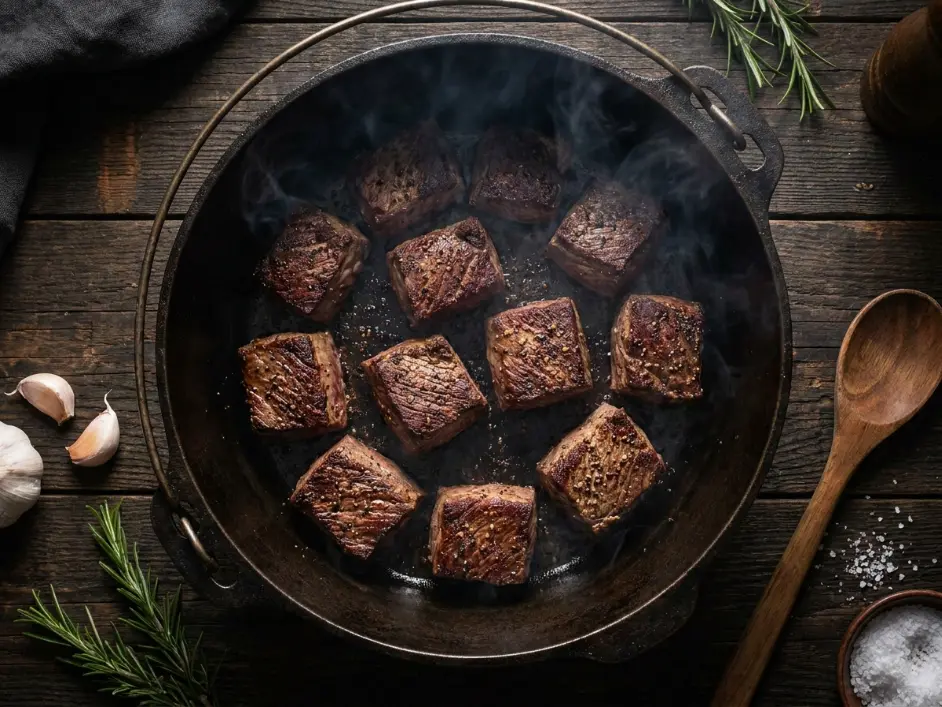
Heat a heavy-bottomed Dutch oven over high heat until it is smoking hot. Add the avocado oil and swirl to coat the bottom.
Working in batches to avoid crowding, sear the beef blocks on all sides until a deep, mahogany crust forms. This should take about 3 to 4 minutes per side. Do not move the meat around—let it sit undisturbed so the Maillard reaction can develop properly.
This browning step is not optional. It creates hundreds of complex flavor compounds through the Maillard reaction that you cannot achieve through braising alone.
Remove the seared meat and set aside. Do not wipe out the pot—those browned bits stuck to the bottom (fond) are pure concentrated flavor.
Step 2: The Extended Hydrolytic Collagen Breakdown
In a blender, combine the chipotle peppers, adobo sauce, garlic, apple cider vinegar, fresh lime juice, cumin, oregano, and a pinch of salt. Blend until completely smooth.
As discussed in acid-balancing methods shared over at Serious Eats, introducing a small splash of apple cider vinegar into the adobo braising liquid intensifies the deep umami notes of slow-cooked beef while helping to tenderize the collagen structure.
Pour this adobo paste into the Dutch oven with the fond. Stir over medium heat for about 2 minutes, scraping up all the browned bits from the bottom. This deglazes the pan and integrates the fond into your sauce base.
Add the beef bone broth and bay leaves, then return the seared meat to the pot. The liquid should come about halfway up the sides of the meat—not fully submerged.
Bring the liquid to a bare simmer, then reduce the heat to the lowest possible setting. Cover the pot with a tight-fitting lid.
Braise for 4 hours, checking occasionally to ensure the liquid maintains a gentle simmer (you should see occasional lazy bubbles breaking the surface). If it is boiling aggressively, reduce the heat further.
After 4 hours, the meat should be fall-apart tender when probed with a fork. If it still feels resistant, continue cooking in 30-minute increments until it reaches the proper texture.
Remove from heat and let the meat rest in the braising liquid for 15 to 20 minutes before shredding. This resting period allows the muscle fibers to relax and reabsorb some of the expelled juices.
Step 3: Amylose Elimination and Controlled Starch Steaming
While the beef braises, prepare the rice. Place the dry basmati rice in a fine mesh strainer and rinse under cold running water, agitating gently with your hand.
Continue rinsing until the water runs completely clear—this usually takes 3 to 4 minutes of continuous rinsing. You are removing all the loose surface starch that would otherwise create a gluey texture.
In a medium saucepan, combine the rinsed rice with the water and a teaspoon of salt. Bring to a boil over high heat, then immediately reduce to the lowest possible heat.
Cover with a tight-fitting lid and cook for 18 minutes without lifting the lid. Resist the temptation to check on it—every time you lift the lid, you release steam and disrupt the cooking process.
After 18 minutes, remove the pot from the heat entirely and let it stand, still covered, for 10 minutes. This resting period allows the rice to finish steaming in its own residual heat and ensures perfectly tender grains.
Step 4: The Low-Temperature Essential Oil Infusion
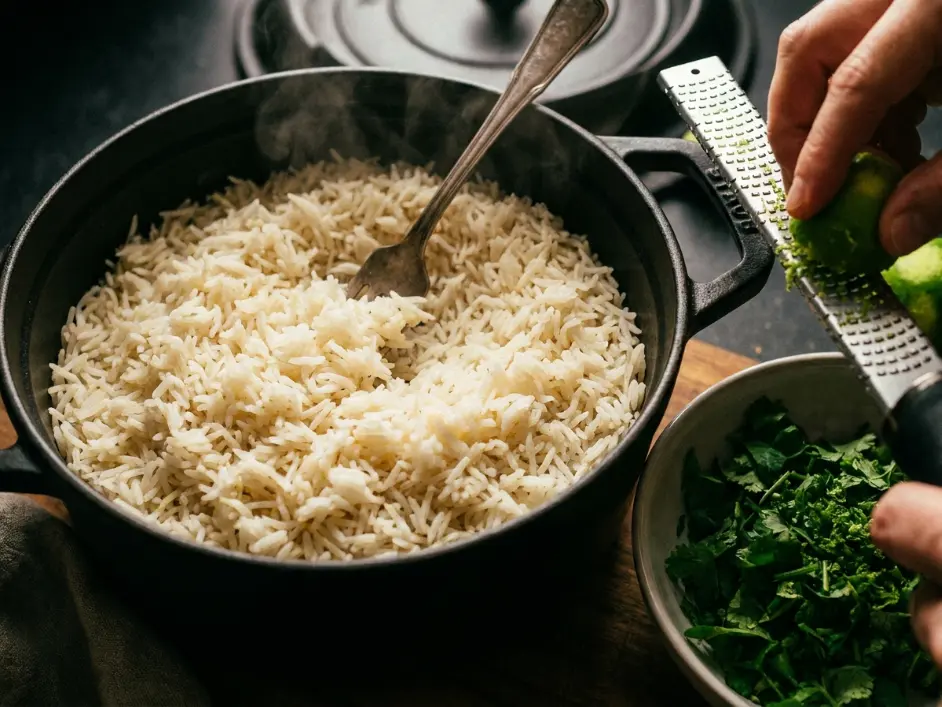
After the rice has rested, remove the lid and fluff the grains gently with a fork. The rice should be tender, with each grain separate and distinct.
Add the fresh lime juice, microplaned lime zest, and finely chopped cilantro directly to the hot rice. Fold gently with a fork or silicone spatula to distribute evenly.
The residual heat of the rice will activate the volatile oils in the cilantro and lime zest without cooking them, preserving their bright, fresh character. This is the critical difference between restaurant-quality cilantro-lime rice and the flat, cooked-tasting versions most home cooks produce.
Taste and adjust seasoning with additional salt if needed. The rice should taste bright, zesty, and herbaceous—not bland or one-dimensional.
For the beef, use two forks to shred the meat directly in the braising liquid. The meat should fall apart with almost no resistance, creating long, tender strands coated in the rich adobo sauce.
If the sauce seems too thin, remove the shredded meat temporarily and simmer the liquid over medium-high heat until it reduces to your desired consistency. Return the meat to the sauce before serving.
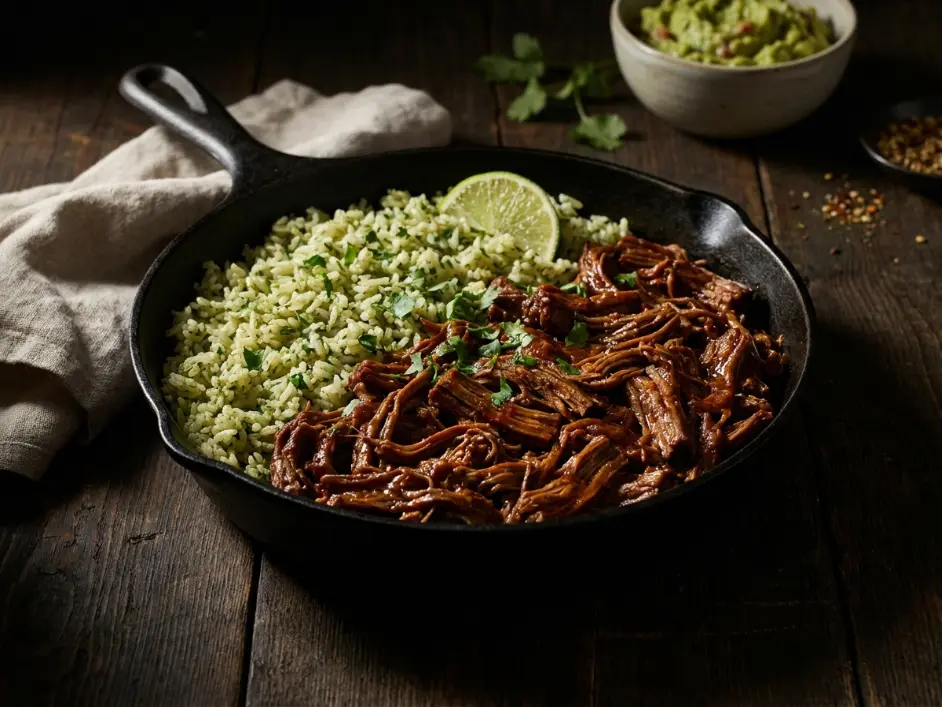
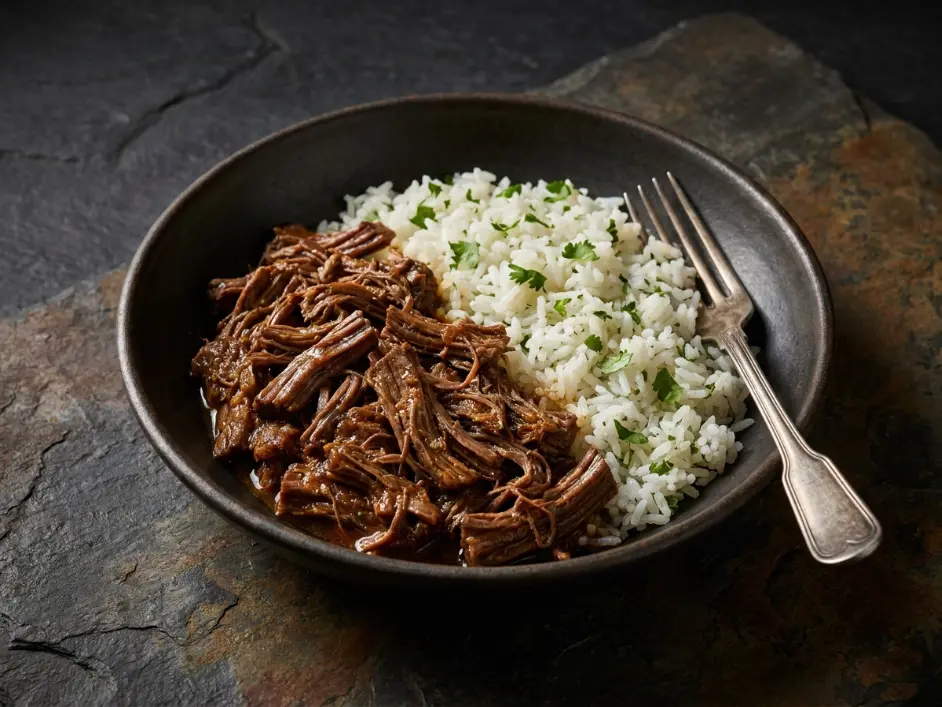
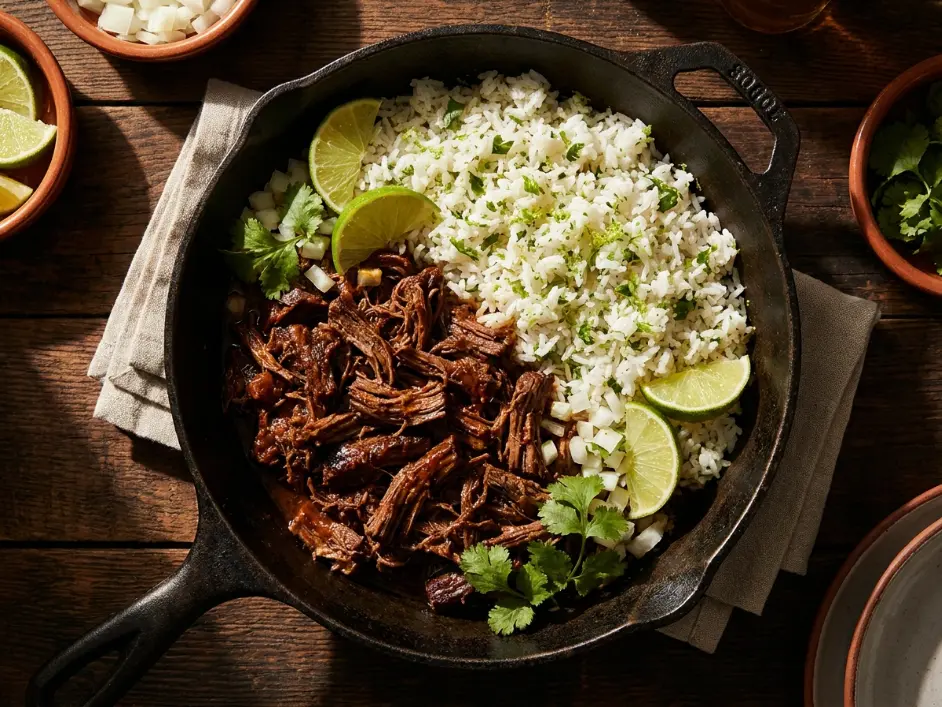
Serve the barbacoa beef and cilantro-lime rice side by side in bowls, allowing diners to build their own combinations with additional toppings like cheese, sour cream, salsa, or guacamole.
Chef Joseph’s Insight
“Cooking is not just chemistry — it is memory made edible. When others gather around a table and tear off that first piece of warm, crunchy bread to plunge it into a bubbling, velvety center, the science fades away and pure connection takes over. The most powerful moves in the kitchen are almost always the quiet ones. The overnight rest. The proper preheat. The two-minute wait before you plate. It is the patience to wring out every last drop of moisture from your greens, and the care you take in picking the right cheese. Take your time, respect the process, and your kitchen will always reward you.”
— Chef Joseph | Expert Palate
When building a complete fast-casual inspired spread around these components, think about balancing rich, savory elements with bright, acidic toppings and fresh, crunchy textures.
4 Elite Secrets to Flawless Crispy Bacon-Wrapped Jalapeño Poppers
Technical Data & Nutrition Table
Per Serving (approximately 1 cup barbacoa + 1 cup rice):
| Nutrient | Amount |
|---|---|
| Calories | 485 kcal |
| Protein | 32g |
| Total Fat | 18g |
| Saturated Fat | 6g |
| Carbohydrates | 45g |
| Sodium | 680mg |
| Cholesterol | 95mg |
Note: Nutritional values are careful kitchen estimates based on standard ingredient databases and may vary depending on specific brands and preparation methods used.
Food Safety & Thermal Management
Because this meal contains both braised beef and cooked rice, proper thermal management is essential. The safe minimum internal holding temperature for all cooked meat and rice combinations is 165°F / 74°C, which ensures that any potential pathogens are destroyed.
The danger zone for bacterial growth spans 40°F to 140°F / 4°C to 60°C. Cooked beef and rice left at room temperature for more than two hours enter this zone and should be discarded to prevent foodborne illness risk.
Planning high-volume family style buffets or catering lines with warm beef and rice components demands checking the hot holding parameters outlined at the Food Network. During parties or buffet service, keep cooked components warm in chafing dishes or slow cookers set to 200°F / 93°C minimum.
If the food cools below 140°F / 60°C, either reheat it back above this threshold or refrigerate any leftovers promptly. Never leave cooked meat and rice compositions sitting at room temperature for extended periods.
Cooked rice is particularly susceptible to Bacillus cereus contamination, a bacteria that forms heat-resistant spores. Always cool rice rapidly and refrigerate within two hours of cooking.
Storage & Reheating Matrix
| Item State | Fridge Storage Limit | Freezer Safety Option | The Absolute Best Reheating Method |
|---|---|---|---|
| Leftover Braised Barbacoa Beef in Sauce | 5 days in airtight container in refrigerator | Up to 4 months if portioned into freezer-safe containers; thaw in fridge overnight | Reheat gently in a covered saucepan over low heat with a splash of broth to restore moisture; avoid microwave which creates hot spots |
| Cooked Cilantro Lime Fluffed Rice | 4 days in airtight container in refrigerator | Up to 2 months in freezer-safe bags; thaw in fridge overnight | Add 2 tablespoons of water, cover tightly with damp paper towel, and steam in microwave for 2-3 minutes to reverse starch retrogradation |
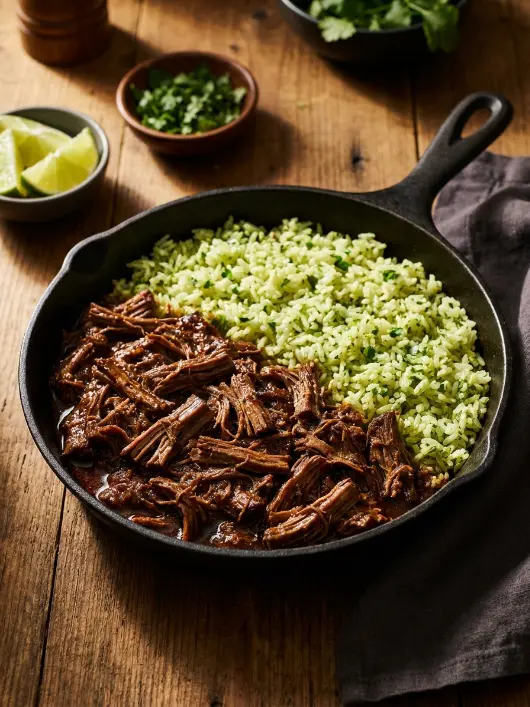
Chipotle Cilantro-Lime Rice and Barbacoa Beef
Ingredients
Equipment
Method
- Rinse the long grain basmati rice repeatedly under cold running water until all loose clouding starches run clear, approximately three to four minutes of agitation.
- Pat the beef chuck roast blocks completely dry with paper towels, then season aggressively on all sides with sea salt.
- Sear the cubed blocks of beef chuck in hot avocado oil inside a preheated Dutch oven until deeply browned on all surfaces, approximately three to four minutes per side.
- Blend chipotle peppers, adobo sauce, minced garlic, apple cider vinegar, lime juice, cumin, oregano, and salt into a completely smooth adobo paste.
- Pour the adobo paste and beef bone broth over the seared meat blocks along with the dry bay leaves, ensuring liquid reaches halfway up the meat.
- Cover the pot tightly with a lid and maintain a gentle simmer at 180 to 190 degrees Fahrenheit for four hours until the protein collagen completely dissolves.
- Cook the washed basmati rice in water with a touch of salt in a covered saucepan for eighteen minutes, then remove from heat and let stand covered for ten additional minutes.
- Fluff the cooked rice with a fork, then fold in the fresh lime juice, microplaned lime zest, and finely chopped cilantro gently while the rice is warm but off heat.
- Let the braised beef rest in its adobo braising liquid for fifteen to twenty minutes after cooking to allow muscle fiber relaxation.
- Shred the tender barbacoa meat using two forks directly inside its rich adobo braising juices, coating every strand before plating alongside the cilantro lime rice.
Notes
Frequently Asked Culinary Questions
Why does my barbacoa turn stringy and dry even though it has been braising for hours?
This happens when the cooking temperature is too high. If the liquid is at a rolling boil instead of a gentle simmer, the muscle fibers contract too rapidly and squeeze out moisture before the collagen has time to dissolve. Maintain the liquid at a bare simmer (180-190°F) where you see only occasional lazy bubbles. If your stovetop runs hot, consider finishing the braise in a 300°F oven for more even, gentle heat.
Can I substitute brown rice for basmati without changing the fluid cooking ratios?
No—brown rice requires significantly more water and longer cooking times because the bran layer resists water absorption. For brown rice, use a 1:2.5 rice-to-water ratio and cook for 45-50 minutes. However, the texture will be chewier and nuttier, which changes the character of the dish. If you want the authentic fast-casual experience, stick with long-grain white rice.
Why does my cilantro turn black and lose its clean taste when added to the rice pot?
Cilantro contains highly volatile essential oils that break down rapidly under heat. If you add it during cooking, the heat destroys these aromatic compounds and can cause enzymatic browning that turns the leaves dark. Always add cilantro off heat, after the rice has finished cooking, so the residual warmth releases the oils without degrading them.
How do I skim off excess surface tallow fat from the adobo sauce before shredding?
Let the braised beef rest in its liquid for 20 minutes after cooking. The fat will rise to the surface. Use a large, shallow spoon or a fat separator to skim off the visible layer of fat. Do not remove all of it—some fat is essential for flavor and moisture. You want to remove only the excessive pooled layer, leaving a thin coating that will coat the shredded meat beautifully.