
5 Flawless Molecular Laws for a Mind-Blowing Copycat Panera Bread Broccoli Cheddar Soup
Imagine tearing off a thick, crusty piece of warm sourdough bread and plunging it into a silky, ultra-velvety pool of liquid gold that clings beautifully to crisp-tender green florets. Now, contrast that with the disastrous kitchen reality: a grainy, gritty texture where the cheese clumps into stringy plastic knots, floating helplessly beneath an unappealing, broken layer of separated yellow grease.
I have tested this method across dozens of batches in the Expert Palate test kitchen, adjusting one variable at a time to isolate exactly what makes the difference between a split, oily mess and a perfectly bound, velvety emulsion. Panera Bread Broccoli Cheddar Soup is a masterclass in roux chemistry, casein protein management, and thermal control—transforming simple ingredients into the comfort food phenomenon that has captivated restaurant-goers for decades.
This is not just about melting cheese into broth. This is about understanding how starch molecules coat fat particles, how temperature governs protein behavior, and how timing prevents textural collapse.

When planning comforting bistro-style spreads or casual weeknight dinners, understanding the science behind beloved classics transforms ordinary soup into an unforgettable experience.
5 Flawless Molecular Principles for a Mind-Blowing Copycat Olive Garden Creamy Tuscan Garlic Chicken
The Physics of Casein Aggregation and Starch-Coated Lipid Barriers
Aged cheddar cheese is approximately 30 to 35 percent fat by weight, with most of that fat trapped inside a matrix of casein proteins. When you heat cheese, the protein structure begins to denature and contract, squeezing out the fat like wringing water from a sponge. If the temperature is too high or the heating too rapid, the proteins tighten violently, expelling all their fat and creating the dreaded greasy, separated texture.
The solution is a properly constructed roux—a cooked mixture of flour and fat that creates a stable emulsion base. When you cook flour in butter, the starch granules absorb the fat and swell. These gelatinized starch molecules then physically wrap around fat droplets in the soup, preventing them from binding together into larger pools that would separate and float to the surface.
By analyzing the precise moisture levels and lipid density profiles of sharp dairy blocks through verified data from the USDA FoodData Central database, we understand that aged cheddar requires gentle heat and protective starch barriers to melt smoothly without breaking.
In simple terms: the roux starches act like tiny bodyguards, surrounding each fat molecule and keeping them dispersed evenly throughout the soup. Without this protection, the fat molecules find each other, merge, and separate into a greasy layer.
Free Dairy Lipids+Gelatinized Flour Amylose Chains+Sub-Boiling Thermal Control→Homogeneous Velvety Soup Emulsion
The second critical factor is temperature. Casein proteins are sensitive to heat—they begin to denature and tighten around 150°F / 65°C. If you add cheese to a boiling liquid (212°F / 100°C), the proteins seize immediately, creating a grainy, curdled texture. The cheese must be added off heat, when the soup is hot but no longer simmering, allowing the proteins to melt gradually and integrate smoothly.
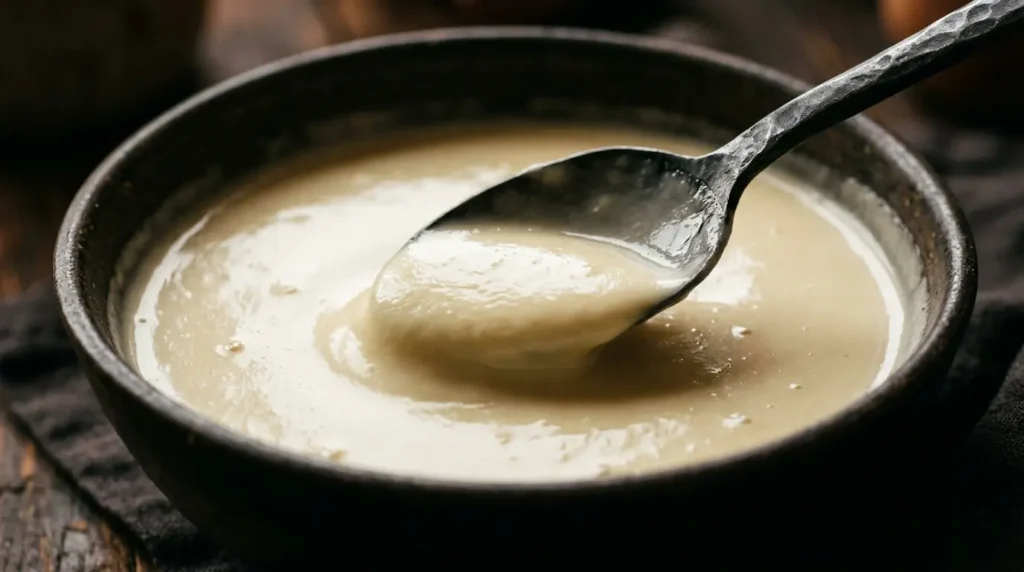
Pro Sourcing & Ingredient Selection
The cheese is your foundation. Choose whole blocks of sharp or extra-sharp yellow cheddar from premium deli counters and grate them yourself just before using. Pre-shredded cheese contains cellulose powder and potato starch anti-caking agents that prevent smooth melting and create a grainy, gritty texture in your soup.
Block cheese also melts more evenly because it has not been exposed to air and moisture, which can cause the surface proteins to oxidize and harden. Fresh-grated cheese integrates seamlessly into the hot liquid without clumping.
Extra-sharp cheddar provides the most authentic Panera flavor profile, with its tangy, aged complexity. Mild or medium cheddar will produce a blander, less interesting soup.
For the broccoli, source fresh, tight-headed organic broccoli crowns with short stems at specialty grocers. The florets should be deep green with no yellowing or brown spots. Small to medium florets are ideal—they cook evenly and maintain their texture better than large, woody pieces.
Avoid pre-cut broccoli florets sold in bags, which are often days old and have lost their vibrant color and crisp texture. Fresh broccoli makes an enormous difference in the final presentation and eating experience.
The dairy matters too. Use half-and-half or whole milk for the soup base—not skim milk or low-fat alternatives, which lack the protective fat content needed to create a stable emulsion and will curdle almost immediately when heated.
Half-and-half (10-12 percent fat) provides a luxurious, creamy mouthfeel without being as heavy as heavy cream. It also has enough fat to buffer the casein proteins and prevent curdling.
For the broth, choose low-sodium chicken broth so you can control the salt level yourself. Full-sodium broths can make the soup unpleasantly salty once the cheese is added, as aged cheddar is already quite salty on its own.
Ingredients Table
| Category | Ingredient | US Customary | Metric |
|---|---|---|---|
| The Starch and Dairy Matrix | Unsalted sweet cream butter | ¼ cup | 57g |
| All-purpose flour (wheat starch) | ¼ cup | 30g | |
| Half-and-half dairy fluid | 2 cups | 480ml | |
| Low-sodium chicken broth | 2 cups | 480ml | |
| Sharp yellow cheddar cheese block, grated | 8 oz | 225g | |
| The Aromatic Vegetable Base | Fresh broccoli crowns, finely chopped florets | 1 lb | 454g |
| Sweet carrots, scrubbed and julienned finely | 1 cup | 130g | |
| Yellow onion, finely minced aromatic | 1 medium | 150g | |
| The Flavor Enhancers | Ground mustard powder | ½ teaspoon | 1g |
| Sea salt | 1 teaspoon | 5g | |
| Cracked black pepper | ½ teaspoon | 1g |
Common Kitchen Blunders
| The Kitchen Blunder | What Actually Happens (Scientific Reality) | The Chef Joseph Fix |
|---|---|---|
| Tossing shredded cheese directly into a boiling soup base which shocks the proteins into a curdle | Temperatures above 150°F cause casein proteins to denature and contract violently, squeezing out fat and creating grainy, separated texture | Remove soup from heat completely before adding cheese, allowing residual heat to melt it gently without protein shock |
| Using pre-packaged shredded cheeses that contain grainy anti-caking starches | Cellulose powder and potato starch coatings prevent smooth melting, creating gritty texture and inhibiting proper fat integration | Hand-grate fresh block cheese immediately before use for clean, smooth melting without textural interference |
| Boiling the broccoli for too long until it releases sulfur and turns an unappealing gray-green | Extended high heat breaks down chlorophyll and releases sulfur compounds, creating mushy texture and unpleasant cabbage-like odor | Simmer broccoli gently for only 12-15 minutes until crisp-tender, preserving vibrant color and firm bite |
| Cooking with a skimmed low-fat dairy alternative that curdles instantly | Low-fat milk lacks protective fat molecules to buffer casein proteins, causing immediate curdling when heated above 140°F | Use half-and-half or whole milk with at least 10% fat content to create stable emulsion and prevent curdling |
| Skipping the roux cooking phase which leaves a raw flour flavor | Uncooked flour contains raw starch that tastes chalky and pasty, and does not gelatinize properly to create thickening and emulsion stability | Cook roux over medium heat for 3-4 minutes, stirring constantly, until it smells nutty and toasted before adding liquid |
| Adding all the liquid at once instead of gradually, creating lumps | Rapid liquid addition shocks the roux, causing flour proteins to clump before starch can gelatinize evenly | Add liquid slowly in three stages while whisking constantly, allowing each addition to incorporate smoothly before adding more |
Step-by-Step Method
Step 1: The Flour-Lipid Roux Expansion
Grate the block of sharp yellow cheddar cheese by hand using a box grater, then set it aside at room temperature. Cold cheese does not melt as smoothly as room-temperature cheese, so letting it warm slightly before adding to the soup prevents clumping.
In a heavy-bottomed enameled Dutch oven, melt the unsalted butter over medium heat. Let it foam and bubble, then wait for the foaming to subside—this indicates that the water in the butter has evaporated and the pure butterfat is ready.
Add the finely minced yellow onion to the melted butter and sauté for 3 to 4 minutes, stirring frequently, until the onion turns translucent and aromatic. The onion should soften completely without taking on any color.
Sprinkle the all-purpose flour evenly over the butter and onion mixture. Use a sturdy wire whisk to stir the flour into the fat, creating a smooth, thick paste. This is your roux.
Cook the roux over medium heat for 3 to 4 minutes, whisking constantly, until it smells nutty and toasted and takes on a pale golden color. This cooking step is critical—it eliminates the raw flour taste and allows the starch granules to swell and gelatinize properly.
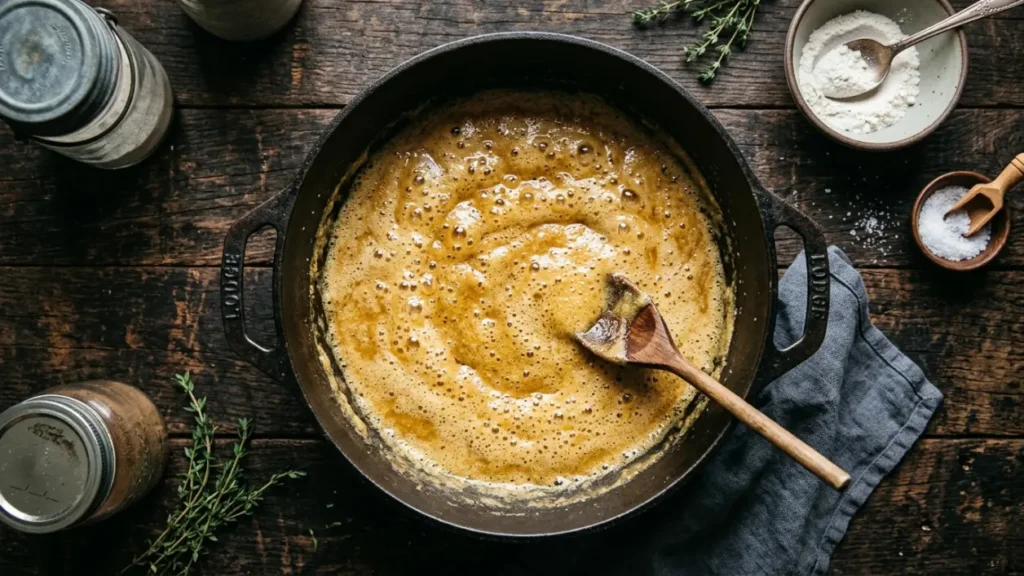
Step 2: The Controlled Dairy Hydration Phase
Slowly pour in the low-sodium chicken broth, whisking constantly as you add it. Pour in small additions—about half a cup at a time—to prevent lumps from forming. The roux will seize and thicken initially, but keep whisking and it will smooth out.
Once all the broth is incorporated and the mixture is smooth, slowly whisk in the half-and-half in the same gradual manner. The liquid should be completely smooth with no visible lumps of flour.
Bring the mixture to a gentle simmer over medium heat, stirring occasionally. You should see small bubbles breaking the surface around the edges, but not a rolling boil. A hard boil will cause the dairy to curdle and the soup to reduce too quickly.
Step 3: Precise Broccoli and Aromatic Simmering
Add the finely chopped broccoli florets and julienned carrots to the simmering liquid. Stir to distribute the vegetables evenly throughout the soup.
Reduce the heat to low and let the soup simmer gently for 12 to 15 minutes, stirring occasionally, until the broccoli is crisp-tender—cooked through but still bright green with a slight bite.
As discussed in flavor enhancement principles detailed over at Serious Eats, adding a subtle dash of dry mustard powder or ground nutmeg amplifies the natural nutty profiles of melted cheddar cheese and adds aromatic complexity without being identifiable as a distinct flavor.
Stir in the ground mustard powder, sea salt, and cracked black pepper. Taste the broth and adjust seasoning if needed, keeping in mind that the cheese will add additional salt.

Step 4: Off-Heat Casein Folding and Stabilization
This is the most critical step. Turn off the heat completely and remove the Dutch oven from the burner entirely. If you have an electric stove, move the pot to a cool burner. The residual heat in the soup is sufficient to melt the cheese—active heat will cause it to break.
Add the grated cheddar cheese one handful at a time, stirring gently after each addition until it melts completely before adding the next handful. Do not rush this process. Gradual incorporation allows the cheese proteins to unfold and integrate smoothly without clumping.
The soup should be thick, creamy, and completely smooth with no visible grease or separation. If you see any oil pooling on the surface, your soup was too hot when you added the cheese. You can try to rescue it by whisking vigorously off heat, but prevention is always better.
Let the soup rest off heat for 2 to 3 minutes to allow the emulsion to stabilize fully before serving. This brief resting period lets the starch molecules finish binding the fat and ensures maximum smoothness.
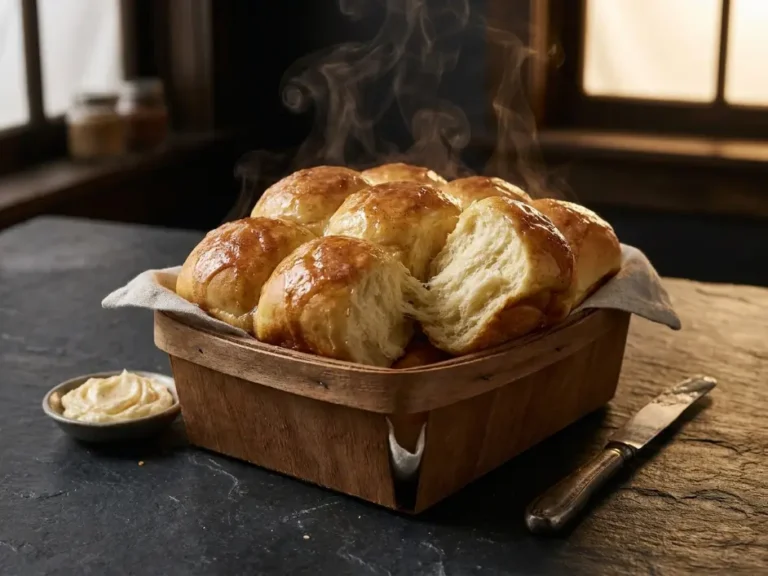
Ladle the hot soup into bowls and serve immediately with crusty bread for dipping. The soup is at its best when freshly made—reheating can cause the cheese to separate if not done carefully.

Chef Joseph’s Insight
“Cooking is not just chemistry — it is memory made edible. When others gather around a table and tear off that first piece of warm, crunchy bread to plunge it into a bubbling, velvety center, the science fades away and pure connection takes over. The most powerful moves in the kitchen are almost always the quiet ones. The overnight rest. The proper preheat. The two-minute wait before you plate. It is the patience to wring out every last drop of moisture from your greens, and the care you take in picking the right cheese. Take your time, respect the process, and your kitchen will always reward you.”
— Chef Joseph | Expert Palate
When building a complete comfort food menu around this soup, think about balancing rich, creamy elements with bright, acidic sides and crusty, textural breads.
Technical Data & Nutrition Table
Per Serving (approximately 1.5 cups):
| Nutrient | Amount |
|---|---|
| Calories | 320 kcal |
| Protein | 14g |
| Total Fat | 22g |
| Saturated Fat | 13g |
| Carbohydrates | 18g |
| Sodium | 580mg |
| Cholesterol | 65mg |
Note: Nutritional values are careful kitchen estimates based on standard ingredient databases and may vary depending on specific brands and preparation methods used.
Food Safety & Thermal Management
Because this soup contains both dairy and chicken broth, proper thermal management is essential. The safe minimum internal holding temperature for all hot liquid foods is 165°F / 74°C, which ensures that any potential pathogens are destroyed.
The danger zone for bacterial growth spans 40°F to 140°F / 4°C to 60°C. Cooked soup left at room temperature for more than two hours enters this zone and should be discarded to prevent foodborne illness risk.
Organizing interactive dinner parties or casual family buffets featuring hot cheese-based soups requires utilizing proper temperature maintenance methods, which can be easily verified through hosting guides over at the Food Network. If serving buffet-style, keep the soup warm in a slow cooker set to the “warm” setting (approximately 200°F / 93°C) to maintain safe serving temperature without causing the cheese to break.
If the soup cools below 140°F / 60°C, either reheat it back above this threshold using gentle, low heat with constant stirring, or refrigerate any leftovers promptly.
Never leave dairy-based soups sitting at room temperature for extended periods, especially in warm weather or crowded indoor environments where ambient temperatures can climb.
Storage & Reheating Matrix
| Item State | Fridge Storage Limit | Freezer Safety Option | The Absolute Best Reheating Method |
|---|---|---|---|
| Leftover Unmelted Cheddar and Veggie Base Prep | 3 days in separate airtight containers in refrigerator | Broth base freezes well for up to 3 months; add cheese fresh after reheating | Thaw broth base in fridge overnight, reheat gently to simmer, then add fresh cheese off heat |
| Fully Cooked Completed Cream Soup Portion | 4 days in airtight container in refrigerator | Not recommended due to cheese emulsion breakdown upon thawing | Reheat gently in saucepan over low heat, stirring constantly and adding 2-3 tablespoons milk to restore smooth consistency; never microwave on high |

Copycat Panera Bread Broccoli Cheddar Soup
Ingredients
Equipment
Method
- Grate the block of sharp yellow cheddar cheese by hand using a box grater, then set aside at room temperature to warm slightly for smoother melting.
- Melt the unsalted butter in a heavy bottomed Dutch oven over medium heat until the foaming stops, indicating pure butterfat is ready.
- Add the finely minced yellow onion into the melted butter and sauté for three to four minutes until translucent and aromatic without browning.
- Whisk in the all purpose flour steadily to create a smooth golden roux paste structure, cooking for three to four minutes while stirring constantly.
- Pour in the low sodium chicken broth slowly in three stages while whisking constantly to prevent lumps, allowing each addition to incorporate smoothly.
- Add the half and half gradually in the same manner, whisking until the liquid base is completely smooth without visible flour lumps.
- Bring the mixture to a gentle simmer over medium heat with small bubbles breaking around the edges, then add the chopped broccoli florets and julienned carrots.
- Reduce heat to low and simmer gently for twelve to fifteen minutes, stirring occasionally, until the broccoli reaches crisp-tender texture while maintaining vibrant color.
- Stir in the ground mustard powder, sea salt, and cracked black pepper, then taste and adjust seasoning as needed.
- Turn off the heat completely and remove the Dutch oven from the burner entirely to allow the liquid to stop simmering.
- Fold the grated cheddar cheese into the hot soup one handful at a time, stirring gently after each addition until completely melted and smooth before adding more.
- Let the soup rest off heat for two to three minutes to allow the emulsion to stabilize fully before ladling into serving bowls.
Notes
Frequently Asked Culinary Questions
Why did my soup develop a gritty texture after sitting in the refrigerator overnight?
Cheese-based soups can develop grittiness due to casein protein aggregation during cooling and storage. When the soup cools, the fat solidifies and the proteins contract, sometimes separating slightly. Gentle reheating over low heat with constant stirring and the addition of a few tablespoons of fresh milk or half-and-half can help re-emulsify the mixture. Always reheat slowly—rapid heating will make the grittiness worse.
Can I substitute chicken broth with vegetable broth without changing the flavor depth?
Yes, vegetable broth works perfectly for a vegetarian version. However, chicken broth provides a richer, more savory umami base. If using vegetable broth, consider adding a teaspoon of nutritional yeast or a splash of soy sauce to boost the savory depth and compensate for the missing chicken flavor compounds.
How do I keep the chopped broccoli from turning completely mushy and losing its color?
Cook the broccoli at a gentle simmer (not a rolling boil) for only 12-15 minutes until crisp-tender. Overcooking breaks down the chlorophyll, turning the broccoli gray-green and mushy. If you plan to reheat the soup, slightly undercook the broccoli during the initial preparation so it does not turn to mush when reheated.
Can I use sharp white cheddar instead of yellow cheddar for this recipe?
Absolutely. White cheddar and yellow cheddar have identical flavor and melting properties—the only difference is the addition of annatto coloring in yellow cheddar. White cheddar will produce a paler soup with the exact same taste and texture. Some people actually prefer the cleaner, more elegant look of white cheddar soup.