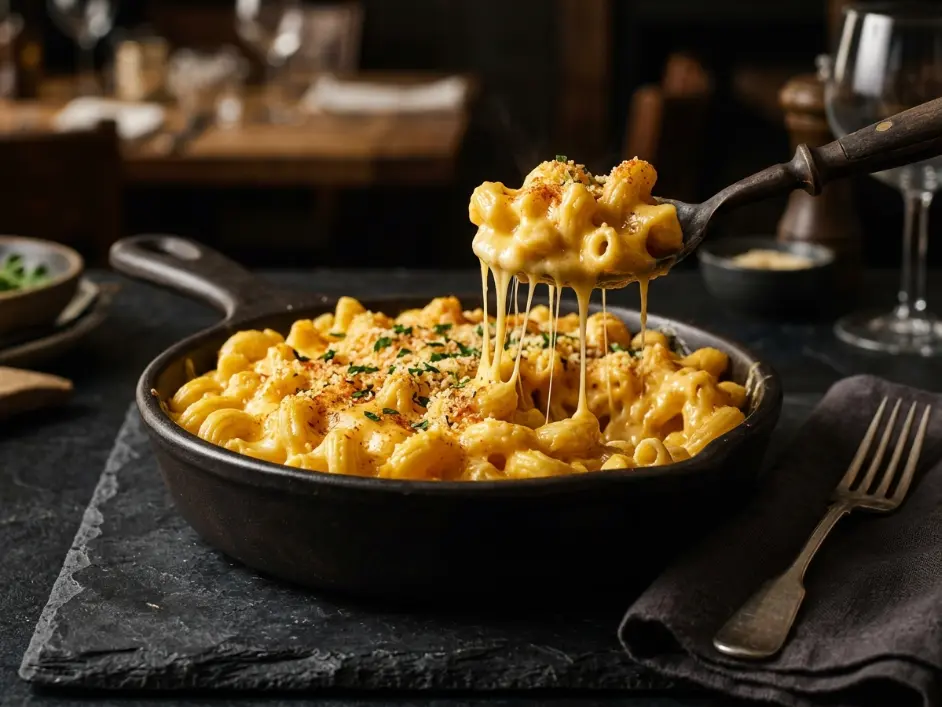
5 Unrivaled Thermodynamics Laws to Avoid Disastrous Grainy Slow Cooker Creamy Macaroni and Cheese
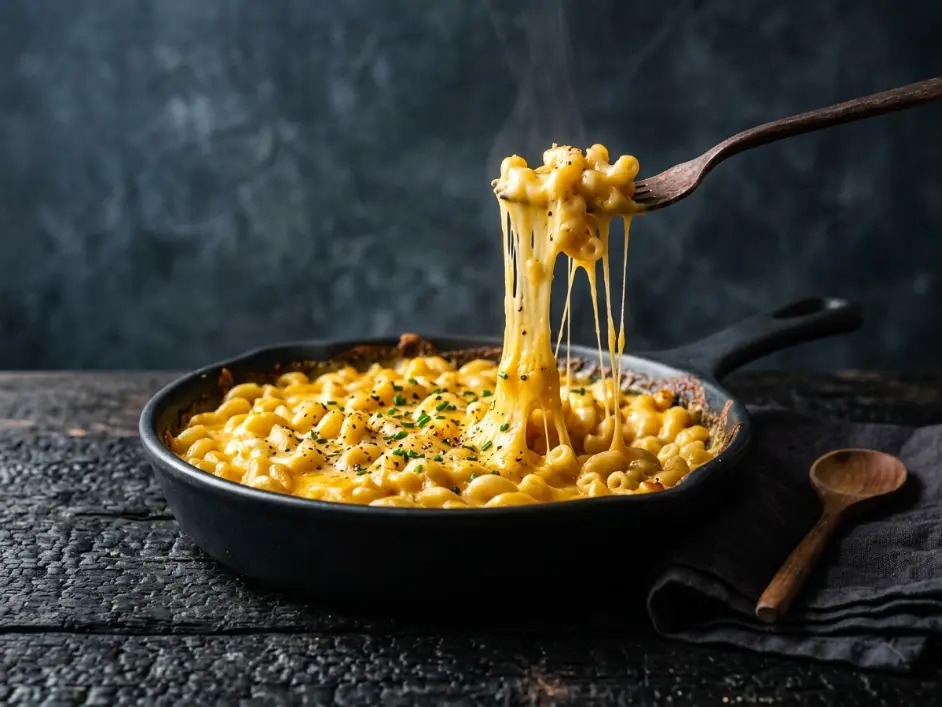
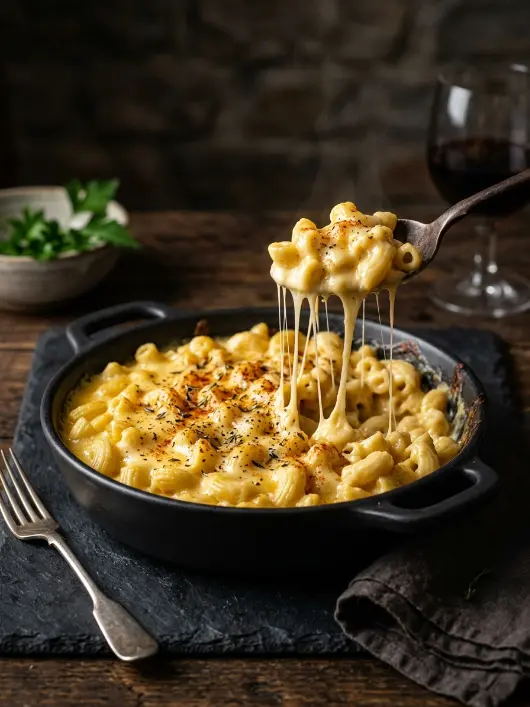
There is a moment — right when you lift the slow cooker lid — where the dish reveals its verdict. Either a cascading mass of tender pasta envelops itself in a rich, mirror-glossy, liquid-gold cheese emulsion that coats every ridge and cavity beautifully, stretching into elastic golden strands that beg to be eaten immediately. Or the lid comes off to reveal a broken, curdled mess where the pasta sits mushy and bloated in a gritty pool of chalky whey while an oily orange layer of separated dairy fat floats ominously on top.
The difference between these two outcomes is not talent. It is not equipment. It is molecular science — specifically the behavior of casein proteins, starch hydrocolloids, and dairy lipids under sustained low heat over two precise hours.
Most home cooks approach slow cooker creamy macaroni and cheese as a dump-and-forget dish. Dump pasta, dump cheese, dump milk, forget it for a few hours, and hope for the best. The results of that approach speak for themselves.
I have tested this method across dozens of batches in the Expert Palate test kitchen, adjusting one variable at a time to isolate exactly what makes the difference between a split, oily mess and a perfectly bound, velvety emulsion. What I found completely changed how I approach every dairy-based slow cooker dish — and it will change how you approach them too.
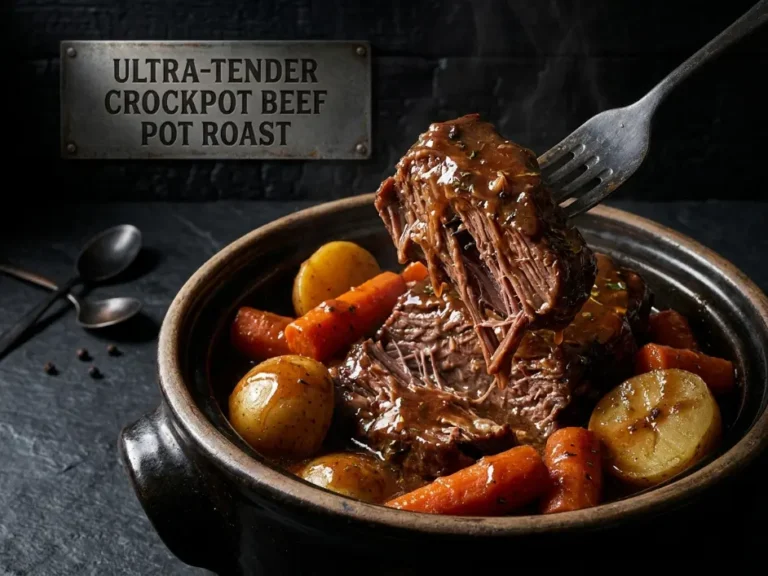
5 Flawless Molecular Rules for an Ultra-Tender Crockpot Beef Pot Roast with Carrots
The Biochemistry of Casein Gelation and Starch Water-Binding
To understand why slow cooker mac and cheese fails so dramatically when done wrong, you need to understand what cheese actually is at the molecular level — because it is not just solid milk.
Cheese is a complex emulsion. It is milk fat and water held together by a dense, interlocking network of casein proteins. Think of those casein proteins as a web of tiny ropes that hold fat globules suspended in a stable position throughout the cheese matrix. When you melt cheese gently, these rope-like proteins relax, the fat liquefies, and the water and fat remain suspended together in a smooth, creamy emulsion.
But here is where slow cooking becomes dangerous. When you expose cheese to continuous, direct heat over an extended period — even the moderate heat of a slow cooker — those casein protein networks tighten aggressively rather than relaxing further. They contract around the fat cells and essentially wring them out, forcing the milk fat to separate from the water phase. The proteins clump together into tiny, gritty granules, and the fat pools on the surface. This is the grainy, broken sauce that destroys an otherwise promising dish.
In simple terms: too much heat for too long squeezes the cheese like a sponge, expelling fat and creating grit.
So how do you prevent it? This is where concentrated starches become your molecular bodyguard. Starch granules — whether from uncooked pasta, a small addition of cornstarch, or the concentrated proteins in evaporated milk — function as hydrocolloids. They absorb water molecules and swell, creating a physical barrier between the free-floating fat globules. This barrier prevents the fat from clustering together even when thermal stress is applied.
The pasta in the slow cooker serves a dual role that most people completely overlook. First, it absorbs liquid and becomes dinner. But second — and more critically — it continuously releases surface starch into the surrounding dairy liquid throughout the cooking cycle. This starch release acts as a continuous, self-replenishing stabilizer that maintains the emulsion’s integrity.
Free Pasta Starches+Hydrated Evaporated Milk Proteins+Molten Cheese Lipids→Velvety Non-Grainy Cheese Sauce
The equation captures the entire strategy. Three molecular forces working in concert to create the sauce that everyone wants but few achieve consistently.
You can track the precise structural moisture limits, mineral contents, and lipid densities of real aged cheddar cheese profiles by referencing the verified datasets over at the FoodData Central database — they confirm that a mature sharp cheddar contains approximately 33 percent fat by weight, which is precisely why it needs a starch and protein scaffold to stay emulsified under heat.
Evaporated milk plays a specific and irreplaceable role here. Standard pasteurized whole milk contains roughly 87 percent water, which means it introduces enormous amounts of free water into the sauce. This dilutes the fat concentration and destabilizes the emulsion. Evaporated milk has had roughly sixty percent of its water removed through vacuum heating, which concentrates its protein density dramatically. These concentrated proteins create a much more robust scaffolding for the fat emulsion, making the sauce far more resistant to breaking under the slow cooker’s sustained thermal environment.
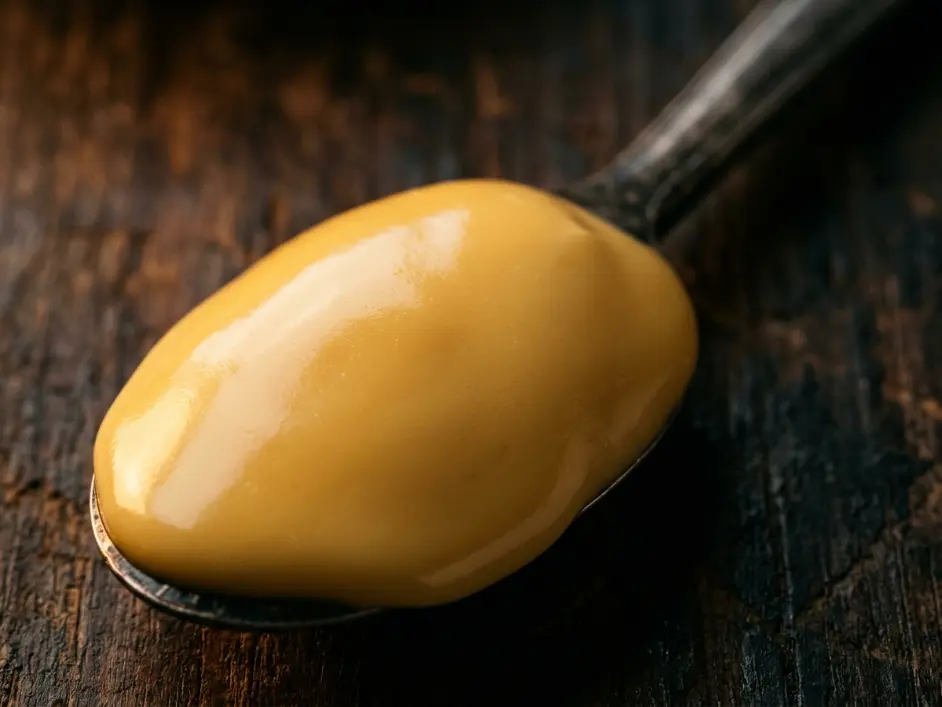
Pro Sourcing & Ingredient Selection
This is where the foundation of your slow cooker creamy macaroni and cheese is either built correctly or compromised before the slow cooker even switches on.
The cheese is your most critical ingredient — and the most commonly ruined one. Walk past the refrigerated bags of pre-shredded cheese. Every single one of them, without exception, is coated in anti-caking agents: typically potato starch, cellulose derived from wood pulp, or calcium carbonate powder. These coatings serve a genuine practical purpose in preventing the shreds from clumping inside the bag, but they are devastating to your sauce.
When you melt pre-shredded cheese into a liquid, those anti-caking powders do not dissolve with the fats. They remain as solid particles suspended throughout the sauce, creating the characteristic sandy, gritty texture that ruins the experience. The only solution is to buy whole blocks of cheese and shred them yourself on a box grater immediately before use.
For this recipe, seek out a combination of cheeses at an artisanal deli counter: a sharp, mature cheddar as your base, and a premium melting cheese like Gruyère, aged Gouda, or fontina for depth and stretch. Gruyère contributes a nutty, slightly earthy complexity that elevates the dish beyond basic. Aged Gouda adds a butterscotch sweetness that plays beautifully against the sharp acidity of cheddar. Fontina melts with extraordinary smoothness, contributing those long, elastic cheese strands that make the dish visually spectacular.
For the evaporated milk, avoid generic store brands and seek out quality versions from established dairy producers. The protein concentration in quality evaporated milk is more consistent, which translates directly to a more stable sauce. Check the ingredient label — it should simply say milk and nothing else.
For the pasta itself, choose thick-walled ridged elbow macaroni or cavatappi from premium Italian or specialty grocers. The ridges are not just aesthetic — they create surface area that the cheese sauce can cling to and penetrate. Thin-walled pasta shapes absorb liquid too aggressively, overcook easily, and collapse into mush during the two-hour slow cook cycle.
Ingredients Table
| Category | Ingredient | Measurement |
|---|---|---|
| The Pasta Core Matrix | Thick-Ridged Uncooked Elbow Macaroni or Cavatappi | 16 oz / 450g |
| Unsalted Butter, Melted | 4 tbsp / 60g | |
| The Dairy Fluid Base Emulsifiers | Evaporated Milk (Full-Fat) | 12 oz / 354ml |
| Whole Milk | 1 cup / 240ml | |
| Full-Fat Brick Cream Cheese, Softened | 4 oz / 113g | |
| Ground Yellow Mustard | 1 tsp / 2.5g | |
| Smoked Paprika | ½ tsp / 1.5g | |
| Garlic Powder | ½ tsp / 1.5g | |
| Fine Sea Salt | 1 tsp / 6g | |
| White Pepper | ¼ tsp / 0.5g | |
| The Hand-Shredded Cheese Blend | Sharp Block Cheddar, Hand-Shredded | 3 cups / 340g |
| Gruyere or Aged Gouda, Hand-Shredded | 1 cup / 115g | |
| Fontina Cheese, Hand-Shredded (Optional) | ½ cup / 55g |
Common Kitchen Blunders That Destroy Slow Cooker Creamy Macaroni and Cheese
| The Kitchen Blunder | What Actually Happens (Scientific Reality) | The Chef Joseph Fix |
|---|---|---|
| Buying pre-shredded cheese with anti-caking starch coatings | The cellulose, potato starch, and calcium carbonate powders used to prevent clumping in packaged shredded cheese do not dissolve when heated. They remain as solid, undissolved particles suspended throughout the molten cheese, creating a characteristic grainy, sandy mouthfeel that no amount of stirring or additional liquid can rescue. The sauce looks broken and feels unpleasant regardless of how correct every other element of the recipe was. | Always purchase whole block cheeses — sharp cheddar, Gruyère, Gouda, fontina — and shred them immediately before use on a clean box grater. The freshly shredded surface has no coatings, allowing the fat and proteins to melt cleanly and integrate smoothly into the dairy liquid. This single change eliminates the number one cause of grainy crockpot mac and cheese. |
| Adding all the shredded cheese at the very beginning for the full two-hour cycle | Cheese exposed to continuous slow-cooker heat for two hours undergoes complete casein protein breakdown. The protein networks that hold fat globules in suspension tighten catastrophically, expelling the fat in an irreversible separation. By the time you lift the lid, you have a greasy orange oil layer floating on top of grainy protein solids. No stirring will rescue a sauce that has undergone this level of thermal overexposure. | Add all shredded cheese only at the very end — after the pasta is fully hydrated and the heat is turned completely off. The residual warmth of the slow cooker and the pasta itself provides precisely enough thermal energy to melt the cheese gently and smoothly into the dairy base without overheating the casein proteins. |
| Overcooking past the pasta absorption threshold | If you cook the pasta for three or four hours instead of two, the elbow macaroni absorbs every available molecule of liquid in the slow cooker. Once the pasta has reached maximum water saturation, it continues swelling and the cell walls rupture. You end up with bloated, mushy pasta suspended in a thick, gluey paste rather than a creamy sauce. The texture becomes reminiscent of canned pasta product — completely unacceptable. | Set a strict timer for two hours on the Low setting. Check the pasta at the ninety-minute mark to assess hydration progress. The pasta should be al dente at this point — tender but with a slight resistance at the core. If it already feels soft, turn the slow cooker off immediately and proceed to the cheese addition step. |
| Using low-fat dairy instead of full-fat evaporated milk and whole milk | Low-fat dairy contains significantly more free water and far less fat relative to full-fat versions. The reduced fat concentration means there are fewer lipid molecules to create a stable emulsion with the cheese. The excess water dilutes the starch and protein scaffolding, preventing a coherent sauce from forming. You end up with a thin, watery liquid that never achieves the velvety consistency you are aiming for regardless of how much cheese you add. | Use full-fat evaporated milk as your primary dairy component — its concentrated protein density provides maximum emulsion stability. Supplement with whole milk only, never skim or reduced-fat varieties. The fat content is not a dietary footnote in this dish — it is a structural requirement for the emulsion to hold together properly. |
| Using thin, delicate pasta shapes like angel hair or thin spaghetti | Thin pasta shapes have minimal wall thickness and a high surface-area-to-volume ratio. They absorb liquid at a dramatically faster rate than thick-walled elbows or cavatappi, reaching maximum saturation within thirty to forty-five minutes. They then continue cooking in a drying environment, becoming irreversibly overcooked, mushy, and disintegrated long before the cheese can be properly incorporated. | Choose thick-walled, ridged pasta shapes: elbow macaroni, cavatappi, rotini, or penne rigate. Their wall thickness slows water absorption, providing a two-hour window that matches the slow cooker’s thermal cycle. The ridges also create maximum surface area for the cheese sauce to cling to, which improves both texture and flavor delivery in every bite. |
| Omitting the cream cheese or any fat stabilizer | Cream cheese is not just a flavor element — it is a structural emulsifier. It contains a higher fat concentration than either shredded cheddar or the dairy liquid, and its soft texture allows it to dissolve gradually throughout the slow-cooking cycle, continuously replenishing the fat content of the sauce as it cooks. Without this continuous fat replenishment, the sauce grows thinner and less stable as the pasta absorbs liquid and the thermal cycle continues. | Always include four ounces of softened full-fat brick cream cheese, cut into small cubes, distributed throughout the pasta before the lid closes. These cubes melt slowly and gradually, acting as a continuous slow-release fat stabilizer throughout the entire cooking cycle. Do not substitute with reduced-fat cream cheese or whipped cream cheese — neither has the structural fat density required. |
Step-by-Step Method
Step 1: Building the Stabilized Dairy Liquid Base
Before a single piece of pasta enters the slow cooker, your first priority is establishing a proper dairy foundation that will remain stable throughout the entire cooking cycle.
Start by brushing the inner porcelain liner of your slow cooker thoroughly with melted unsalted butter. Do not skip this step — it is not purely for non-stick purposes. The thin butter film creates a lipid barrier along the vessel walls that prevents the pasta starch from bonding directly to the surface and scorching along the edges during the two-hour cycle.
Pour all the uncooked, unboiled elbow macaroni directly into the greased slow cooker base. Then toss the dry pasta with the remaining melted butter, turning it gently until every piece is lightly coated. This butter coat serves a specific molecular purpose: it creates a thin hydrophobic film over the raw starch cells on the pasta surface.
As pasta hydration science dynamics thoroughly worked out over at Serious Eats prove, coating the dry pasta in a small amount of liquid fat before slow cooking prevents excessive surface starches from leaching too aggressively into the surrounding liquid during the hydration phase, which would otherwise create a gluey, over-thickened sauce matrix.
In a separate bowl, whisk together your full-fat evaporated milk, whole milk, ground yellow mustard, garlic powder, smoked paprika, fine sea salt, and white pepper. Whisk vigorously for thirty seconds until the mustard fully dissolves and the spices distribute evenly throughout the liquid.
The ground mustard serves a specific chemical function beyond flavor: it contains natural emulsifying compounds that help maintain the fat-in-water suspension as the dairy heats. It is a quiet ingredient with significant structural impact.
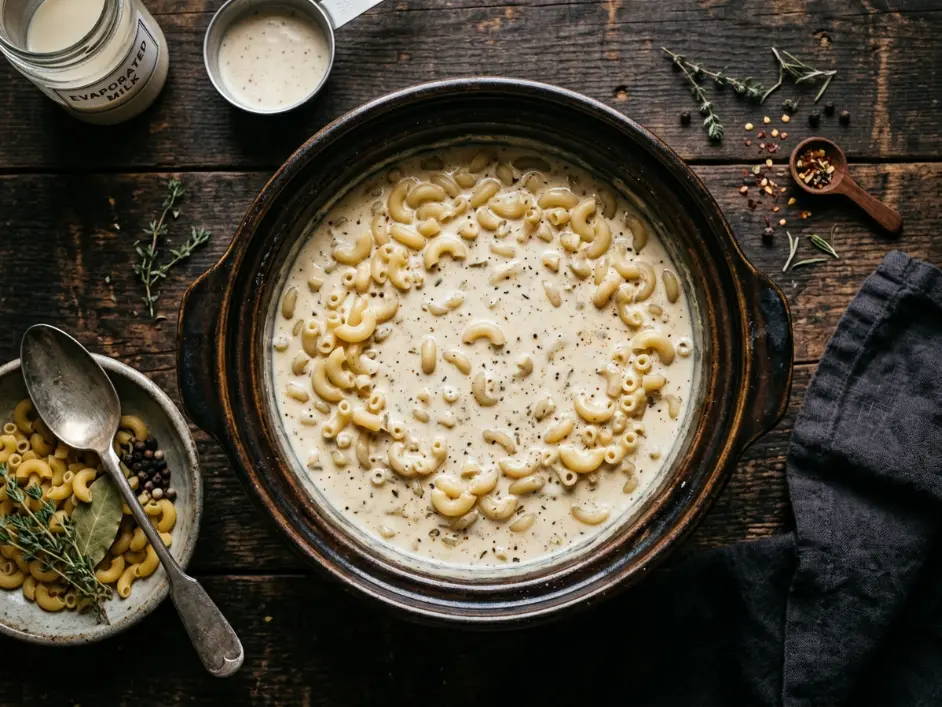
Pour this spiced dairy liquid evenly over the buttered macaroni noodles, ensuring they are loosely settled beneath the liquid surface. Then cut your softened full-fat cream cheese into small, uniform cubes — roughly half-inch pieces — and scatter them across the surface of the wet pasta.
Step 2: The Low-Thermal Pasta Hydration Phase
Secure the slow cooker lid tightly and set the heat to Low. Unlike most slow cooker recipes, this one operates on a precise two-hour window — not four hours, not six hours, two hours. Low heat on most slow cookers maintains an interior temperature of approximately 190°F to 200°F (88°C to 93°C), which is sufficient to fully hydrate dry pasta without overheating the dairy matrix.
The cream cheese cubes you scattered across the surface will melt gradually during this phase, dissolving into the warming liquid below and continuously replenishing the fat content of the sauce. This is a slow-release stabilization process that cannot be replicated if you add the cream cheese later.
Do not lift the lid. Each time you break the seal, you release steam that the pasta is absorbing for hydration. The moisture balance inside the sealed slow cooker is precisely calibrated to what the pasta needs — lose that steam and the pasta will not hydrate properly.
At the ninety-minute mark, carefully lift the lid and use a wooden spoon to gently stir the pasta from the bottom up. You are checking for two things: that the pasta has absorbed most of the liquid and feels al dente — tender with slight resistance — and that no pasta is sticking or burning along the lower edges. If the pasta feels genuinely soft already, turn the slow cooker off immediately.
If the pasta still has a significant chalky core, replace the lid and continue for another fifteen minutes, then check again.
Step 3: Incremental Folding of the Real Cheese Matrix
This is the step where most recipes catastrophically diverge from success. The timing and method of cheese addition are not trivial details — they are the entire difference between a glossy emulsion and a broken, greasy disaster.
Once the pasta has reached a perfect al dente state, turn the slow cooker completely off. Remove the electrical connection if your model continues running on Warm automatically — you do not want any additional heat during this phase.
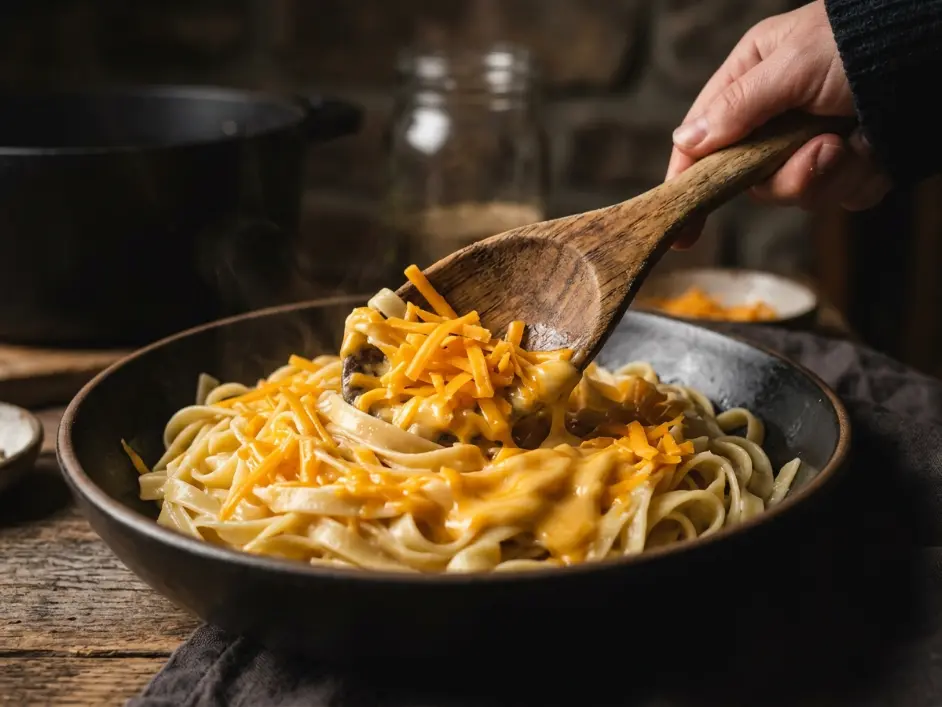
Take your hand-shredded sharp cheddar and add half of it to the pasta. Use your wooden spoon to fold gently — not stir aggressively, fold. Turn the spoon slowly through the pasta, lifting from the bottom and layering cheese over the top in a continuous, gentle motion. Within thirty seconds, the residual heat of the pasta and the slow cooker vessel will begin melting the cheese into the surrounding dairy liquid.
Watch the transformation. The shredded cheddar will first soften, then begin melting into golden threads, then dissolve into the sauce completely. Once the first addition is fully incorporated, add the second half of the cheddar using the same gentle folding technique.
Finally, add your Gruyère or Gouda and the optional fontina if you are using it. These premium melting cheeses integrate with even more fluidity than the cheddar, contributing those spectacular long, elastic strands that make the dish visually extraordinary.
Step 4: The Final Rest and Thermal Stabilization
Once all the cheese is incorporated and the sauce appears smooth and glossy, step away from the slow cooker for exactly two minutes. Do not stir. Do not add anything. Simply rest.
During this window, the sauce undergoes a critical equilibration process. The residual heat in the pasta, the slow cooker vessel, and the newly melted cheese all stabilize at a common temperature. The starch that the pasta released throughout cooking — now distributed throughout the entire liquid — begins setting slightly, thickening the sauce from a loose emulsion into a velvety, coating consistency.
After two minutes, give the entire dish one final gentle stir from the bottom up. The sauce should now coat the back of a spoon in a continuous, unbroken layer with a visible mirror-like gloss. Taste and adjust seasoning — a small pinch of additional sea salt often brings everything into focus. A light dusting of smoked paprika across the surface adds visual drama and a subtle earthy warmth that ties the flavors together.
Serve immediately directly from the slow cooker, using a deep ladle or large serving spoon to capture both pasta and generous amounts of that velvety, molten cheese sauce in every portion.
Chef Joseph’s Insight
Cooking is not just chemistry — it is memory made edible. When others gather around a table and tear off that first piece of warm, crunchy bread to plunge it into a bubbling, velvety center, the science fades away and pure connection takes over. The most powerful moves in the kitchen are almost always the quiet ones. The overnight rest. The proper preheat. The two-minute wait before you plate. It is the patience to wring out every last drop of moisture from your greens, and the care you take in picking the right cheese. Take your time, respect the process, and your kitchen will always reward you. — Chef Joseph | Expert Palate
Nutrition Information (Per Serving)
| Nutritional Component | Amount Per Serving |
|---|---|
| Calories | 620 |
| Protein | 28g |
| Total Fat | 32g |
| Saturated Fat | 19g |
| Carbohydrates | 58g |
| Dietary Fiber | 2g |
| Sodium | 710mg |
| Cholesterol | 98mg |
Note: Nutrition values are careful kitchen estimates based on standard ingredient databases. Values assume eight servings and do not include optional breadcrumb topping or additional cheese garnish.
Food Safety and Thermal Management
Dairy-heavy pasta assemblies require specific food safety attention because the combination of high protein, high fat, and starch creates an ideal environment for bacterial growth if temperature is not properly managed.
The minimum safe holding temperature for dairy-based hot pasta assemblies is 140°F (60°C). Any temperature below this within the danger zone — 40°F to 140°F (4°C to 60°C) — allows bacterial populations to double rapidly. At room temperature in the center of this danger zone, pathogenic bacteria can reach dangerous concentrations within two to four hours.
Once your slow cooker creamy macaroni and cheese is finished, serve it immediately or hold it on the absolute lowest Warm setting your slow cooker offers — and critically, for no more than thirty minutes on Warm. Beyond thirty minutes on any heating setting, the residual thermal energy will continue stressing the casein proteins in the cheese sauce, eventually causing the fat to separate and the sauce to break regardless of how perfectly it was prepared.
For large family events, buffet spreads, or holiday gatherings, keeping dense, rich pasta and hot dairy sauces at proper safe holding levels complies directly with the food defense frameworks managed over at the Food Network.
If serving as a buffet dish, consider serving in smaller batches replenished from a warm holding container rather than leaving the full batch exposed to fluctuating temperatures over an extended service period.
Storage and Reheating Guide
| Item State | Fridge Storage Limit | Freezer Safety Option | Best Reheating Method |
|---|---|---|---|
| Fully Finished Creamy Cheese Sauce Macaroni | 3–4 days in airtight glass container | Not recommended (cheese emulsions break irreparably upon freezing and thawing, creating a grainy, separated sauce that cannot be rescued) | Gentle stovetop reheating in a heavy-bottomed saucepan over low heat with 2–3 tablespoons of half-and-half or whole milk added per portion, stirring continuously in slow circular motions. Never microwave on high — the rapid, uneven thermal exposure triggers instant lipid separation and protein curdling that destroys the emulsion permanently. |
| Plain Hydrated Slow-Cooker Macaroni Base (Pre-Cheese) | 4–5 days in sealed container | Up to 2 months (pasta freezes better without cheese — add fresh cheese upon reheating for best quality) | Stovetop warming in a wide skillet over medium-low heat with a splash of evaporated milk to rehydrate the pasta. Once the pasta is warmed through and the liquid is hot, fold in fresh hand-shredded cheese using the same incremental folding technique described in Step 3. This produces a fresher result than reheating fully finished mac and cheese. |
Slow Cooker Creamy Macaroni and Cheese
Ingredients
Equipment
Method
- Brush the inner porcelain liner of the slow cooker thoroughly with a thin layer of melted unsalted butter using a silicone pastry brush. This creates a lipid barrier that prevents pasta starch from bonding to the vessel walls.
- Pour the uncooked, unboiled ridged elbow macaroni directly into the greased slow cooker base. Add the remaining melted butter over the dry pasta and toss gently until every piece is lightly coated with a thin fat film.
- In a medium mixing bowl, whisk together the full-fat evaporated milk, whole milk, ground yellow mustard, garlic powder, smoked paprika, fine sea salt, and white pepper for thirty seconds until all spices dissolve and distribute evenly.
- Pour the spiced dairy liquid matrix evenly over the buttered macaroni noodles, ensuring they settle loosely beneath the liquid surface. The pasta does not need to be fully submerged — it will absorb liquid during cooking.
- Cut the softened full-fat cream cheese into small half-inch cubes. Scatter the cubes evenly across the surface of the wet pasta so they are distributed throughout rather than concentrated in one area.
- Secure the slow cooker lid tightly. Set the heat to Low. Cook for two hours without lifting the lid. The sealed environment concentrates steam that the pasta requires for proper hydration.
- At the ninety-minute mark, gently lift the lid and stir from the bottom up with the wooden spoon to prevent sticking along the lower edges. The pasta should be al dente — tender with slight core resistance. If it already feels soft, turn off the slow cooker immediately.
- Once the pasta reaches al dente, turn the slow cooker completely off. Add half of the hand-shredded sharp cheddar cheese and fold gently using slow, continuous bottom-to-top motions. Allow thirty seconds for the residual heat to begin melting the cheese.
- Once the first cheese addition is fully incorporated, add the remaining hand-shredded cheddar using the same gentle folding technique. Then add the Gruyère or Gouda and optional fontina cheese, folding each addition until completely smooth and glossy.
- Allow the finished mac and cheese to rest undisturbed for two minutes. The sauce will thicken slightly as the released pasta starches cool and set. Give one final gentle stir, adjust seasoning, dust with smoked paprika, and serve immediately.
Notes
Always use full-fat evaporated milk instead of standard milk — its unique high-temperature vacuum processing concentrates the dairy proteins which protect the sauce from splitting under the slow cooker’s sustained thermal curves.
Do not leave the crockpot on the Warm setting for over thirty minutes after adding the cheese, as continuous heat denatures the casein protein networks and causes the sauce to gradually separate into visible oil pockets and grainy solids.
Frequently Asked Culinary Questions
Why did the cheese sauce in my slow cooker mac and cheese turn out grainy?
The most common cause is pre-shredded cheese coated with anti-caking agents. These coatings — cellulose, potato starch, calcium carbonate — do not dissolve when melted and remain as solid particles throughout the sauce. The second most common cause is adding cheese at the beginning and cooking it for the full two-hour cycle, which causes the casein protein network to break down and expel fat. Always shred your own cheese from a whole block, and always add it at the very end after the heat is off.
Do I need to boil the macaroni noodles before adding them to the slow cooker?
No — and boiling them first actually makes the problem worse. Pre-cooked pasta has already absorbed its full capacity of water. When you add it to the slow cooker dairy liquid, it cannot absorb the dairy the way raw pasta does. Raw pasta releases surface starch into the surrounding liquid as it hydrates, which acts as a natural thickening agent and emulsion stabilizer throughout the cooking cycle. This starch release is essential to the velvety texture of the finished dish.
How do I save my mac and cheese if the oils start separating inside the pot?
If you catch it early, turn the slow cooker off immediately and add two tablespoons of cold whole milk to the pot. Stir vigorously with a wooden spoon in rapid circular motions for thirty seconds — the temperature drop and mechanical action can sometimes re-emulsify a mildly broken sauce. If the separation is severe, transfer the entire contents to a saucepan on the stovetop over low heat. Whisk in evaporated milk one tablespoon at a time until the sauce comes back together. The key is gentle, continuous mechanical action combined with a slow temperature reduction.
Can I use milk instead of evaporated milk for a lighter version?
You can, but the sauce will be significantly less stable and more prone to separation. Standard whole milk contains roughly 87 percent water, which introduces a large volume of free liquid into the slow cooker. This dilutes the fat concentration and reduces the protein scaffolding that keeps the emulsion intact. If you must use standard milk, compensate by adding an extra ounce of cream cheese and reducing the total milk volume by a quarter. Expect a slightly thinner, less glossy sauce even with these adjustments.