6 Unmatched Braising Laws to Stop Making Disastrous Bitter Crockpot Cozy Beef Stew with Red Wine Reduction
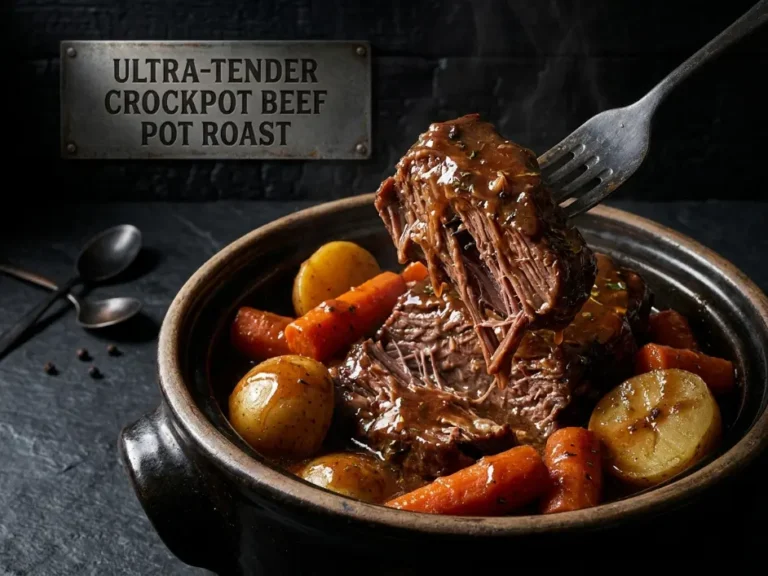
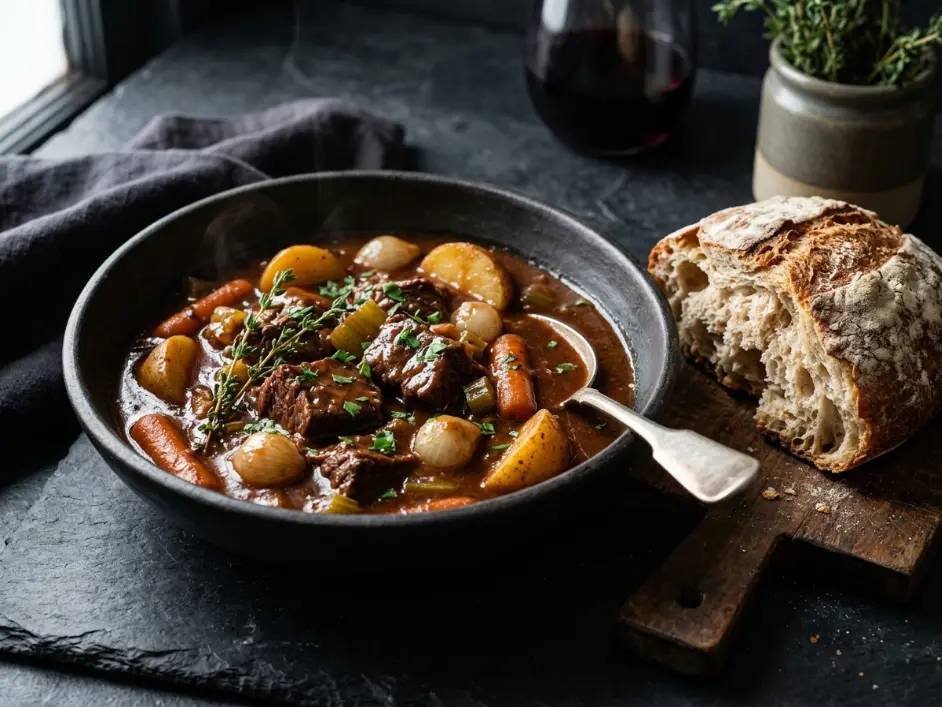
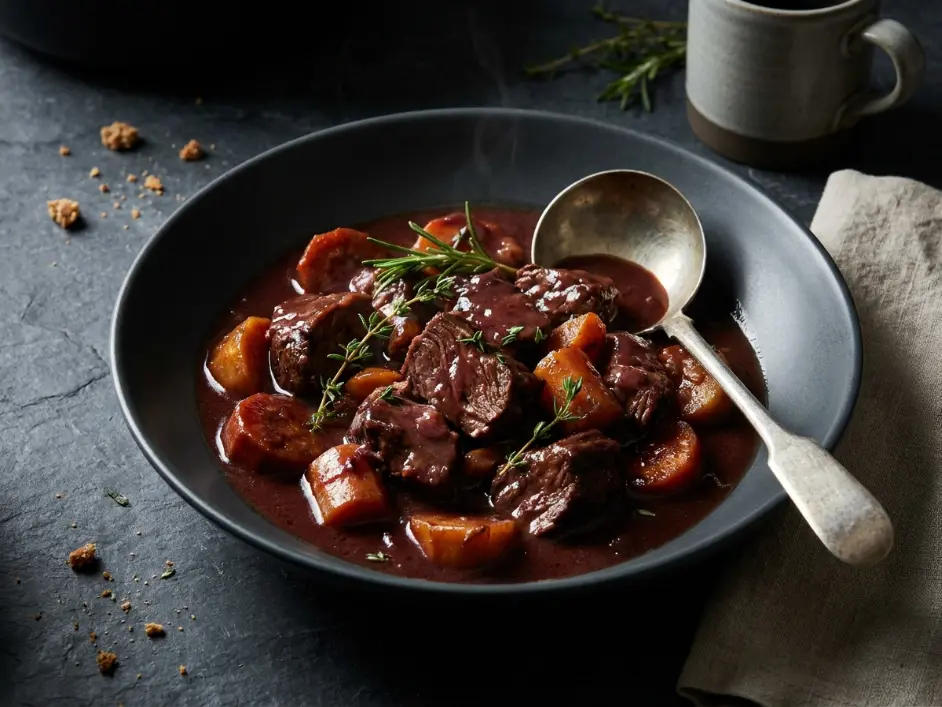
There is a specific moment — somewhere around hour five of slow cooking — when a great beef stew announces itself. The aroma drifting from the kitchen is not just meat and vegetables. It is something deeper, more complex: oak-aged tannins mingling with rendered beef fat, rustic rosemary, and a mahogany sweetness that comes only from properly reduced red wine. You dip a heavy spoon into a thick, glossy gravy that clings perfectly, coats deeply, and carries fork-tender chunks of beef that surrender at the lightest touch.
Then there is the other version. The one most home kitchens produce when they misunderstand what a slow cooker actually does: tough, chalky, gray meat cubes floating aimlessly in a thin, watery broth that tastes sharply of raw, unevaporated alcohol heat and bitter burnt garlic. The potatoes have dissolved into paste. The wine never properly cooked off. The whole dish smells vaguely of a cooking mistake rather than a masterclass.
The problem is not the crockpot. The problem is believing a slow cooker can do everything alone.
I have tested this method across dozens of batches in the Expert Palate test kitchen, adjusting one variable at a time to isolate exactly what makes the difference between a split, oily mess and a perfectly bound, velvety emulsion. What I discovered was that crockpot cozy beef stew with red wine reduction demands two precise interventions before the slow cooker lid ever closes — and without them, no amount of patience will save the dish.
6 Unrivaled Culinary Secrets to Avoid Disastrous Dry Dump-and-Go Crockpot BBQ Pulled Pork Sandwiches
The Chemistry of Maillard Browning and Tannin Coprecipitation
Most people do not understand that a slow cooker operates at temperatures that fundamentally cannot produce one of cooking’s most critical flavor reactions. The interior of a slow cooker on Low reaches approximately 190°F to 200°F (88°C to 93°C). The Maillard reaction — the chemical process that creates the complex, roasted, savory crust on properly seared beef — requires surface temperatures above 285°F (140°C). These are two entirely different thermal worlds.
When amino acids and reducing sugars on the surface of raw beef encounter temperatures above this threshold, they react together and form hundreds of entirely new aromatic compounds simultaneously. This is not just browning — it is the creation of flavor molecules that simply do not exist in raw or gently cooked meat. Pyrazines, furans, thiols, and oxazoles — the compounds that make properly seared beef smell deeply savory, complex, and unmistakably meaty.
In simple terms: without a hard sear, your beef will taste like boiled gray meat inside a wine-flavored liquid. The slow cooker cannot change this.
You can verify the exact amino acid structures, intramuscular iron densities, and moisture loss profiles of raw beef chuck cuts by checking verified biochemical indices within the FoodData Central database — they confirm that beef chuck contains a dense profile of reactive amino acids, particularly glutamic acid, that participate most actively in Maillard reactions under high-heat searing conditions.
Now, the second layer of science: red wine and its tannin behavior inside a stew.
Red wine contains polyphenolic compounds called tannins — large, complex molecules responsible for the mouth-drying, astringent sensation in bold red wines. When raw, these tannin molecules have a harsh, bitter quality that intensifies unpleasantly under the low, closed-environment heat of a slow cooker.
But when you first reduce the wine in a hot skillet — boiling off the ethanol and concentrating the liquid by half — the tannin molecules undergo a process called coprecipitation. They begin binding with the denatured proteins from the beef fond (the caramelized crust remnants on the skillet bottom), forming new, larger molecular complexes that taste rounder, softer, and genuinely savory rather than sharp and astringent.
In simple terms: raw wine in a slow cooker tastes like alcohol soup. Properly reduced wine creates a velvety flavor foundation that tastes like a French bistro.
The ethanol itself is also a critical element to manage. Ethanol has a boiling point of 173°F (78°C) — well within the slow cooker’s operating range. But the sealed environment means the ethanol vapor cannot escape. It circulates inside the closed vessel continuously, infusing the stew with a persistent raw alcohol sharpness that never fully mellows.
Pan-Seared Chuck Beef Lipids+Reduced Tannin Molecules+Root Vegetable Starches→Rich Mahogany Gravy Matrix
Deglazing with wine in the hot skillet, then reducing until the alcohol fumes dissipate completely, solves all of this in one elegant step before the slow cooker ever switches on.
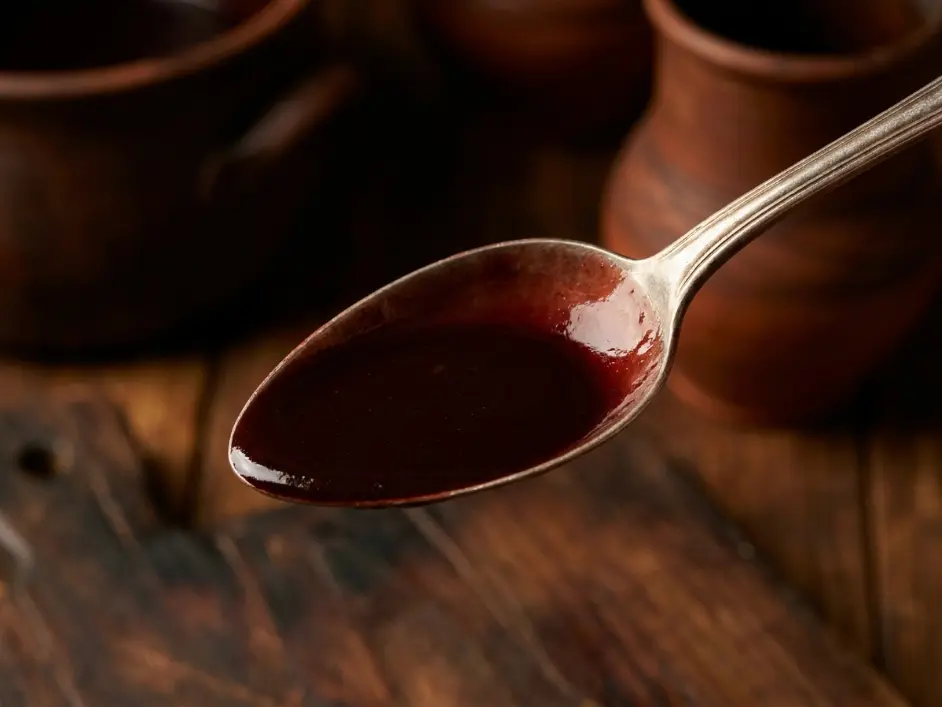
Pro Sourcing & Ingredient Selection
Your ingredient choices define the ceiling of what this dish can achieve. No technique can compensate for poor sourcing at the molecular level.
Start with the beef. Do not reach for lean round cuts or stew meat from anonymous packaging. These cuts lack the intramuscular fat and collagen that are essential for surviving six hours in a slow cooker. Lean cuts become dry, stringy, and unpleasant regardless of how carefully you execute every other step. Seek out heavily marbled beef chuck roast — boneless or bone-in — from a specialty artisan butcher.
Chuck comes from the shoulder, a heavily worked muscle group that is loaded with collagen and intramuscular fat. During slow cooking, the collagen hydrolyzes into gelatin, which coats every muscle fiber, locks in moisture, and contributes directly to that silky, unctuous mouthfeel that defines a perfect stew. The intramuscular fat bastes the meat from inside throughout the entire cooking cycle.
For the red wine, abandon anything labeled “cooking wine.” These products are loaded with added sodium — sometimes 200mg per tablespoon — and lack the complex phenolic structure that makes red wine useful as a braising liquid. The sodium ruins your seasoning balance, and the thin, simple flavor contributes nothing of depth.
Choose a dry, robust, oak-aged red wine that you would genuinely drink — a premium Cabernet Sauvignon or French Merlot from a boutique cellar or a quality wine shop. The oak aging contributes vanilla and toast notes that complement the beef beautifully. The robust tannin structure gives the gravy its signature body and depth after reduction. You are not wasting a good bottle — you are using good wine as an ingredient, which is the only proper approach.
For the potatoes, choose small, dense waxy varieties: Yukon Gold or red-skin baby potatoes. These cultivars have a tight, dense starch structure that holds their shape under prolonged cooking without disintegrating. Russet or baking potatoes are completely wrong for this application — their loose, granular starch cells absorb liquid and collapse into an unpleasant, mealy paste that clouds your gravy.
Ingredients Table
| Category | Ingredient | Measurement |
|---|---|---|
| The Umami Protein Foundation | Beef Chuck Roast, Cut into 2-inch Cubes | 3 lbs / 1.36 kg |
| Sea Salt | 2 tsp / 12g | |
| Black Pepper | 1 tsp / 2g | |
| Avocado Oil (for searing) | 3 tbsp / 45ml | |
| The Red Wine Reduction Matrix | Dry Red Wine (Cabernet Sauvignon or Merlot) | 1.5 cups / 360ml |
| Low-Sodium Beef Stock | 2 cups / 480ml | |
| Tomato Paste (Concentrated) | 2 tbsp / 32g | |
| Yellow Onions, Sliced | 2 medium onions / 300g | |
| Garlic Cloves, Smashed | 5 cloves / 25g | |
| Worcestershire Sauce | 1 tbsp / 15ml | |
| Unsalted Butter (for finishing) | 2 tbsp / 30g | |
| The Botanical Starches and Herbs | Waxy Baby Yukon Gold Potatoes, Whole | 1 lb / 450g |
| Carrots, Peeled and Cut into Thick Rounds | 3 medium carrots / 240g | |
| Fresh Rosemary Sprigs | 2 sprigs / 4g | |
| Fresh Thyme Sprigs | 4 sprigs / 3g | |
| Bay Leaves | 2 leaves / 1g | |
| Cornstarch (Optional, for finishing) | 1.5 tbsp / 12g |
Common Kitchen Blunders That Destroy Crockpot Cozy Beef Stew with Red Wine Reduction
| The Kitchen Blunder | What Actually Happens (Scientific Reality) | The Chef Joseph Fix |
|---|---|---|
| Dumping raw, unreduced wine directly into the cold crockpot | A slow cooker’s sealed environment prevents ethanol from escaping as vapor. The alcohol circulates continuously throughout the six-hour cooking cycle, infusing every element of the stew with a harsh, sharp, raw alcohol quality that never mellows. The raw tannins also remain in their most aggressive molecular state — harsh, astringent, and bitter — because they never undergo the reduction and protein-binding process that transforms them into a round, velvety flavor element. | Always pour the wine into a hot skillet and boil it vigorously with the fond until the volume reduces by half and you can no longer smell sharp alcohol fumes. This takes approximately five to seven minutes of hard boiling. Only then does the wine become a proper braising liquid with concentrated, complex flavors instead of a bitter chemical addition. |
| Skipping the pan-sear step entirely | Unseared beef produces no Maillard reaction compounds. The surface proteins simply denature slowly in warm liquid, creating a gray, texturally soft exterior with none of the deep, complex savory notes that distinguish a proper stew from boiled meat in liquid. The entire flavor profile becomes flat and one-dimensional. No amount of seasoning, wine, or vegetables can compensate for missing these hundreds of new aromatic compounds that only high-heat surface browning creates. | Sear every surface of your beef cubes in a screaming-hot cast iron pan before adding them to the slow cooker. You need a dark, caramelized mahogany crust on all sides — not gray, not light brown, but deeply dark. This requires genuine patience and a very hot pan. |
| Crowding the sear skillet with too much beef at once | When you add too much cold, wet beef to a skillet simultaneously, the surface temperature of the pan drops instantly. The moisture released by the crowded meat creates steam, which physically prevents the surface temperature from rising above the boiling point of water (212°F / 100°C). Below this temperature, no Maillard browning occurs. Instead of searing, you are slowly steaming gray, moisture-releasing meat cubes in their own liquid. | Sear the beef cubes in small, uncrowded batches — approximately one-third of the total amount at a time. Leave significant space between each cube so steam can escape. The pan temperature recovers quickly when it is not overwhelmed by cold meat. Each batch should take no longer than three to four minutes total. |
| Adding delicate russet potatoes at the beginning of the cook cycle | Russet potatoes have a granular, loosely packed starch cell structure that absorbs liquid aggressively. After six hours in a slow cooker, russets completely disintegrate into a grainy, starchy paste that clouds the gravy and eliminates all textural contrast in the dish. The stew becomes monotonously uniform in texture — a quality that kills the eating experience regardless of how complex the flavor is. | Choose dense, waxy Yukon Gold or red-skin baby potatoes. Their tight starch cell structures resist liquid absorption and hold their shape throughout the entire six-hour cycle. They will be completely tender inside but structurally intact on the outside, providing the satisfying textural contrast the dish needs. |
| Cooking the herbs for the entire six-hour duration | Fresh herbs — particularly rosemary, thyme, and bay leaves — contain delicate volatile compounds responsible for their bright, aromatic qualities. These compounds are water-soluble and heat-sensitive. Prolonged exposure to moist heat for six hours causes them to fully leach out and then continue breaking down into harsh, grass-like, bitter phenolic compounds. What started as fragrant and herbal becomes increasingly bitter and unpleasant. | Add fresh herb sprigs during the first four hours, then discard them when you check the stew at the four-hour mark. If you want fresh herbal brightness at the finish, add new sprigs in the final thirty minutes of cooking. Alternatively, add dried herbs at the beginning and fresh herbs only at the end. |
| Neglecting a finishing acid or butter element before serving | After six hours of concentrated reduction, a beef stew can taste intensely savory but flat — the dominant notes become heavy and monotonous without brightness or richness. Without a finishing element, the gravy also lacks the glossy, light-reflective surface that makes a stew visually stunning. Unfinished stews look and taste one-dimensional. | Swirl two tablespoons of cold unsalted butter into the stew during the final five minutes of cooking, stirring continuously until it melts into a glossy emulsion. This technique — called monter au beurre in French cooking — adds richness, rounds the flavor, and creates the glossy, light-catching surface that elevates presentation. A squeeze of fresh lemon juice adds brightness. |
Step-by-Step Method
Step 1: Executing the High-Thermal Surface Sear
Before anything touches the slow cooker, you must execute a proper sear. Pat your beef chuck cubes completely dry using paper towels — thoroughly, aggressively dry. Any surface moisture will create steam and prevent browning. Salt and pepper all surfaces generously.
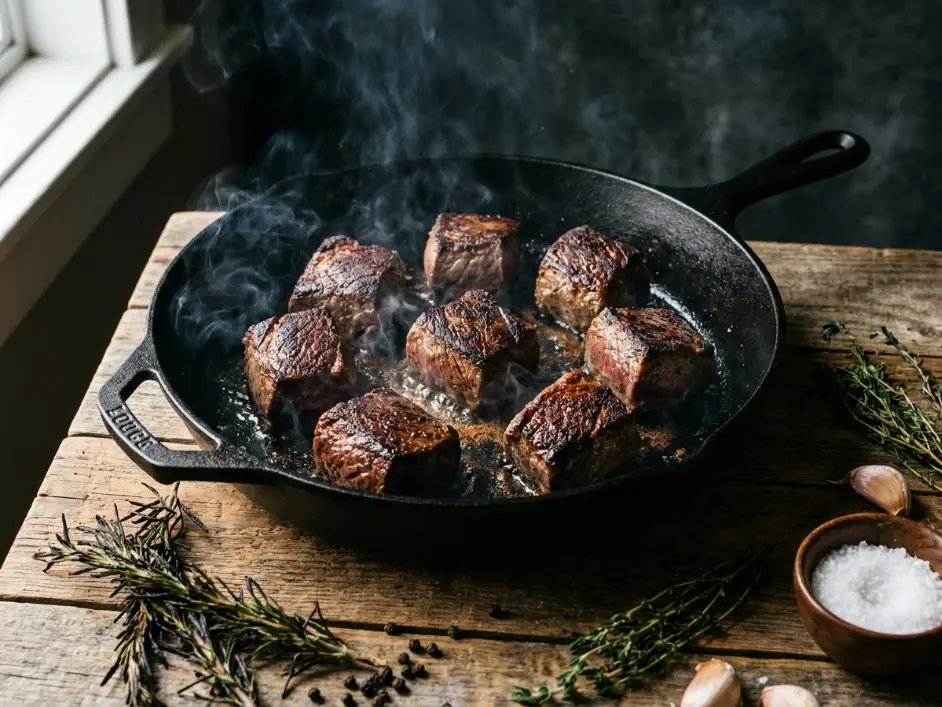
Place a heavy cast iron skillet over high heat for three full minutes. The pan needs to be genuinely, uncomfortably hot. Pour in two tablespoons of avocado oil with its high smoke point and allow it to reach its shimmer point before adding any meat.
Working in small batches of approximately one-third of the beef, add the cubes to the pan in a single uncrowded layer. Leave space between each piece. Do not move them. Do not nudge them. Do not check underneath them for thirty seconds.
After ninety seconds, check one cube. If the surface releases easily from the pan and reveals a dark, mahogany-brown crust, it is ready to flip. If it sticks, it is not ready — leave it thirty more seconds. Sear all remaining sides until equally dark.
Transfer the seared beef cubes directly into the slow cooker. Add more oil between batches if necessary. Repeat until every piece of beef has a proper crust on all sides.
Step 2: The Skillet Deglazing and Tannin Reduction Phase
The bottom of your cast iron skillet at this point should be covered in dark, concentrated fond — caramelized bits of beef protein and rendered fat that represent some of the most intensely flavored material in this entire recipe. Do not wash this pan. Do not wipe it. This is gold.
Reduce the heat slightly to medium-high and add your sliced yellow onions directly to the residual fat in the pan. Stir them continuously, scraping them across the fond, which begins dissolving into the onion’s released moisture. Cook for three to four minutes until the onions are softened and translucent. Add the smashed garlic cloves and cook for one more minute.
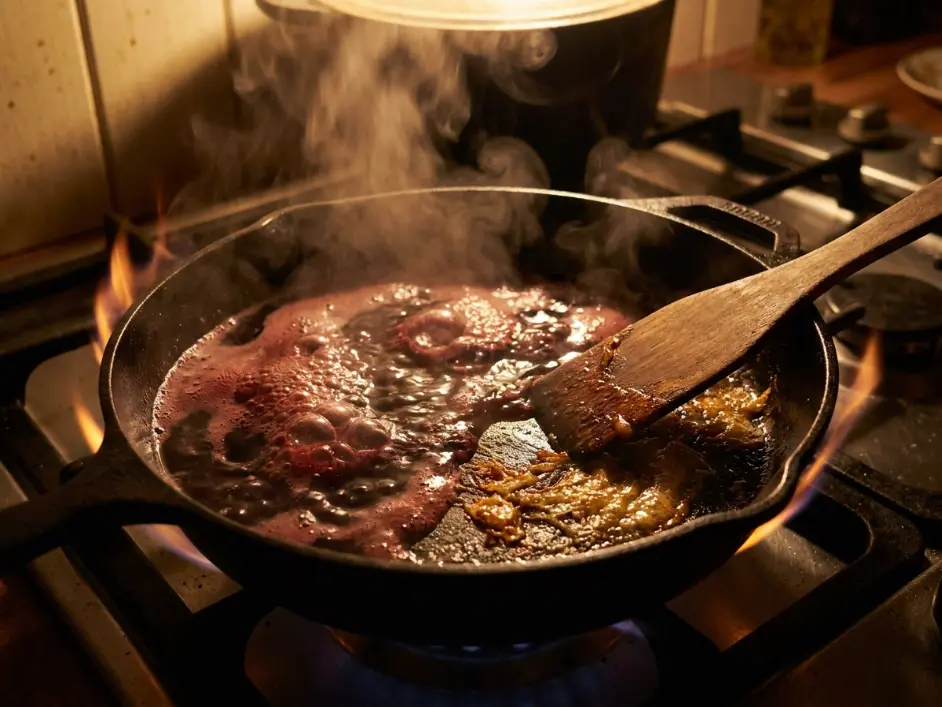
Now pour the dry red wine into the hot pan. The reaction will be immediate and dramatic — the liquid will hit the superhot surface and erupt into a violent boil, releasing billowing steam. Use your wooden spatula to scrape aggressively along the entire bottom of the pan, releasing every last bit of concentrated fond into the wine. This step captures an enormous amount of flavor that would otherwise be left behind.
Allow the wine to boil hard and reduce. You are looking for a fifty percent reduction in volume — roughly five to seven minutes of vigorous boiling. You will know the ethanol has properly evaporated when the sharp, nose-stinging fumes dissipate and what remains smells sweet, concentrated, and complex rather than sharply alcoholic.
Stir in the tomato paste and let it cook for one minute in the reduction, which eliminates raw paste sharpness and deepens its color. Add the beef stock and Worcestershire sauce. Pour the entire contents of the skillet over the beef in the slow cooker.
Step 3: Low-and-Slow Hydrolytic Stewing Sequence
With the seared beef and the fully reduced wine-fond liquid now in the slow cooker, arrange your whole baby Yukon Gold potatoes and thick-cut carrot rounds around and over the beef. Tuck in your fresh rosemary sprigs, thyme branches, and bay leaves.
Secure the lid tightly and set the slow cooker to Low heat. Set a timer for six hours. Do not lift the lid during this cycle — the thermal dynamics inside the sealed slow cooker are carefully balanced, and each lid removal costs you approximately thirty minutes of cooking time as temperature recovers.
As slow-cooking concepts thoroughly broken down over at Serious Eats demonstrate, deglazing the searing pan fond with wine before crockpot transfer captures trapped flavor loops — meaning those concentrated caramelized proteins dissolve into the liquid base and continuously infuse the braising environment throughout the entire six-hour cycle. The liquid carries these compounds deep into every element of the stew.
At the four-hour mark, discard the herb sprigs. Their volatile aromatic compounds have fully contributed and will only continue breaking down into bitterness if left in longer.
After six hours, check the internal temperature of the beef cubes. Properly braised beef chuck should read between 195°F and 205°F (90°C to 96°C) — the temperature range at which the collagen has fully hydrolyzed into gelatin and the muscle fibers fall apart effortlessly. Below this temperature, even by ten degrees, the collagen remains stubbornly tough. Do not rush this.
Step 4: Starch Stabilizing and Finishing Gloss Infusion
Once the beef reaches its target temperature, assess the consistency of your gravy. If it appears thinner than you want, mix one and a half tablespoons of cornstarch with two tablespoons of cold water until smooth. Stir this slurry into the hot stew and replace the lid for fifteen minutes. The starch granules will swell and thicken the gravy into a glossy, coating consistency.
Now execute the finishing gloss. Take two tablespoons of cold unsalted butter, cut into small cubes, and drop them directly into the simmering stew. Using a wooden spoon, stir continuously in slow circular motions as the butter gradually melts into the liquid. This technique — monter au beurre — disperses milk fat particles throughout the gravy, creating a silky, emulsified, light-catching sheen that transforms the visual and textural quality of the dish instantly.
Taste the stew and adjust seasoning with sea salt. Add a small squeeze of fresh lemon juice if the flavor profile feels heavy or flat — the acid will immediately brighten the dominant beef and wine notes and create balance.
Ladle into deep, dark ceramic bowls and serve alongside a torn piece of crusty sourdough bread. Serve immediately while the gravy is still glossy and steaming.
Chef Joseph’s Insight
Cooking is not just chemistry — it is memory made edible. When others gather around a table and tear off that first piece of warm, crunchy bread to plunge it into a bubbling, velvety center, the science fades away and pure connection takes over. The most powerful moves in the kitchen are almost always the quiet ones. The overnight rest. The proper preheat. The two-minute wait before you plate. It is the patience to wring out every last drop of moisture from your greens, and the care you take in picking the right cheese. Take your time, respect the process, and your kitchen will always reward you. — Chef Joseph | Expert Palate
5 Foolproof Thermodynamics Rules for Majestic Slow Cooker Creamy White Chicken Chili
Nutrition Information (Per Serving)
| Nutritional Component | Amount Per Serving |
|---|---|
| Calories | 580 |
| Protein | 55g |
| Total Fat | 22g |
| Saturated Fat | 9g |
| Carbohydrates | 32g |
| Dietary Fiber | 4g |
| Sodium | 740mg |
| Cholesterol | 138mg |
Note: Nutrition values are careful kitchen estimates based on standard ingredient databases. Values assume six servings with standard portions of beef, vegetables, and gravy. Wine-derived alcohol calories largely evaporate during the reduction process.
Food Safety and Thermal Management
Beef chuck stew safety operates on a different principle than standard minimum-temperature food safety. The minimum safe internal temperature for beef is 145°F (63°C) with a three-minute rest — but for braised chuck to become tender and shreddable, you must reach 195°F to 205°F (90°C to 96°C). This higher temperature is a quality requirement as much as a safety one. At these temperatures, collagen fully hydrolyzes and all potential pathogens are completely eliminated with enormous safety margin.
Always verify temperature using a calibrated digital probe thermometer inserted into the thickest beef cube in the center of the slow cooker. Peripheral pieces cook faster — the center reading gives you the most conservative, reliable data.
The danger zone for bacterial growth spans from 40°F to 140°F (4°C to 60°C). Crockpot cozy beef stew with red wine reduction should never sit at room temperature for longer than two hours. If you are serving it as part of a buffet or dinner party and need extended holding time, keep it in the slow cooker on the Warm setting (approximately 150°F / 65°C) to maintain safe holding temperatures.
Keeping thick beef-based reductions and hot slow-cooked stews at safe holding metrics during long buffet services matches the food defense guidelines managed over at the Food Network.
Storage and Reheating Guide
| Item State | Fridge Storage Limit | Freezer Safety Option | Best Reheating Method |
|---|---|---|---|
| Fully Reduced Beef Stew with Root Vegetables | 3–4 days in airtight glass container | Up to 3 months (note: potatoes may soften slightly in texture upon freezing and thawing, but flavor remains excellent) | Gentle stovetop reheating in a covered pot or Dutch oven over low-medium heat with a splash of fresh beef stock (approximately ¼ cup per portion), stirring occasionally. Never use high microwave power, which causes rapid thermal expansion that splits the fat suspension in the gravy. Low, slow reheating preserves emulsion integrity and maintains the glossy texture. |
| Separated Red Wine Stew Gravy Base | 5–7 days in glass jar | Up to 4 months (excellent freezer option — a ready-made reduction base for future batches) | Stovetop warming over medium heat in a small saucepan, whisking occasionally to re-emulsify any separated fat. If the gravy has thickened too aggressively during storage, whisk in warm beef stock to restore consistency before adding back to meat and vegetables. |
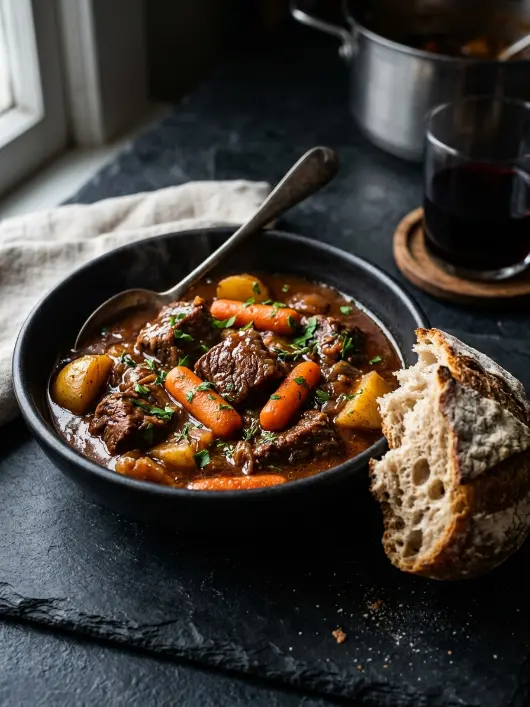
Crockpot Cozy Beef Stew with Red Wine Reduction
Ingredients
Equipment
Method
- Pat the marbled beef chuck roast cubes completely dry with paper towels. Season all surfaces generously with sea salt and black pepper. Heat a heavy cast iron skillet over high heat for three full minutes until smoking.
- Pour avocado oil into the hot pan. Working in small, uncrowded batches of one-third of the beef, sear the cubes without moving them until a deep, dark mahogany crust forms on each surface — approximately 90 seconds per side. Transfer seared cubes directly to the slow cooker. Repeat with remaining beef, adding oil between batches as needed.
- With the skillet still hot, add the sliced yellow onions and smashed garlic to the residual rendered fat. Stir continuously, scraping the fond, for three to four minutes until onions are translucent.
- Pour the dry red wine into the hot skillet. It will erupt immediately into violent boiling. Scrape aggressively along the entire pan bottom with the wooden spatula to dissolve every bit of caramelized fond into the wine. Allow to boil hard for five to seven minutes until volume reduces by half and sharp alcohol fumes fully dissipate.
- Stir the tomato paste into the wine reduction and cook for one minute. Add the beef stock and Worcestershire sauce. Pour the entire contents of the skillet over the beef in the slow cooker.
- Arrange the whole baby Yukon Gold potatoes and thick-cut carrot rounds around and over the beef. Tuck in fresh rosemary sprigs, thyme branches, and bay leaves. Secure the slow cooker lid tightly.
- Set the slow cooker to Low heat. Cook for six full hours without lifting the lid. At the four-hour mark, discard the herb sprigs to prevent bitterness.
- After six hours, insert a meat thermometer into the center beef cube. Target internal temperature is 195°F to 205°F (90°C to 96°C). If reading is below 195°F (90°C), continue cooking in thirty-minute increments until target is reached.
- If gravy needs thickening, mix cornstarch with cold water until smooth. Stir slurry into hot stew and replace lid for fifteen minutes until thickened.
- Drop cold unsalted butter cubes into the stew and stir continuously in slow circular motions until fully melted and emulsified into a glossy sheen. Taste and adjust seasoning. Serve immediately in deep bowls with crusty sourdough bread.
Notes
Choose dense waxy baby potatoes like Yukon Golds rather than baking russets to prevent the starches from breaking down into a grainy soup paste during the six-hour cooking cycle.
Always sear the beef cubes in tiny, uncrowded batches so the meat surfaces fry instantly in the fat rather than steaming inside escaping moisture cells — crowding creates boiled gray meat instead of properly browned crust.
Frequently Asked Culinary Questions
Why is the red wine gravy in my crockpot stew watery instead of thick and glossy?
Two likely causes: either you added too much liquid or you skipped the reduction step. The slow cooker is a sealed, low-evaporation environment — liquid does not reduce the way it does on a stovetop. Any liquid you add at the beginning largely remains at the end. Use only the amounts specified — the beef itself releases additional moisture as it cooks. If your gravy is still too thin after cooking, use the cornstarch slurry method described in Step 4 to thicken it to your preference.
Can I make this beef stew recipe without using any alcohol?
Yes. Replace the red wine with a combination of one cup of unsalted beef stock and half a cup of pure grape juice with a tablespoon of red wine vinegar. The grape juice provides the fruit sugars and some phenolic complexity, while the vinegar contributes the mild acidity that wine provides. The flavor will not be identical, but it will be deeply satisfying. Still reduce this mixture in the skillet before adding to the slow cooker — you want a concentrated, complex base regardless of the liquid used.
Why did my beef chunks come out tough and chewy even after hours in the slow cooker?
Almost certainly a temperature problem. Beef chuck collagen transforms from tough to gelatin only above 195°F (90°C) with sustained time. If your slow cooker runs cool or you cooked on the Warm setting instead of Low, the internal temperature may not have reached this threshold. Additionally, if you used a lean cut like round roast or sirloin, no amount of cooking will produce a tender result — the collagen content is simply too low. Always use chuck and always verify temperature.
How do I fix the stew if the red wine reduction tastes too bitter or sour?
Start with fat and sweetness. Swirl in an extra tablespoon of cold unsalted butter and stir continuously for thirty seconds — fat coats the palate and rounds harsh flavors significantly. Add half a teaspoon of brown sugar or a drizzle of honey and stir thoroughly. The sweetness will counterbalance bitterness. If the issue is excessive sourness, add another tablespoon of tomato paste, which contributes umami and balances acidity. Taste after each adjustment before adding more of any element.