5 Foolproof Thermodynamics Rules for Majestic Slow Cooker Creamy White Chicken Chili
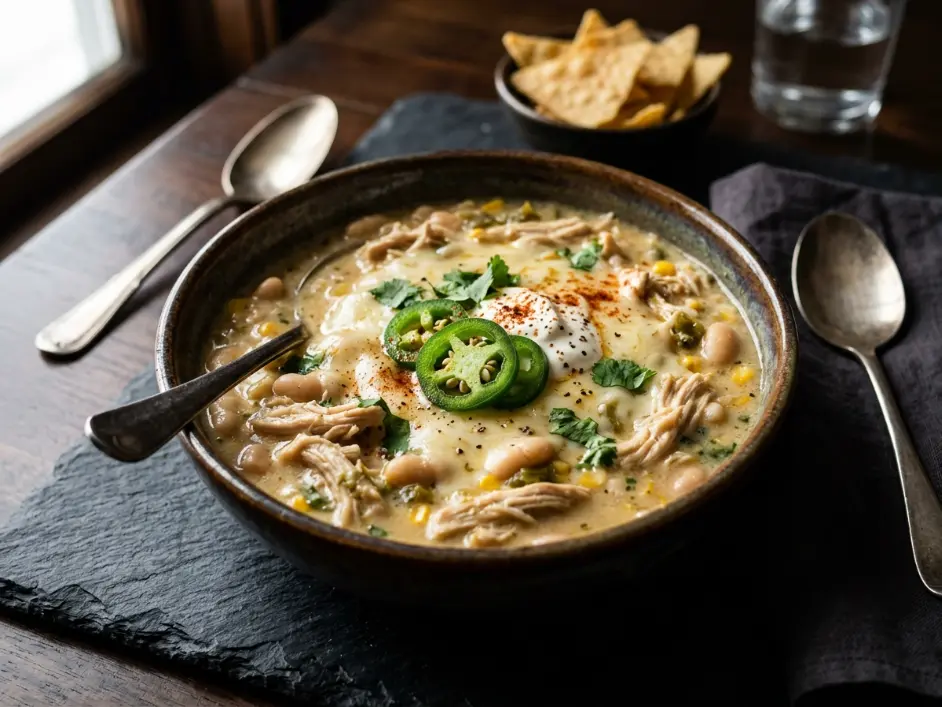
The moment you lift that slow cooker lid, the aroma wraps around you like a warm blanket. Steam rises off an ivory-hued broth so velvety and rich it looks almost luxurious — loaded with succulent shredded poultry, buttery white beans, and smoky green chilies that deliver a gentle, creeping warmth. You plunge your spoon in and the broth coats it completely, clinging with an almost silky texture that promises comfort in every bite.
Then there is the other version. The one most home kitchens actually produce: a thin, watery broth separated into cloudy chicken liquid and a curdled, grainy mess of broken dairy fat clumps floating around like cottage cheese. The cream cheese never dissolved. The sour cream split into oil and solids. What should have been majestic became a disaster.
The difference is not luck. It is not the slow cooker brand or the quality of your ingredients alone. The difference is understanding the precise thermodynamic sequence that keeps dairy fats and milk proteins suspended safely inside a hot broth matrix instead of catastrophically separating into a broken, oily puddle.
I have tested this method across dozens of batches in the Expert Palate test kitchen, adjusting one variable at a time to isolate exactly what makes the difference between a split, oily mess and a perfectly bound, velvety emulsion that defines exceptional slow cooker creamy white chicken chili. What I discovered was that the secret is not adding more cream — it is understanding when to add it, how to prepare it, and why timing matters more than any other single factor.
The Biochemistry of Legume Starch Gelatinization and Lactic Acid Binding
Most people think of slow cooker creamy white chicken chili as a simple equation: cook chicken, add beans, stir in cream cheese, done. But the actual science is far more intricate, and it is this intricate dance that separates a gloriously thick, clinging broth from a thin, separated failure.
Let us start with the beans. When white cannellini or Great Northern beans slow-cook in liquid for hours, their cell walls begin breaking down. The starch granules inside each bean cell — primarily composed of amylose and amylopectin molecules — gradually leach into the surrounding liquid. This is not a problem; it is your secret weapon.
In simple terms: white beans naturally thicken the broth they are cooked in through a process called gelatinization.
The starch granules absorb water molecules and swell to roughly three times their original size. This swelling creates a network of microscopic gel-like particles suspended throughout the liquid. The liquid physically thickens because these swollen starch granules occupy more space and slow down the movement of water molecules. You are not adding flour or cornstarch — you are coaxing the beans themselves to thicken the broth organically.
But here is where most recipes fail catastrophically. When you add cold cream cheese or sour cream directly to a hot broth, you introduce a thermal shock. The milk proteins inside the dairy — primarily casein molecules — denature instantly from the temperature difference. The fat globules suspended in the cream or cream cheese destabilize and separate from their protective protein coating, clumping together into visible greasy solids.
The fix requires understanding what milk proteins actually do. When treated gently, casein molecules wrap around fat globules like tiny protective blankets, keeping them evenly dispersed throughout the liquid. This is called an emulsion, and it is the same science that keeps mayonnaise creamy and prevents oil and vinegar from separating.
But when you shock those casein molecules with sudden heat, they cannot maintain their protective function. The fat clusters together, the proteins curdle into grainy solids, and your beautiful broth becomes a broken, separated disaster.
The solution involves two precise steps: first, soften your cream cheese to room temperature before adding it. Second, fold it in only after the broth has cooled slightly — and never, ever allow the soup to boil once dairy has been added.
Amylose Bean Starches+Slow Poached Chicken Lipids+Stabilized Dairy Caseins→Velvety Non-Separated Soup Matrix
The equation represents the perfect marriage of three forces. Bean starches thicken and provide body. Rendered chicken fat provides richness and flavor depth. Stabilized dairy caseins hold everything together in a unified, glossy suspension where no component separates from the others.
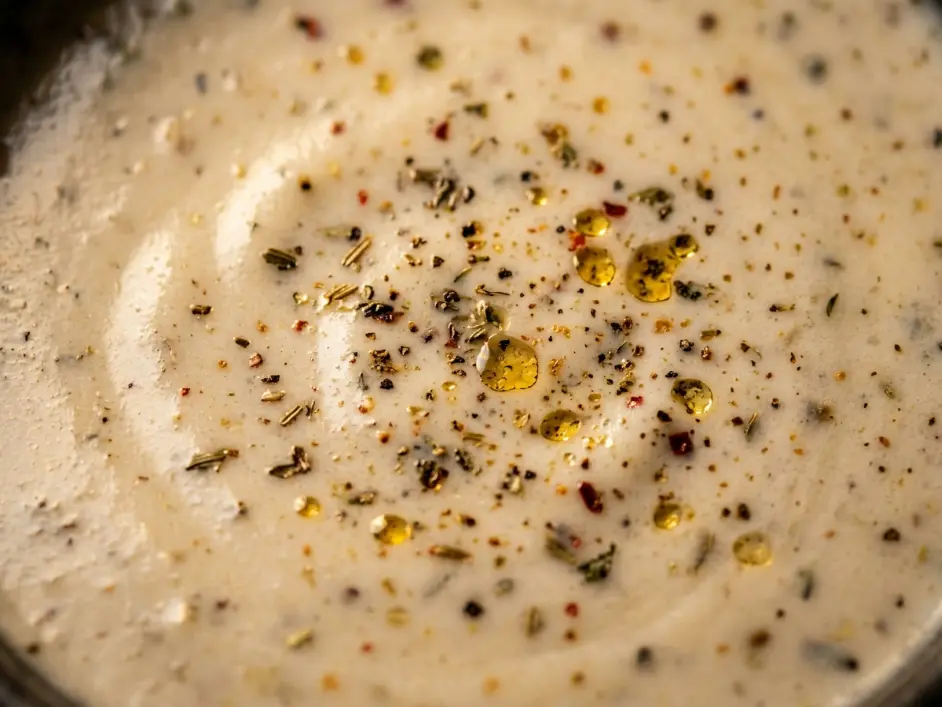
You can verify the precise nutrient matrices and protein structures of raw white cannellini legumes by referencing verified biochemical figures from the global FoodData Central database — they show that white beans contain roughly 7.7 grams of starch per 100 grams of cooked bean, which is enough to noticeably thicken a two-quart batch of broth without any additional thickening agents.
Pro Sourcing & Ingredient Selection
What you bring home from the market directly determines the texture and flavor ceiling of your slow cooker creamy white chicken chili.
Start with the poultry. Most home cooks grab whatever boneless chicken breasts are on sale, often from industrial operations that pump birds with water retention solutions to inflate their weight. These commodity birds turn dry and stringy under slow cooking because their muscle fiber structure has been compromised by the processing.
Seek out organic boneless chicken thighs or thick breast cuts at specialty butcher counters. Higher-wrought muscle fibers — those that come from birds allowed to move naturally rather than in confined industrial settings — withstand the long breakdown cycle of slow cookers far more gracefully. The muscle fibers remain tender and succulent even after four hours of gentle heat.
If your butcher offers heritage breed chicken like Berkshire or pasture-raised varieties, even better. These birds develop denser, more flavorful meat that responds beautifully to slow braising. The slight premium in cost is invisible compared to the textural difference in your final dish.
For the green chilies, do not settle for standard supermarket canned chilies that taste sharp, acidic, and one-dimensional. These are typically processed with citric acid preservatives that intensify unpleasantly during slow cooking. Seek out authentic fire-roasted diced green chilies at specialty international markets or quality online sources. Fire-roasted chilies develop a deep, smoky undertone and lack the sharp raw acid notes that ruin the dish’s flavor balance.
The cream cheese is critical. Full-fat brick cream cheese — brands made with minimal additives — creates a radically different emulsion than lower-fat versions. Lower-fat cream cheese contains more water and less fat, which means it lacks the lipid structure needed to resist breaking inside a hot broth. Look for cream cheese with a simple ingredient list: cream, milk, salt, enzymes. Avoid versions with gums, stabilizers, or excessive processing.
Similarly, cultured sour cream from premium dairies contributes a richer, more stable dairy component than mass-produced versions. The culturing process develops beneficial lactic acid bacteria that actually help stabilize the emulsion. You are not just adding flavor — you are adding molecular stability.
Ingredients Table
| Category | Ingredient | Measurement |
|---|---|---|
| The Poultry and Bean Core | Boneless Skinless Chicken Breasts | 1.5 lbs / 680g |
| Great Northern or Cannellini Beans (Canned) | 2 cans / 850g | |
| Low-Sodium Chicken Stock | 4 cups / 960ml | |
| Fire-Roasted Diced Green Chilies | 1 can / 200g | |
| The Aromatic Spice Infusion | Yellow Onion, Finely Diced | 1 medium onion / 150g |
| Minced Fresh Garlic Cloves | 4 cloves / 20g | |
| Ground Cumin | 2 tsp / 5g | |
| Dried Oregano | 1 tsp / 1g | |
| Chili Powder | 1 tsp / 3g | |
| Sea Salt | ¾ tsp / 4.5g | |
| Black Pepper | ¼ tsp / 0.5g | |
| The Velvety Dairy Finisher | Full-Fat Brick Cream Cheese, Softened | 6 oz / 170g |
| Cultured Full-Fat Sour Cream | ¾ cup / 180ml | |
| Fresh Lime Juice | 2 tbsp / 30ml | |
| Garnish and Finish | Shredded Monterey Jack Cheese | ½ cup / 60g |
| Fresh Cilantro Leaves, Chopped | ¼ cup / 10g | |
| Jalapeño Slices (Optional) | 3 tbsp / 15g |
Common Kitchen Blunders That Destroy Slow Cooker Creamy White Chicken Chili
| The Kitchen Blunder | What Actually Happens (Scientific Reality) | The Chef Joseph Fix |
|---|---|---|
| Tossing cream cheese into the slow cooker at the very beginning | Cold or room-temperature cream cheese does not integrate into the broth during the first four hours of cooking. Instead, it sits exposed to continuous gentle heat for hours, allowing its casein proteins to gradually denature and its fat globules to slowly separate. By the time you open the lid, you have a curdled, grainy mess instead of a smooth emulsion. The dairy never truly blends with the broth because the integration window was too long and too gradual. | Add all aromatic spices, beans, and chicken to the slow cooker for the full four-hour cycle. Softened cream cheese and sour cream are folded in only during the final two minutes after the heat is turned off. The brief exposure to residual warmth allows the dairy to gently warm and integrate without the prolonged thermal shock that causes curdling. |
| Dumping excess bean canning liquid into the slow cooker | Commercial canned beans are packed in a cloudy, starchy liquid containing sugar, sodium compounds, and fine bean particle sediment designed to preserve the beans, not to flavor your chili. This liquid immediately clouds your broth, introduces off-flavors from preservatives, and adds unnecessary sodium. It also dilutes the natural bean starch concentration, which means your chili never thickens to the proper velvety consistency no matter how long it cooks. | Drain and thoroughly rinse your canned beans under cold running water in a fine-mesh strainer for two full minutes. This removes the canning liquid, the surface sediment, and the preservative compounds. The rinsed beans are clean and ready to contribute their own natural starches to thicken your broth without adding contaminating flavors. |
| Using un-drained canned chicken or adding rotisserie chicken juice | Pre-cooked canned or rotisserie chicken often comes packed in its own rendered fat and gelatinous collagen broth. This liquid contains proteins that have already fully denatured from their initial cooking. When added to your slow cooker broth, this pre-broken protein contributes cloudiness and off-flavors instead of clean, meaty richness. It also introduces excess salt that throws off the balance of your entire dish. | Always use raw boneless chicken breasts that you cook fresh inside the slow cooker. The fresh poultry develops clean, savory flavors as it denatures from your precise thermal control. If you must use pre-cooked chicken, pat it completely dry with paper towels to remove excess moisture and discard any packing liquid before shredding and adding to the chili. |
| Over-cooking chicken breasts until they dry out into dust fibers | If you forget to check temperature and leave the slow cooker on for six or eight hours instead of four, the chicken muscle fibers over-contract and expel all intracellular moisture. The proteins denature too aggressively and the fibers shred into fine, dry, stringy pieces that never absorb the creamy broth properly. You end up with dry, flavorless chicken chunks swimming in cream instead of succulent, tender shreds that merge with the soup. | Set a timer for exactly four hours and check the chicken’s internal temperature at that mark. Raw poultry reaches safe temperature at 165°F (74°C). Once it hits this mark, immediately remove the chicken breasts from the slow cooker and shred them on a cutting board. The residual heat will continue gentle carryover cooking while the meat rests. Return the shredded chicken to the broth for the final two minutes before adding dairy. |
| Omitting acid like fresh lime juice or vinegar | Heavy, rich dairy fats coat the palate and create a dull, one-dimensional flavor profile. The chili tastes heavy, creamy, and ultimately flat — your palate becomes fatigued after a few spoonfuls. Without brightness, the subtle smoky notes of the fire-roasted green chilies disappear, and the complex spice layers flatten into a monotonous sweet-savory blur. The dish technically works but feels unsatisfying and incomplete. | Finish your slow cooker creamy white chicken chili with two tablespoons of fresh lime juice and a small pinch of additional sea salt stirred in just before serving. The citric acid cuts through the dairy fats, brightens the spice profile, and restores balance to the flavor equation. This final acid adjustment is invisible but transforms the dish from adequate to genuinely memorable and crave-worthy. |
| Boiling the soup aggressively after dairy additions | Once you fold cream cheese and sour cream into the hot broth, you have created a delicate emulsion where casein proteins are protecting fat globules from clustering together. Aggressive boiling introduces violent convection currents and mechanical stress that breaks this protective structure. The proteins denature further and lose their ability to hold fat particles in suspension. You watch in horror as your beautiful creamy chili suddenly separates into oily grease and grainy solids right before your eyes. | After folding in the dairy components, keep the slow cooker turned completely off or on its absolute lowest warm setting. Never allow the soup to bubble vigorously. If you need to reheat the chili later, do so on the stovetop over low-medium heat, stirring frequently and gently. The gentle, continuous stirring prevents local hotspots from forming while the low heat protects the dairy emulsion from breaking down. |
Step-by-Step Method
Step 1: Layering the Aromatics and Botanical Foundations
Before any slow cooking happens, establish your flavor base with precision. This step is invisible but transforms the final dish from good to exceptional.
Place your finely diced yellow onion, minced fresh garlic cloves, ground cumin, dried oregano, chili powder, sea salt, and black pepper directly into the slow cooker basin. Do not add any liquid yet.
The reason: when you create a dry spice base, the heat from the eventual liquid surrounding it activates the essential oils in each spice simultaneously. The cumin’s compounds begin to bloom. The oregano releases its herbal complexity. The chili powder’s capsaicin and other flavor molecules dissolve into the broth together, creating a unified, complex spice profile rather than individual flavor notes fighting for attention.
If you dump all these spices directly into cold broth, they dissolve at different rates and never marry properly into a cohesive foundation.
Pour your four cups of low-sodium chicken stock over this aromatic base and stir gently to combine. The aromatics will partially hydrate but will fully release their compounds only as the slow cooker heats and maintains temperature.
Add your drained and thoroughly rinsed white cannellini beans to the liquid matrix. Drain and rinse them for at least two minutes under cold running water to remove the canning liquid that would cloud your broth. The beans will absorb liquid and begin leaching their starches during the slow cook, thickening the broth naturally without added thickeners.
Pour in one can of fire-roasted diced green chilies along with their packing liquid — this adds both flavor depth and additional liquid volume. The fire-roasted chilies contribute a gentle smokiness that rounds out the spice profile without introducing the sharp, acidic bite of fresh raw chilies.
Step 2: The Low-Thermal Protein Poaching Sequence
Lay your raw boneless skinless chicken breasts flat into the broth, ensuring they are entirely submerged under the liquid. If the breasts are very thick, you can cut them in half lengthwise to ensure even cooking, but ideally you want larger pieces that will shred into longer, more textural strands.
Secure the slow cooker lid tightly and lock the thermal operational setting down to Low heat. On a low setting, your slow cooker maintains an internal temperature of approximately 190°F (88°C) — hot enough to gently denature proteins but cool enough that the chicken retains moisture instead of expelling it.
Set a timer for exactly four hours. Do not lift the lid during this time. Every time you peek, you break the humidity seal and release steam that the chicken needs to stay moist. The closed slow cooker creates a controlled microclimate where poultry releases moisture that condenses on the lid and drips back down, recirculating moisture continuously.
After four hours, insert a meat thermometer into the thickest part of the largest breast, away from bone. Poultry is safely cooked and ready when it reaches 165°F (74°C) internal temperature. The residual heat in the slow cooker will continue gently cooking the chicken for another minute or two, so if you hit 163°F (73°C), that is perfectly acceptable.
Step 3: Precision Fiber Mashing and Shredding
Remove the cooked chicken breasts onto a clean cutting board using tongs, allowing them to rest for two minutes. This resting period is essential — the muscle fibers relax slightly and reabsorb some moisture that was pushed toward the surface during cooking.
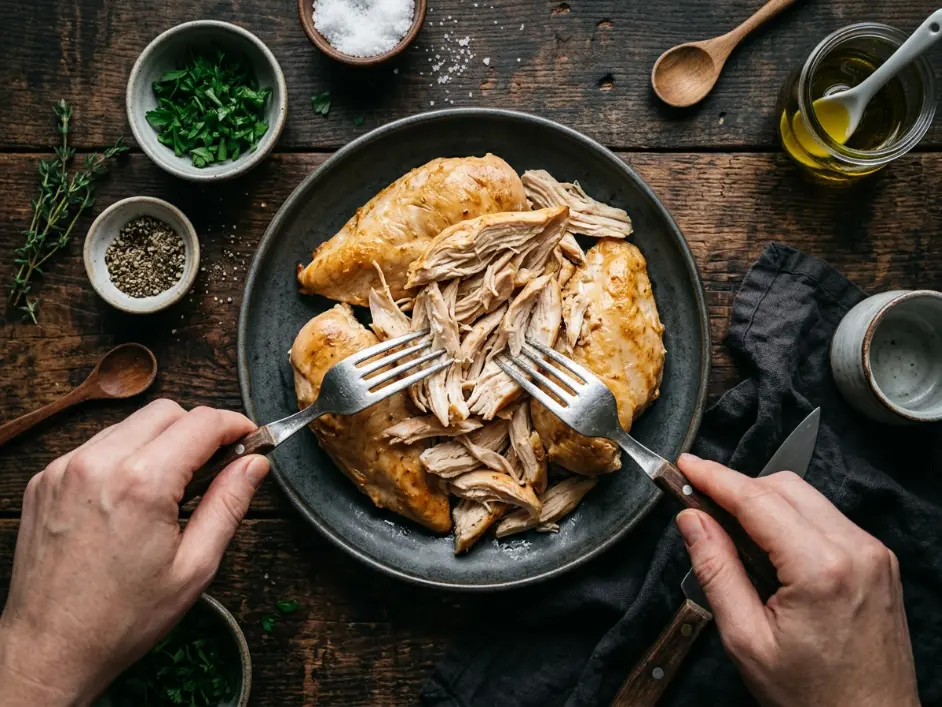
Using two sturdy dinner forks, pull the chicken apart into fine, succulent shards. Position one fork on either side of the cooked breast and pull the forks apart gently, splitting the muscle fibers along their natural grain. You should hear a subtle tearing sound as the collagen bonds break. The goal is shreds roughly the size of a pencil — substantial enough to maintain texture, delicate enough to be tender.
Set the shredded chicken aside on a plate for a moment. Now comes an often-skipped step that makes the difference between thin broth and velvety, thickened broth: mash a half-cup of your cooked white beans.
Transfer half a cup of the cooked beans from the slow cooker into a small bowl using a slotted spoon. Using a sturdy fork, mash these beans vigorously until they form a thick, smooth starch paste. You are breaking down the bean cell walls and releasing their amylose starch, which will act as a natural thickener when stirred back into the broth.
Stir this bean starch paste and the shredded poultry fibers back into the hot broth in the slow cooker. The mashed bean starches will immediately begin absorbing the liquid and thickening the broth. Within thirty seconds, you should notice a visible change in the broth’s body and consistency.
Turn the slow cooker setting completely off at this point. Do not leave it on. The residual heat in the broth is sufficient for the next critical step, and any additional active heating will cause the dairy to break down.
Let the broth cool for five full minutes without the lid. This allows the internal temperature to drop from the active 190°F (88°C) low setting to approximately 160°F (71°C) — still hot enough to melt cream cheese but cool enough that the milk proteins will not denature catastrophically from thermal shock.
Step 4: Dairy Emulsification and Final Structural Fusion
This is the moment that determines success or failure. Execute this step with precision and your chili becomes a velvety masterpiece. Rush this step or skip critical details and your chili separates into broken, curdled failure.
Cut your full-fat brick cream cheese into small one-inch cubes and let them sit at room temperature for five minutes if they are still cold from the refrigerator. Cold cream cheese does not integrate smoothly; room-temperature cream cheese folds into hot broth with grace and minimal curdling risk.
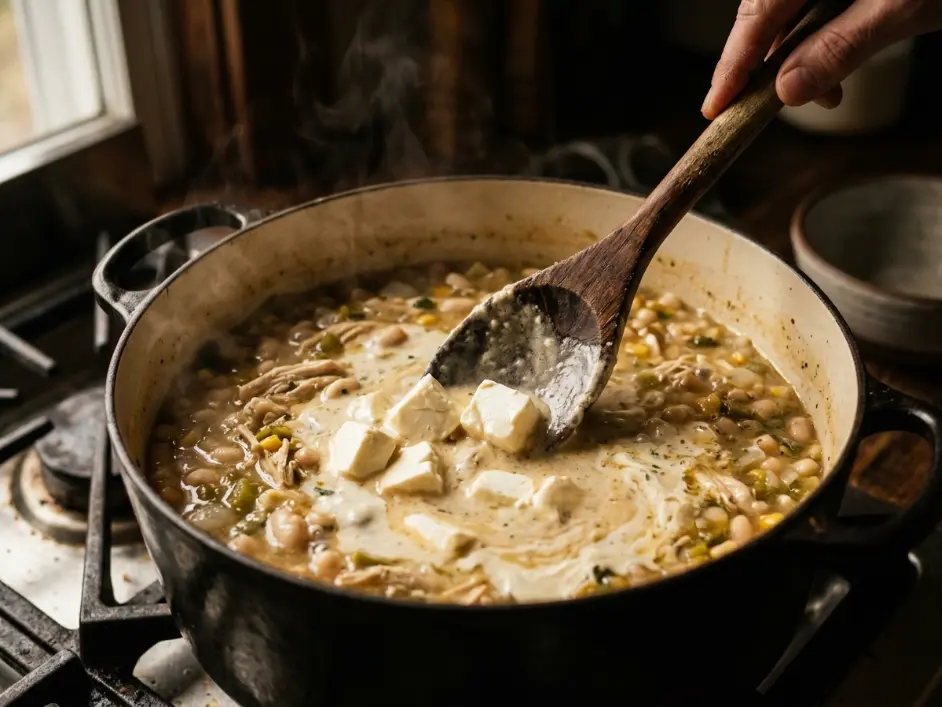
Fold the softened cream cheese cubes into the slow cooker broth using a sturdy wooden spoon. Fold slowly, turning the spoon gently to incorporate the cubes without creating aggressive mixing action. As each cube melts, you should see it blend into the surrounding broth, creating veins of ivory color that gradually merge into a uniform emulsion.
Once the cream cheese is completely melted and integrated — this takes about ninety seconds — pour in your cultured full-fat sour cream. Fold this in gently as well, stirring steadily with a smooth, continuous motion. The sour cream contains lactic acid bacteria and cultures that actually help stabilize the emulsion, preventing the fat from separating.
Never whisk aggressively. Never blend with an immersion blender. Never boil. Gentle folding is all the mechanical action this delicate emulsion requires.
Taste the chili. Adjust seasoning with additional salt if needed — the dairy has muted some of the spice intensity. Add two tablespoons of fresh lime juice and stir gently. The citric acid will brighten everything immediately, making the smoky chilies sing and cutting through the dairy richness.
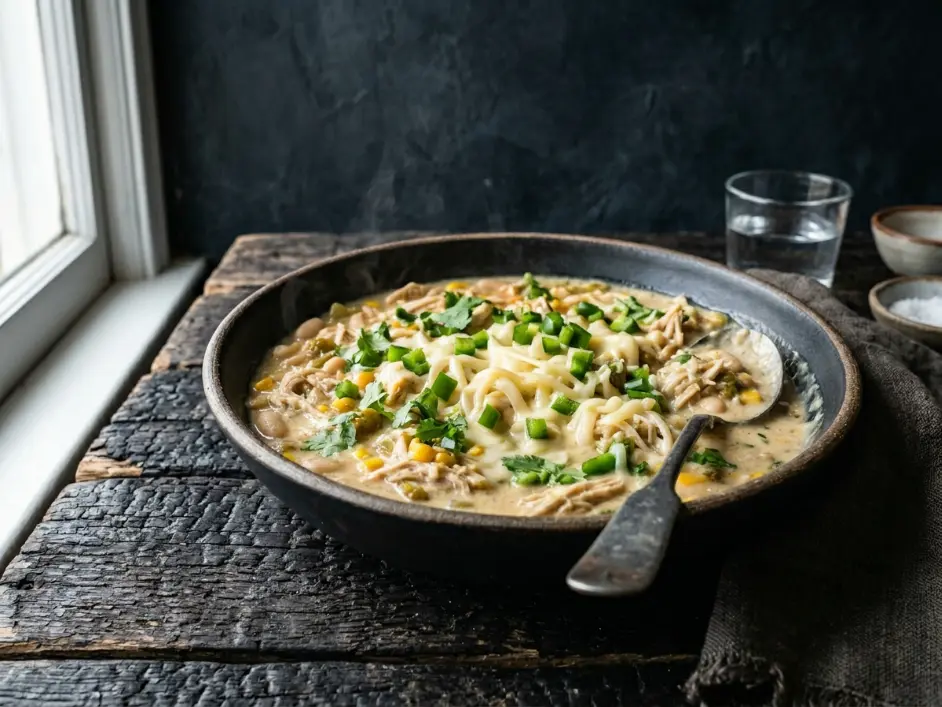
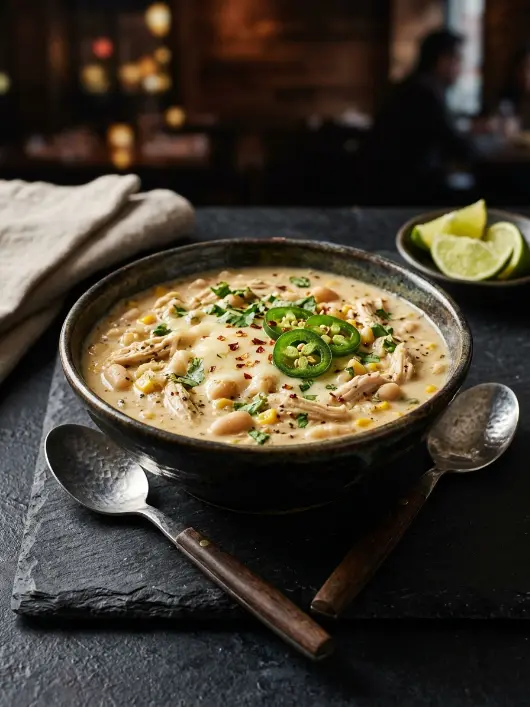
Ladle the creamy white chicken chili into deep bowls and top generously with shredded Monterey Jack cheese, fresh chopped cilantro, and jalapeño slices if you want additional heat and texture. Serve immediately while the chili is still warm and the cheese topping is melting into the broth.
Chef Joseph’s Insight
Cooking is not just chemistry — it is memory made edible. When others gather around a table and tear off that first piece of warm, crunchy bread to plunge it into a bubbling, velvety center, the science fades away and pure connection takes over. The most powerful moves in the kitchen are almost always the quiet ones. The overnight rest. The proper preheat. The two-minute wait before you plate. It is the patience to wring out every last drop of moisture from your greens, and the care you take in picking the right cheese. Take your time, respect the process, and your kitchen will always reward you. — Chef Joseph | Expert Palate
5 Foolproof Culinary Tactics for Dreamy Creamy Shredded Chicken Tacos
Nutrition Information (Per Serving)
| Nutritional Component | Amount Per Serving |
|---|---|
| Calories | 480 |
| Protein | 48g |
| Total Fat | 22g |
| Saturated Fat | 11g |
| Carbohydrates | 28g |
| Dietary Fiber | 6g |
| Sodium | 720mg |
| Cholesterol | 125mg |
Note: Nutrition values are careful kitchen estimates based on standard ingredient databases. Values assume six servings and do not include optional cheese or jalapeño garnishes.
Food Safety and Thermal Management
Poultry food safety is non-negotiable when building slow cooker creamy white chicken chili. Chicken breasts are safely cooked when they reach an internal temperature of 165°F (74°C), measured in the thickest part of the meat away from bone. This thermal benchmark eliminates any risk of pathogenic bacteria like Salmonella or Campylobacter.
Always use a calibrated meat thermometer to verify doneness. Do not rely on visual cues or texture alone — these can be deceiving, especially with white meat that can look cooked while still being dangerously undercooked internally.
The danger zone — the temperature range where harmful bacteria multiply most aggressively — spans from 40°F to 140°F (4°C to 60°C). Once your slow cooker creamy white chicken chili reaches the finished state with dairy additions, it should never sit at room temperature for longer than two hours. If you are preparing this for a festive dinner and need to hold it warm, keep it in the closed slow cooker on the Warm setting (approximately 150°F / 65°C) or transfer it to a covered pot inside a 200°F (93°C) oven.
Keeping dairy-based soups or hot slow-cooked poultry chili assemblies at proper safe holding levels during festive dinners maps directly to the food defense guidelines managed over at the Food Network.
Storage and Reheating Guide
| Item State | Fridge Storage Limit | Freezer Safety Option | Best Reheating Method |
|---|---|---|---|
| Fully Finished Dairy-Bound White Chili | 3–4 days in airtight glass container | Up to 3 months (note: dairy-based soups may show slight texture separation after freezing, but flavor remains excellent) | Gentle stovetop reheating in a covered pot over low-medium heat, stirring frequently to prevent sticking. Never microwave, as concentrated heat breaks down the dairy emulsion. If texture seems broken upon thawing, whisk in a tablespoon of fresh sour cream to re-stabilize the emulsion. |
| Plain Bean and Chicken Stock Base Pre-Dairy Addition | 5–7 days in glass container | Up to 4 months (excellent choice for freezing if you want to add fresh dairy after thawing) | Stovetop reheating over medium heat until steaming. This version can tolerate more aggressive heat since dairy has not yet been added. Once reheated, proceed with the dairy folding steps as described in the recipe. |
Slow Cooker Creamy White Chicken Chili
Ingredients
Equipment
Method
- Place the finely diced yellow onion, minced fresh garlic cloves, ground cumin, dried oregano, chili powder, sea salt, and black pepper into the slow cooker basin. Create an aromatic spice foundation before adding any liquid.
- Pour the low-sodium chicken stock over the aromatic base and stir gently. Add the drained and thoroughly rinsed white cannellini beans to the liquid. Pour in one can of fire-roasted diced green chilies with their packing liquid.
- Lay the raw boneless skinless chicken breasts flat into the broth ensuring complete submersion. Secure the slow cooker lid tightly and set the temperature to Low heat (approximately 190°F / 88°C interior). Set a timer for exactly four hours without lifting the lid.
- After four hours, insert a meat thermometer into the thickest part of the largest breast away from bone. Verify that internal temperature has reached 165°F (74°C). Once confirmed, immediately remove the cooked chicken breasts onto a cutting board using tongs.
- Allow the chicken to rest for two minutes. Using two sturdy dinner forks positioned on opposite sides of each breast, gently pull apart the cooked meat into fine, succulent shards along the natural grain. The shreds should be roughly pencil-sized for optimal texture.
- Using a slotted spoon, transfer approximately half a cup of the cooked white beans into a small bowl. Mash these beans vigorously with a fork until they form a thick, smooth starch paste. This paste contains released amylose starch for thickening.
- Stir the mashed bean starch paste and shredded poultry fibers back into the hot broth in the slow cooker. The bean starches will immediately begin thickening the broth noticeably. Turn the slow cooker completely off at this point.
- Allow the broth to cool without the lid for five full minutes. This allows the internal temperature to drop from 190°F (88°C) to approximately 160°F (71°C) — hot enough to melt cream cheese but cool enough to prevent dairy curdling.
- Cut the full-fat brick cream cheese into small one-inch cubes. Allow them to reach room temperature for five minutes if necessary. Fold the cream cheese cubes into the slow cooker broth using gentle, slow stirring motions until completely melted and integrated, approximately ninety seconds.
- Pour in the cultured full-fat sour cream and fold gently into the chili using continuous, smooth stirring motions. The sour cream’s lactic acid bacteria help stabilize the emulsion and prevent fat separation. Never whisk aggressively or use high-speed blending.
- Taste the chili and adjust seasoning with additional salt if needed. Add two tablespoons of fresh lime juice and stir gently. The citric acid will brighten the flavor profile, making the smoky chilies sing and cutting through dairy richness.
- Ladle the creamy white chicken chili into deep bowls and top generously with shredded Monterey Jack cheese, fresh chopped cilantro, and jalapeño slices if desired. Serve immediately while the chili is warm and cheese topping is melting.
Notes
Frequently Asked Culinary Questions
Why did my white chili turn out thin and watery instead of thick and creamy?
This almost always means you skipped the bean-mashing step or used un-drained canned beans. The natural starch from white beans is what thickens the broth. If you did not mash half a cup of beans back into the soup, the starch concentration was too low to create proper body. Additionally, if you added the canning liquid from the cans, you diluted the natural starch concentration. Always rinse beans thoroughly and mash a portion to release their starches.
Can I use Greek yogurt instead of cream cheese to make the broth creamy?
Greek yogurt has a higher protein content and lower fat content than cream cheese, which means it is much more prone to curdling in hot liquid. The protein denatures rapidly and separates from the liquid, creating a grainy texture instead of a smooth emulsion. Stick with full-fat cream cheese and sour cream for stability and texture. If you want to reduce dairy calories, use slightly less cream cheese but do not substitute it entirely.
How do I fix the chili if the dairy curdles and turns grainy inside the slow cooker?
If you catch the curdling immediately, pour the entire soup into a blender (working in batches if necessary) and blend on low speed for thirty seconds. The mechanical action can sometimes re-emulsify the broken sauce. If this does not work, strain the soup through a fine-mesh strainer to separate the broken solids from the broth, then whisk the broth with fresh sour cream and gently reheat over low stovetop heat. The fresh dairy can sometimes rescue a broken sauce.
Can I put frozen chicken breasts straight into the slow cooker for this recipe?
Technically yes, but not recommended. Frozen chicken takes significantly longer to reach safe internal temperature — typically six to eight hours instead of four — which means the meat becomes over-cooked and mushy. Additionally, the extended cooking time allows more moisture to escape, resulting in dry, stringy chicken. Thaw your chicken in the refrigerator overnight before cooking, or use the defrost setting on your microwave if you are short on time.
Can I double this recipe and cook it in a larger slow cooker?
You can, but you need to adjust the cooking time slightly. In a larger slow cooker (6-quart or bigger), the liquid is more shallow relative to the amount of food, which means evaporation increases and the broth can become too concentrated. Add an extra half-cup of chicken stock when doubling the recipe. The cooking time remains approximately four hours on Low, but check the chicken temperature starting at the 3.5-hour mark — the larger batch might cook slightly faster depending on how densely the ingredients are packed.