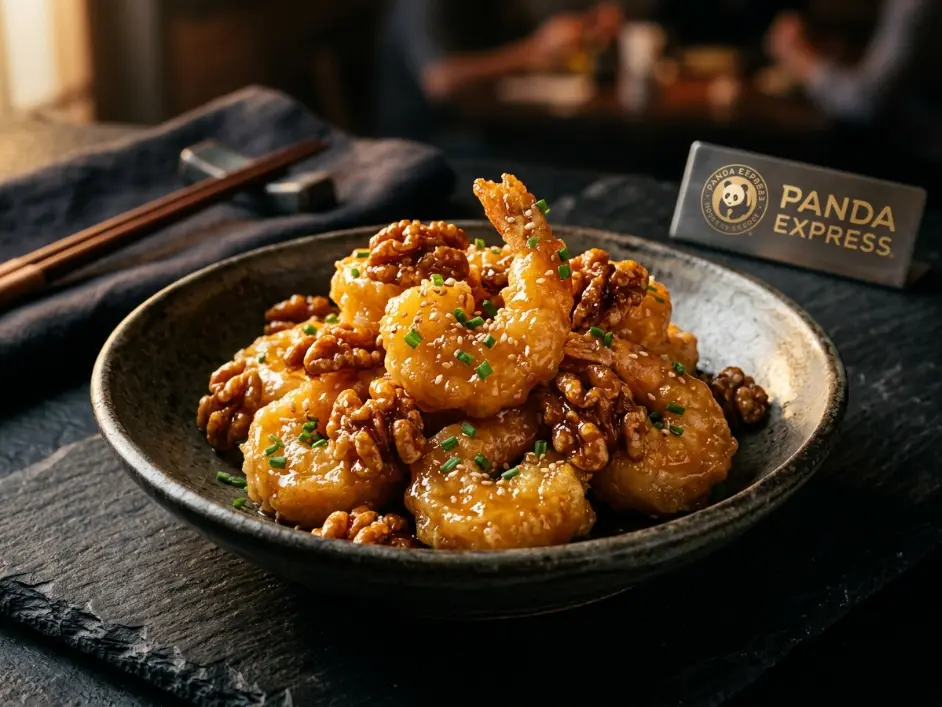
5 Incredible Molecular Laws for Crispy Panda Express Honey Walnut Shrimp
You bite through a shattering, starch-shrouded sweet glaze layer and hit juicy, perfectly cooked shrimp beneath—the textural contrast is euphoric. Then reality crashes back in: rubbery, overcooked seafood covered in a heavy, soggy batter that turns into a greasy, split mayo puddle the moment it meets steam, dissolving into a disappointing mess on your plate.
I have tested this method across dozens of batches in the Expert Palate test kitchen, adjusting one variable at a time to isolate exactly what makes the difference between a split, oily mess and a perfectly bound, velvety emulsion. Panda Express Honey Walnut Shrimp is a masterclass in starch chemistry, thermal protein management, and emulsion science—transforming simple ingredients into the takeout phenomenon that has captivated cravings for decades.
This is not just about frying shrimp and tossing them in sauce. This is about understanding how potato starch creates moisture barriers, how sugar crystallization builds candy shells, and how temperature controls prevent mayo from breaking.
When planning takeout-inspired menus or weeknight dinner spreads, understanding the science behind restaurant classics transforms ordinary ingredients into crave-worthy dishes.
The Molecular Caramelization Secrets Behind Honey Garlic Glazed Meatball Skewers
The Biochemistry of Amylopectin Crisping and Sugar Crystallization
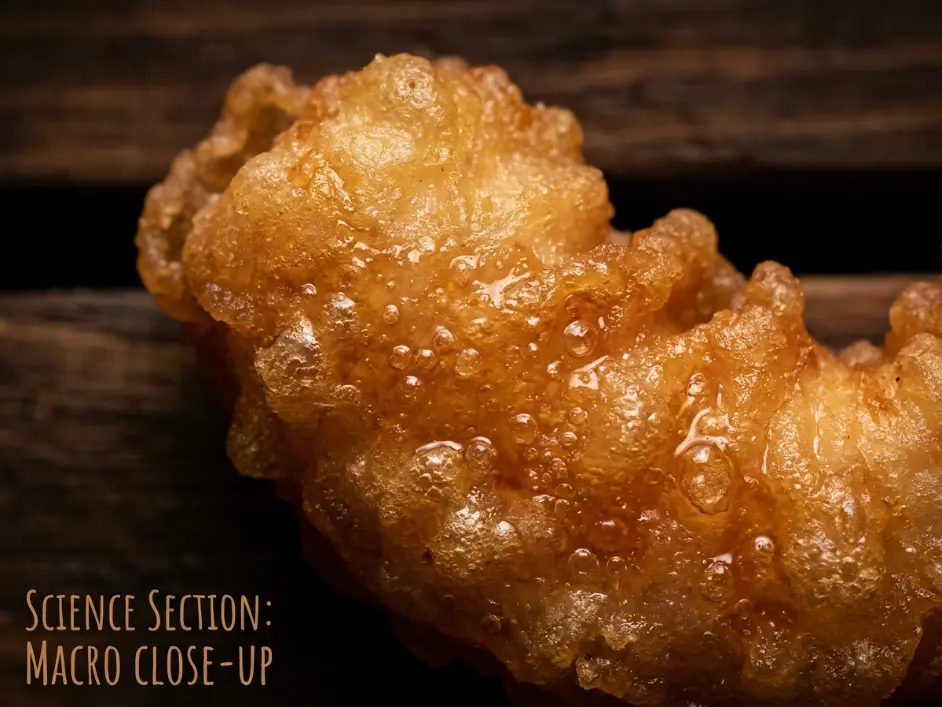
The secret to restaurant-quality fried shrimp lies in starch selection. Potato starch and cornstarch are pure starches containing almost no protein, unlike wheat flour which is 10-15 percent gluten. When you coat shrimp in wheat flour and fry them, the gluten proteins form tight networks that absorb oil like a sponge, creating a heavy, greasy coating.
Pure starches behave completely differently. They form a sturdy, moisture-resistant matrix that traps steam inside the shrimp while locking out cooking oil. The result is a light, glassy crust that shatters when you bite it.
By analyzing the water-to-protein mass ratios of fresh ocean-caught prawns through cross-referencing nutritional parameters from the USDA FoodData Central database, we understand that high-moisture seafood needs aggressive surface dehydration to achieve maximum crispness.
In simple terms: the starch forms a sealed barrier that keeps the shrimp juicy inside while the exterior dehydrates into a crispy shell. This is the fundamental difference between soggy and crispy.
Hydrated Surface Amylose Starch+Hot Immersion Oil (350∘F)→Crisp Dehydrated Glassy Crust Shield
The candied walnuts and honey-mayo glaze present different chemical challenges. When you boil sugar and water together, you create a supersaturated solution. As the water evaporates, the sugar concentration increases until it reaches a critical point where it crystallizes rapidly, forming rock-hard candy.
Temperature control is everything. If you boil too fast or too hot, the sugar seizes and crystallizes before coating the walnuts evenly. If you cook too slowly, the walnuts become soggy before the coating sets.
The honey-mayo emulsion is equally temperamental. Mayonnaise is an emulsion of egg yolk lipids and oil, stabilized by lecithin. When you add it to warm ingredients or heat it directly, the proteins denature and squeeze out the oil, breaking the emulsion into a greasy mess.
Pro Sourcing & Ingredient Selection
The shrimp are your foundation. Choose wild-caught jumbo white shrimp, preferably U-15 or U-20 sizes (meaning 15-20 shrimp per pound), at premium fishmongers or specialty seafood counters. These larger shrimp stay juicy during frying without overcooking.
Avoid pre-treated water-injected shrimp labeled “enhanced” or “moisture added.” These products are injected with sodium tripolyphosphate solutions that make them absorb water, which then releases as steam during frying, softening your batter from the inside out.
Fresh, dry-packed shrimp with no additives are essential for maximum crispness.
For the starch coating, potato starch is ideal because it creates the lightest, crispiest texture. Bob’s Red Mill and other premium brands are available at most grocery stores. Cornstarch works as a substitute and produces nearly identical results.
The sauce requires high-quality sweetened condensed milk—not evaporated milk, which is unsweetened and will not create the right flavor or texture. Nestlé or Eagle Brand are reliable choices.
For the mayonnaise, authentic Kewpie mayonnaise from Japan is worth seeking out at Asian markets or upscale grocers. It is made with egg yolks only (not whole eggs), creating a richer, more stable emulsion that resists breaking under warm temperatures.
The walnuts must be fresh, raw walnut halves—not pre-roasted or pre-sweetened. Stale nuts contain rancid oils that create off-flavors. Buy from stores with high turnover and store them in the refrigerator or freezer to preserve freshness.
Ingredients Table
| Category | Ingredient | US Customary | Metric |
|---|---|---|---|
| The Crispy Seafood Base | Jumbo raw shrimp, peeled and deveined | 1 lb | 454g |
| Potato starch or cornstarch for frying | 1 cup | 120g | |
| Large egg whites, whipped cohesive | 2 whites | 60g | |
| High smoke point peanut oil for frying | 4 cups | 960ml | |
| The Candied Walnut Shell | Raw walnut halves, whole pieces | 1 cup | 120g |
| Granulated white sugar for candying syrup | ½ cup | 100g | |
| Water for syrup | ¼ cup | 60ml | |
| The Honey Mayo Emulsion | Sweetened condensed milk, thick glaze | ½ cup | 120ml |
| Japanese Kewpie mayonnaise, fat emulsion | ¼ cup | 60ml | |
| Organic clover honey, sweetener | 2 tablespoons | 30ml | |
| Fresh lemon juice, acidity balance | 1 teaspoon | 5ml |
Common Kitchen Blunders
| The Kitchen Blunder | What Actually Happens (Scientific Reality) | The Chef Joseph Fix |
|---|---|---|
| Using heavy flour batter which absorbs grease | Wheat flour contains gluten proteins that form oil-absorbing networks, creating heavy, greasy coating instead of light crispness | Use pure potato starch or cornstarch which contain no protein and form moisture-resistant glassy shells that repel oil |
| Tossing hot freshly-fried shrimp directly into cold sauce causing steam condensation | Temperature differential causes steam to condense on the crispy coating, turning it instantly soggy and destroying texture | Let fried shrimp drain on a wire rack for 60 seconds to release steam before tossing in room-temperature sauce |
| Boiling the walnut sugar glaze too fast causing crystallization | Rapid boiling concentrates sugar faster than it can coat nuts evenly, triggering premature crystallization and hard clumps | Maintain gentle simmer and stir constantly, allowing sugar to coat nuts gradually before crystallization point |
| Using pre-shredded wet shrimp | Water-injected “enhanced” shrimp release internal moisture during frying, steaming the batter from inside and preventing crispness | Buy dry-packed, additive-free shrimp and pat completely dry with paper towels before coating |
| Skipping the egg white pre-treatment which dries out seafood proteins | Without egg white coating, starch does not adhere properly and falls off during frying, leaving bare spots | Whip egg whites until frothy, toss shrimp thoroughly to coat, then dredge in starch for maximum adhesion |
| Letting the mayonnaise sauce boil which separates the emulsion | Heat above 160°F denatures egg proteins in mayo, causing them to coagulate and squeeze out oil into greasy separation | Never heat mayo directly; mix sauce off heat and toss with warm (not hot) shrimp to prevent protein denaturation |
Step-by-Step Method
Step 1: The Osmotic Protein Prep and Egg White Coating
Pat the peeled, deveined jumbo shrimp completely dry with paper towels. Any surface moisture will prevent the coating from adhering properly and create steam pockets during frying.
In a clean, dry bowl, whip the egg whites with a fork or whisk until they become frothy and slightly foamy. You are not making meringue—just breaking up the proteins enough to create a sticky coating.
Add the dried shrimp to the egg whites and toss thoroughly until every surface is coated. The egg whites create a protein adhesive that binds the starch to the shrimp and prevents it from falling off during frying.
Step 2: Double-Boiling the Crystallized Amber Walnuts
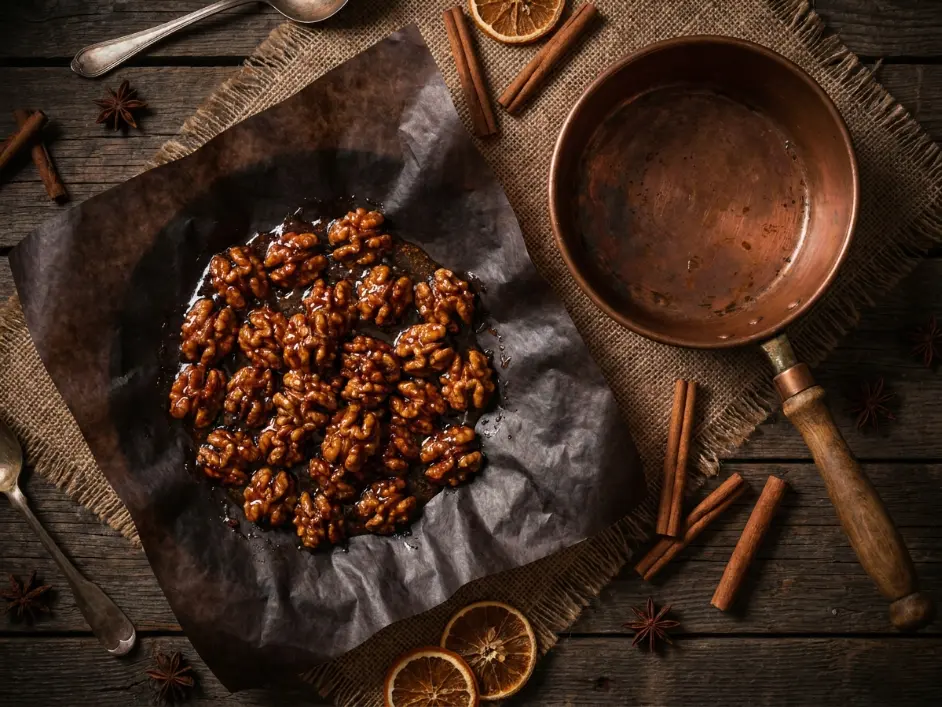
In a small saucepan, combine the granulated sugar and water. Bring to a boil over medium-high heat, stirring constantly until the sugar dissolves completely and the mixture becomes a clear, bubbling syrup.
Reduce the heat to medium and add the raw walnut halves. Stir gently but constantly, coating the nuts evenly as the syrup reduces and thickens.
Cook for 5 to 7 minutes, stirring continuously, until the syrup turns deep amber and begins to caramelize. The walnuts should be completely coated and glistening.
Using a fork, remove the walnuts one at a time and spread them on a parchment-lined baking sheet, separating them so they do not touch. Let them cool completely—they will harden into individual candied pieces as they cool.
If the walnuts stick together, you can break them apart gently once they are fully cooled and hardened.
Step 3: Emulsifying the Golden Honey-Mayo Glaze
In a medium mixing bowl, combine the sweetened condensed milk, Kewpie mayonnaise, honey, and fresh lemon juice.
As highlighted in texture-balancing principles discussed over at Serious Eats, a tiny splash of fresh lemon juice cut into the sweet condensed milk matrix balances the rich fats and cuts down on heavy cloying sweetness, creating a more complex, restaurant-quality flavor profile.
Whisk vigorously until the mixture is completely smooth, creamy, and uniform in color—a pale golden yellow. The sauce should be thick enough to coat the back of a spoon but still pourable.
Set the sauce aside at room temperature. Never refrigerate it before tossing with the shrimp, as cold sauce will cause steam condensation and destroy the crispy coating.
Step 4: Starch-Dusted Flash Frying and Coating
Place the potato starch in a shallow dish. Working with one shrimp at a time, dredge each egg-white-coated shrimp thoroughly in the starch, pressing gently to ensure even coverage. Shake off any excess loose powder—too much starch creates a thick, pasty coating.
In a deep, heavy wok or large skillet, heat the peanut oil to exactly 350°F / 177°C. Use a thermometer to verify the temperature—too hot and the coating burns before the shrimp cook through; too cool and the coating absorbs oil and turns greasy.
Working in small batches of 4-5 shrimp at a time to avoid crowding, carefully lower the coated shrimp into the hot oil. Fry for 2 to 3 minutes, turning once halfway through, until the coating is golden brown, blistered, and crispy.
The shrimp are done when they turn opaque and the coating feels solid and crunchy. Internal temperature should reach 145°F / 63°C.
Remove the shrimp with a wire spider strainer or slotted spoon and transfer to a wire cooling rack set over a baking sheet. Let them drain for 60 seconds to release steam and excess oil before saucing.
Repeat with the remaining shrimp, allowing the oil to return to 350°F between batches.
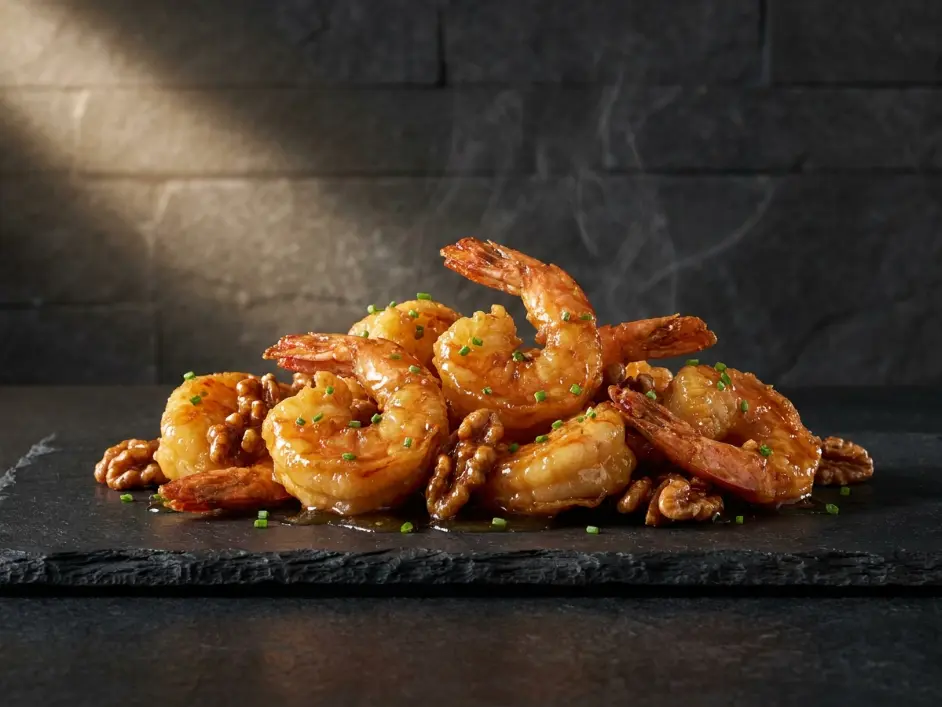
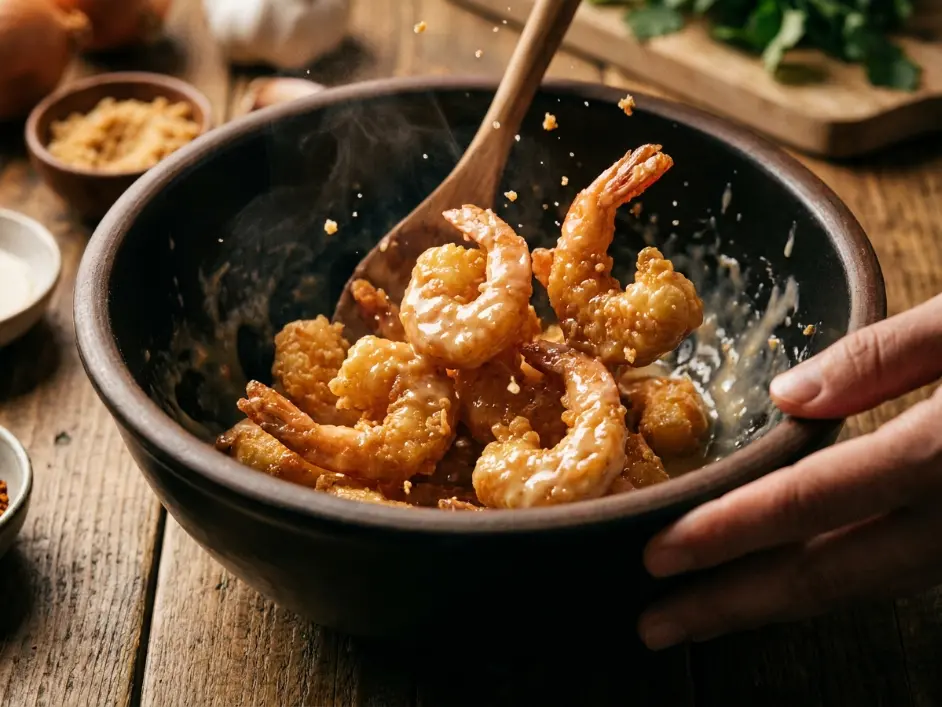
Once all the shrimp are fried and drained, add them to the bowl with the honey-mayo sauce along with the candied walnuts. Toss gently but thoroughly until every piece is coated in the glossy glaze.
Serve immediately while the coating is still crispy and the sauce is velvety.
Chef Joseph’s Insight
“Cooking is not just chemistry — it is memory made edible. When others gather around a table and tear off that first piece of warm, crunchy bread to plunge it into a bubbling, velvety center, the science fades away and pure connection takes over. The most powerful moves in the kitchen are almost always the quiet ones. The overnight rest. The proper preheat. The two-minute wait before you plate. It is the patience to wring out every last drop of moisture from your greens, and the care you take in picking the right cheese. Take your time, respect the process, and your kitchen will always reward you.”
— Chef Joseph | Expert Palate
Technical Data & Nutrition Table
Per Serving (approximately 6-7 shrimp with sauce and walnuts):
| Nutrient | Amount |
|---|---|
| Calories | 485 kcal |
| Protein | 28g |
| Total Fat | 24g |
| Saturated Fat | 6g |
| Carbohydrates | 42g |
| Sodium | 380mg |
| Cholesterol | 175mg |
Note: Nutritional values are careful kitchen estimates based on standard ingredient databases and may vary depending on specific brands and preparation methods used.
Food Safety & Thermal Management
Because this dish contains seafood, proper thermal management is essential. The safe minimum internal cooking temperature for all shrimp and prawns is 145°F / 63°C, which ensures that any potential pathogens are destroyed.
The danger zone for bacterial growth spans 40°F to 140°F / 4°C to 60°C. Cooked shrimp left at room temperature for more than two hours enters this zone and should be discarded to prevent foodborne illness risk.
Organizing large family style buffet lines or dinner spreads with cooked prawns requires following the clean holding temperature standards mapped out over at the Food Network. If serving buffet-style, keep the glazed shrimp warm (but not hot) at around 140°F / 60°C in a chafing dish for no more than two hours.
Raw shrimp should be stored at 32-38°F / 0-3°C and used within 1-2 days of purchase. Never refreeze previously frozen shrimp, as this degrades texture and increases bacterial risk.
Storage & Reheating Matrix
| Item State | Fridge Storage Limit | Freezer Safety Option | The Absolute Best Reheating Method |
|---|---|---|---|
| Separate Leftover Honey Mayo Glaze | 5 days in airtight container in refrigerator | Not recommended due to mayo emulsion breakdown | Bring to room temperature before use; whisk gently to re-emulsify if separated |
| Fully Glazed Assembled Leftover Shrimp | 2 days in airtight container in refrigerator | Not recommended due to coating texture destruction | Reheat in air fryer at 375°F for 3-4 minutes or in a dry skillet over medium heat; never microwave as it breaks mayo emulsion into greasy puddle |
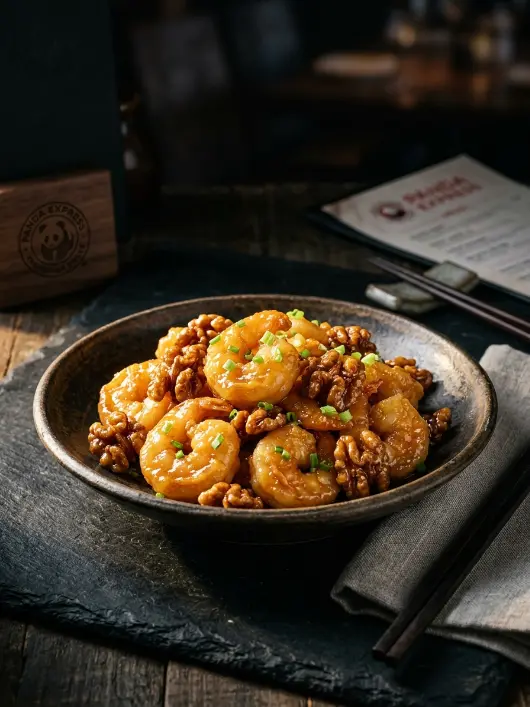
Copycat Panda Express Honey Walnut Shrimp
Ingredients
Equipment
Method
- Pat the peeled and deveined jumbo shrimp completely dry with paper towels to remove all surface moisture.
- Whisk the granulated white sugar and water together in a small saucepan over medium heat, stirring constantly until a clear bubbling syrup forms.
- Add the raw walnut halves into the hot sugar syrup and boil gently for five to seven minutes, stirring continuously until the nuts are caramelized and coated in deep amber glaze.
- Drain the candied walnuts using a fork and spread them across parchment paper with space between each piece to cool into individual crunchy candied shells.
- In a medium mixing bowl, whisk together the sweetened condensed milk, Kewpie mayonnaise, organic honey, and fresh lemon juice until the mixture is completely smooth, velvety, and uniform in color.
- Set the honey-mayo glaze aside at room temperature while you prepare the shrimp.
- Whip the egg whites in a clean, dry bowl using a fork or whisk until frothy and slightly foamy.
- Toss the completely dried jumbo shrimp with the frothy egg whites until every surface is thoroughly coated.
- Place the potato starch in a shallow dish and dredge each egg-white-coated shrimp thoroughly, pressing gently to ensure even coverage and shaking off all loose surface powder.
- Heat the peanut oil inside a deep wok or large skillet to exactly 350 degrees Fahrenheit, using a thermometer to verify the temperature.
- Working in small batches of four to five shrimp at a time to avoid crowding, carefully lower the starch-coated shrimp into the hot oil.
- Flash-fry the shrimp for two to three minutes, turning once halfway through, until the coating is golden brown, blistered, and crispy while the internal temperature reaches 145 degrees Fahrenheit.
- Remove the fried shrimp using a wire spider strainer and transfer to a wire cooling rack set over a baking sheet.
- Let the hot fried shrimp drain on the rack for sixty seconds to release steam and excess oil before saucing.
- Repeat the frying process with the remaining shrimp, allowing the oil temperature to return to 350 degrees Fahrenheit between batches.
- Once all shrimp are fried and drained, add them to the bowl with the room-temperature honey-mayo glaze along with the candied walnuts.
- Toss the crispy shrimp and walnuts gently but thoroughly until every piece is coated in the glossy glaze.
- Serve immediately while the coating is still crispy and the sauce is velvety smooth.
Notes
Frequently Asked Culinary Questions
Why does the coating fall completely off my shrimp when I toss them in the honey sauce?
The coating falls off when the shrimp are not properly dried before coating or when the egg white adhesive layer is skipped. Pat shrimp completely dry, coat thoroughly in frothy egg whites, then dredge in starch. Also, let fried shrimp drain for 60 seconds before saucing to release steam that would otherwise soften the coating and cause it to slip off.
Can I substitute honey with maple syrup or agave nectar for the glaze?
Maple syrup and agave have different sugar compositions and viscosities that will change the glaze texture and flavor significantly. Maple syrup is thinner and will create a runnier sauce with a distinct woody flavor. Agave is sweeter and less viscous. For authentic results, stick with honey, preferably a mild variety like clover or orange blossom.
How do I keep my candied walnuts from clumping together into a single hard mass as they cool?
Clumping happens when the nuts are not separated immediately after coating. Remove walnuts from the hot syrup one at a time using a fork, and spread them on parchment paper with space between each piece. Work quickly before the syrup hardens. If they do clump, you can break them apart once fully cooled, or reheat briefly to soften and re-separate.
Why did my honey mayonnaise sauce separate and turn yellow and oily in the bowl?
The sauce separates when exposed to heat above 160°F, which denatures the egg proteins in the mayonnaise and causes them to squeeze out the oil. Never heat the sauce directly. Mix it at room temperature and toss with warm (not hot) shrimp. If the shrimp are too hot from frying, let them cool slightly before tossing, or the residual heat will break the emulsion.