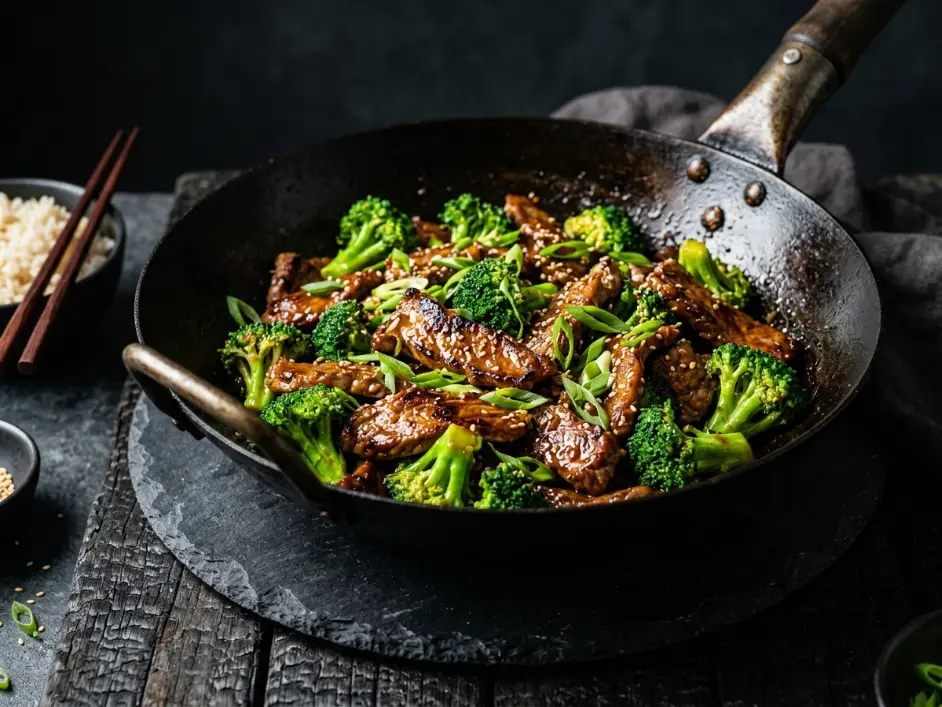
Executing a Flawless Quick Skillet Beef and Broccoli Stir-Fry Using the 15-Minute Velveting Technique
Imagine biting into a piece of stir-fried beef so impossibly tender it melts on your tongue, yet still showing a caramelized, deeply seared exterior with intense umami depth. The broccoli florets are vibrant emerald green, crisp-tender with a structural snap, not mushy or waterlogged. The sauce clings glossily to every surface—a unified emulsion of soy, ginger, and garlic aromatics, thickened perfectly with a starch slurry that hasn’t separated or become gelatinous.
Now flip that script. The disastrous reality: rubbery, tough shoe-leather beef strips that taste like compressed cardboard. The broccoli has turned gray-green and mushy from over-steaming. The sauce is thin and watery, pooling at the bottom of the pan instead of coating everything. The quick skillet beef and broccoli stir-fry tastes like a cooking mistake instead of a restaurant-quality weeknight meal.
I have tested this method across dozens of batches in the Expert Palate test kitchen, adjusting one variable at a time to isolate exactly what makes the difference between a split, oily mess and a perfectly bound, velvety emulsion. The quick skillet beef and broccoli stir-fry requires understanding the precise relationships between alkaline protein velveting, starch slurry suspension mechanics, and high-heat pan thermal storage.
This is where most home cooks catastrophically fail. They skip the velveting wash. They crowd the skillet. They add ingredients in the wrong sequence. One misstep and your stir-fry becomes mushy, greasy, or sauce-less.
But master the 15-minute alkaline window and the two high-heat zones, and you’ll own a restaurant-quality meal that tastes like you spent hours perfecting technique instead of exactly twenty-five minutes in your kitchen.
The Deep Biochemistry of Alkaline Velveting and Rapid Maillard Acceleration
Here’s the precise molecular reality happening when you properly execute a quick skillet beef and broccoli stir-fry. Beef flank or sirloin is approximately 60% water, 35% protein (predominantly myosin and actin muscle fibers organized in tight bundles), and 5% fat. The entire success depends on managing protein fiber separation, moisture retention during high-heat searing, and starch suspension stability in the sauce.
When you apply sodium bicarbonate (baking soda) to raw beef, something transformative happens at the molecular level. The sodium bicarbonate raises the environmental pH from approximately 5.5 (slightly acidic muscle fiber baseline) to approximately 8.0-8.5 (alkaline). This alkaline environment triggers an ionic reaction that weakens the electrostatic bonds holding myosin and actin filaments together in tight bundles.
In simple terms: Alkaline pH doesn’t cook or break down the protein. Instead, it loosens the protein structure, allowing myosin-actin bundles to separate slightly. This separation creates microscopic pockets where water can be retained during cooking.
This process is called velveting—a Chinese culinary technique that’s scientifically brilliant. When you sear the velveted beef at high heat, these weakly-bonded protein bundles can’t contract as aggressively as untreated beef. The water trapped in the microscopic pockets stays bound longer, keeping the meat tender and juicy even as the exterior sears intensely.
The 15-minute window is critical. This is the optimal time for alkaline penetration to occur throughout the beef thickness without over-alkalizing (which would create a soapy texture and unpleasant taste). After 15 minutes, you must wash away all excess baking soda with cold water. Residual alkalinity on the surface would taste harsh and prevent proper Maillard browning.
Now for the starch slurry mechanics. When you combine cornstarch with cold water, the starch granules absorb water and swell slightly. But they don’t gelatinize—that only happens at temperatures above 140°F / 60°C. At high stir-fry temperatures (375-400°F / 190-204°C), the starch granules swell rapidly, absorbing sauce liquid and creating a suspension that clings to the beef and broccoli instead of pooling at the bottom.
The critical factor: the slurry concentration. Too much starch (more than 2 tablespoons / 16g per 1 cup / 240ml sauce) creates a gluey, gelatinous texture. Too little starch (less than 1 tablespoon / 8g) and the sauce remains thin and watery. The sweet spot is 1.5 tablespoons / 12g cornstarch per 1 cup sauce—this creates a glossy, clinging suspension without becoming gloopy.
Broccoli presents its own thermal challenges. Broccoli florets are approximately 90% water with significant cellulose in the cell walls. When exposed to high heat, water evaporates rapidly from the surface. But if broccoli is crowded in the skillet or steamed instead of seared, the water gets trapped and creates steam pockets that soften the cellulose excessively. You end up with mushy, water-logged broccoli instead of crisp-tender texture.
The solution: high-heat, uncrowded searing in minimal liquid. The broccoli florets should maintain crisp-tender texture because water evaporates quickly and the cell walls experience high-heat stress that actually strengthens them through Maillard browning at the surface.
The garlic and ginger components are equally critical for flavor depth. Fresh garlic contains allicin—a volatile sulfur compound. At stir-fry temperatures above 350°F / 176°C, allicin breaks down rapidly. If you add garlic too early, it burns into bitter, acrid black specks. If you add it at the very end, the flavor remains sharp and overpowering instead of mellow and integrated.
The timing window for garlic is approximately 10-15 seconds at high heat—just long enough for the allicin to convert into mellower, more complex compounds without burning. This is why professionals add garlic in the final moments of cooking or finish with it off-heat, allowing residual heat to develop the flavor without scorching.
Alkaline pH+High-Heat Maillard+Starch Slurry Suspension→Tender Glossy Beef and Broccoli
Understanding the structural muscle fiber maps, trace amino profiles, and raw macro-nutrient breakdown balances perfectly by cross-examining verified global food composition datasets curated by BBC Good Food. Beef flank steak typically contains approximately 26g protein per 100g raw, with a water content around 63-65g per 100g depending on intramuscular fat density and muscle fiber orientation.
Pro Sourcing & Ingredient Selection
Start with beef quality and cut selection. Look for flank steak or sirloin with visible marbling—the intramuscular fat actually helps retain moisture during high-heat searing. Avoid lean cuts like eye of round, which lack fat and dry out excessively. The grain structure matters obsessively—always slice beef against the grain, perpendicular to the muscle fiber bundles, to sever the myofibrillar structures and shorten fiber length.
For beef sizing, slice the steak into strips approximately 0.25 inch / 6mm thick and 2-3 inches / 5-8cm long. Thin slices cook rapidly and allow maximum surface area for searing. Thick slices remain cold in the center while the exterior over-cooks.
For broccoli, select fresh, tight crowns with deep emerald-green color. Avoid yellowing or browning edges, which indicate age and oxidation. Fresh broccoli should feel heavy for its size and have a slight sweetness when a small piece is tasted raw. Pre-cut florets sitting in plastic containers have already begun oxidizing—buy whole heads and cut them yourself into uniform 2-inch / 5cm florets.
For soy sauce, use fermented versions with no added sweeteners or artificial compounds. Look for labels listing only soybeans, salt, and sometimes wheat. Avoid soy sauce that lists corn syrup, which dilutes the umami concentration and adds unnecessary sweetness that clouds the flavor profile.
For ginger and garlic, use fresh, firm specimens with no soft spots or sprouting. Fresh ginger should snap cleanly when broken, indicating high moisture content and volatile aromatic oils. Pre-minced garlic from jars has already oxidized and lost aromatic potency.
For oil, use high-smoke-point varieties like refined peanut, refined coconut, or avocado oil. These oils maintain structural stability at the 375-400°F / 190-204°C stir-fry temperatures without breaking down into acrid compounds. Avoid olive oil, which smokes at lower temperatures and imparts unwanted fruity flavors.
Comprehensive Ingredients Table
| Category | Ingredient | US Customary | Metric |
|---|---|---|---|
| Tenderized Bovine Protein | Beef flank steak (thinly sliced against grain) | 1 lb | 454g |
| Baking soda (sodium bicarbonate) for alkaline velveting | 0.5 tsp | 2.5g | |
| Cellular Vegetable Base | Fresh broccoli florets (tight, compact crowns) | 3 cups | 225g |
| Sauce and Binding Components | Fermented soy sauce (no added sweeteners) | 0.5 cup | 120ml |
| Fresh ginger (minced, just before cooking) | 1 tbsp | 15g | |
| Fresh garlic cloves (minced, just before cooking) | 4 cloves | 20g | |
| Cornstarch (pure starch, for slurry) | 1.5 tbsp | 12g | |
| Cold water (for cornstarch slurry) | 0.25 cup | 60ml | |
| Chicken or beef stock (low-sodium) | 0.5 cup | 120ml | |
| Brown sugar (for umami balance) | 1 tbsp | 12g | |
| Rice vinegar (for acidity and brightness) | 1 tbsp | 15ml | |
| Cooking Medium and Finishing | High-smoke-point oil (refined peanut or avocado) | 3 tbsp | 45ml |
| Sesame oil (toasted, for finishing) | 1 tbsp | 15ml | |
| Red pepper flakes (optional heat) | 0.25 tsp | 0.5g | |
| Fresh scallions (sliced, for garnish) | 0.25 cup | 20g |
Common Kitchen Blunders Matrix
| The Kitchen Blunder | What Actually Happens (Scientific Reality) | The Chef Joseph Fix |
|---|---|---|
| Skipping the alkaline velveting step entirely | Without the alkaline pH elevation, myosin-actin bundles remain tightly bonded and contract excessively during high-heat cooking. The muscle fibers squeeze out their bound water rapidly, creating a dry, rubbery texture. The beef tastes tough instead of tender. Additionally, without velveting, the Maillard browning reaction happens more slowly because the protein surface is denser and less reactive. | Always apply 0.5 teaspoon / 2.5g baking soda to the beef strips and let sit for exactly 15 minutes at room temperature. This alkaline treatment weakens the myosin-actin bonds, allowing water retention during searing and accelerating Maillard browning. After 15 minutes, rinse thoroughly with cold water to remove all residual alkalinity, then pat completely dry. This step is non-negotiable. |
| Crowding the skillet with too much beef and broccoli simultaneously | Crowded ingredients reduce the surface-area-to-heat contact ratio. Instead of searing, the ingredients stew in their own released moisture. The beef steams instead of developing a caramelized crust. The broccoli becomes waterlogged and mushy from trapped steam. The starch slurry dilutes excessively from excess water release, creating a thin, weak sauce instead of a glossy coating. | Work in two batches if necessary. Sear the beef in a single uncrowded layer first, removing it to a plate. Sear the broccoli separately in the hot skillet until crisp-tender. Only then combine both with the sauce for final glaze reduction. Never crowd—individual pieces need direct heat contact to sear properly. |
| Adding cornstarch slurry before the high-heat sear is complete | Premature slurry addition causes the starch to gelatinize before all the beef’s surface has seared properly. The sauce thickens and clings to the beef before browning is complete, trapping moisture and preventing Maillard browning from developing. You end up with a gluey sauce coating un-browned, pale beef instead of deeply caramelized, seared beef coated in glossy sauce. | Add the cornstarch slurry only during the final 1-2 minutes of cooking, after all beef has been seared and broccoli is crisp-tender. The high heat causes rapid starch gelatinization and glaze reduction without interfering with earlier browning reactions. Timing is everything. |
| Adding garlic too early or at excessive temperature | Fresh garlic’s allicin compounds break down rapidly at high temperatures above 350°F / 176°C. If garlic is added more than 20 seconds before serving, it oxidizes into bitter, acrid black specks that taste metallic and burnt. The garlic flavor becomes harsh instead of sweet and integrated. | Add minced fresh garlic during the final 10-15 seconds of cooking, immediately before you add the thickened sauce or remove from heat. The brief exposure allows allicin to convert into mellow, complex compounds without burning. Alternatively, finish the dish with garlic off-heat, allowing residual warmth to develop the flavor gently. |
| Over-diluting the cornstarch slurry with too much water | A dilute slurry creates a thin sauce that doesn’t cling to the beef or broccoli. Instead of a glossy, unified coating, the sauce remains watery and pools at the bottom of the skillet. The starch granules never fully swell because insufficient liquid volume prevents adequate absorption. You end up with a broth-like consistency instead of a coating sauce. | Maintain a strict ratio of 1.5 tablespoons / 12g cornstarch per 1 cup / 240ml total liquid (stock plus any other liquid components). Whisk cornstarch and cold water separately, then stir this slurry into the hot sauce near the end of cooking. The proper concentration creates a glossy suspension that clings perfectly without becoming gelatinous. |
| Using cold beef strips straight from refrigerator | Ice-cold beef takes much longer to reach the surface temperature needed for rapid Maillard browning. The exterior begins steaming from moisture release before the surface temperature reaches the 300°F / 149°C threshold for browning. You end up with pale, steamed beef instead of deeply caramelized, seared beef. The texture also suffers because the cold interior pulls heat away from the surface during cooking. | Remove the velveted beef from refrigerator 8-10 minutes before cooking, allowing it to drift toward room temperature (approximately 65-70°F / 18-21°C). This smaller thermal gradient allows the surface to reach browning temperature quickly without the exterior over-cooking while the interior remains cold. Alternatively, blot the beef completely dry immediately before cooking to remove any surface condensation. |
Master Step-by-Step Method
Cellular Cleavage and Alkaline Wash Phase
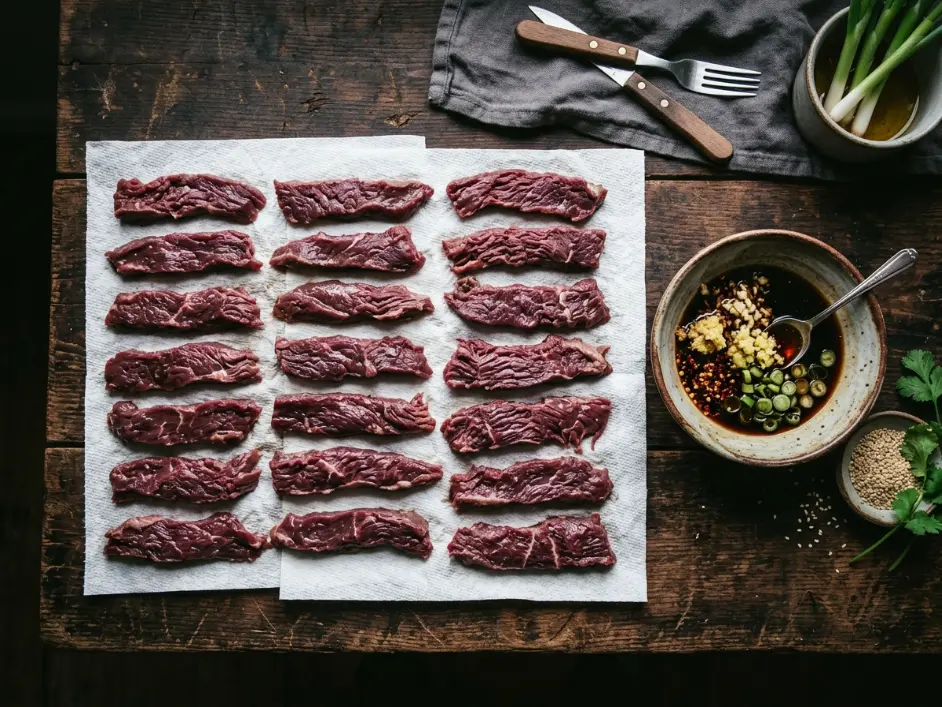
Begin by selecting a flank steak or sirloin steak (approximately 1 pound / 454g) and placing it on a cutting board. The grain should be clearly visible running in one direction across the meat. Slice the steak against the grain—perpendicular to the fiber bundles—into strips approximately 0.25 inch / 6mm thick and 2-3 inches / 5-8cm long. The grain cutting is essential—you’re severing the myofibrillar bundles to shorten fiber length and make the beef more tender.
Transfer the sliced beef strips to a bowl and sprinkle 0.5 teaspoon / 2.5g of baking soda over all the strips. Toss gently to coat every piece with the alkaline powder. The baking soda will begin raising the pH around the muscle fibers immediately.
Allow the beef to sit at room temperature for exactly 15 minutes. During this time, the alkaline environment (pH approximately 8.0-8.5) weakens the electrostatic bonds holding myosin and actin filaments in tight bundles. The muscle fibers begin separating slightly, creating microscopic pockets where water can be retained during high-heat searing.
After exactly 15 minutes, transfer the beef to a colander and rinse thoroughly under cold running water, stirring gently with your hands to remove all residual baking soda. The goal is to eliminate all trace of alkalinity from the surface—residual baking soda would taste soapy and prevent proper browning. Rinse for approximately 30 seconds until the water runs clear.
Pat the beef completely dry with paper towels. Any surface moisture would create steam during searing and prevent the Maillard browning reaction from developing properly. Spend 30 seconds per batch rubbing away all surface moisture.
Combine the sauce components in a small bowl while the beef rests: 0.5 cup / 120ml fermented soy sauce, 0.5 cup / 120ml low-sodium stock, 1 tablespoon / 12g brown sugar, 1 tablespoon / 15ml rice vinegar, and 1 tablespoon / 15g minced fresh ginger. Whisk these together until the brown sugar dissolves completely. This is your base sauce that will be thickened with the cornstarch slurry near the end of cooking.
High-Velocity Protein Searing and Broccoli Crisp-Tenderness Phase
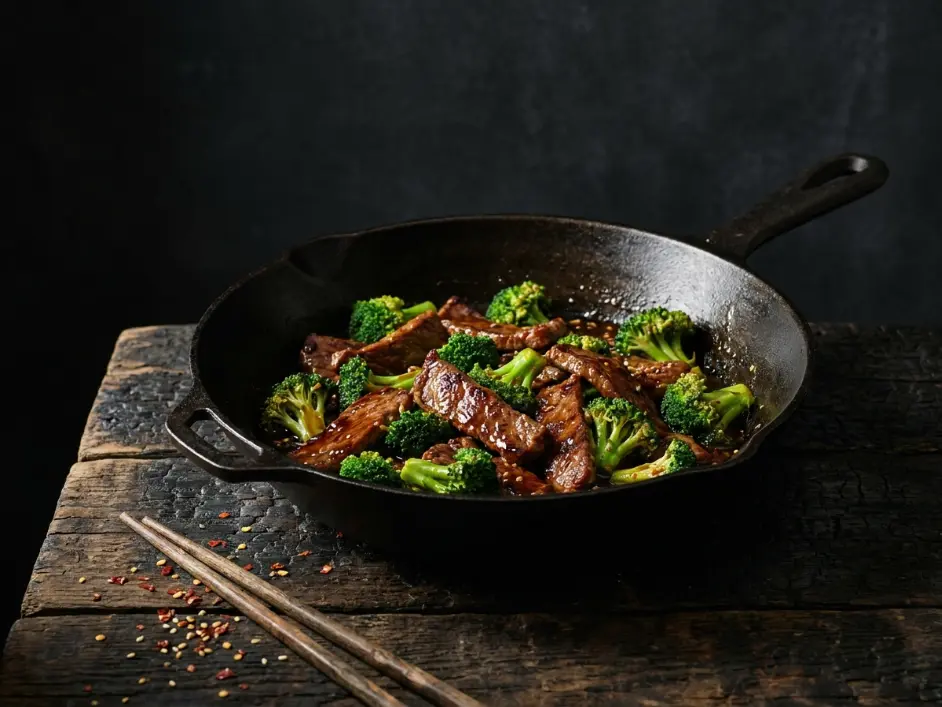
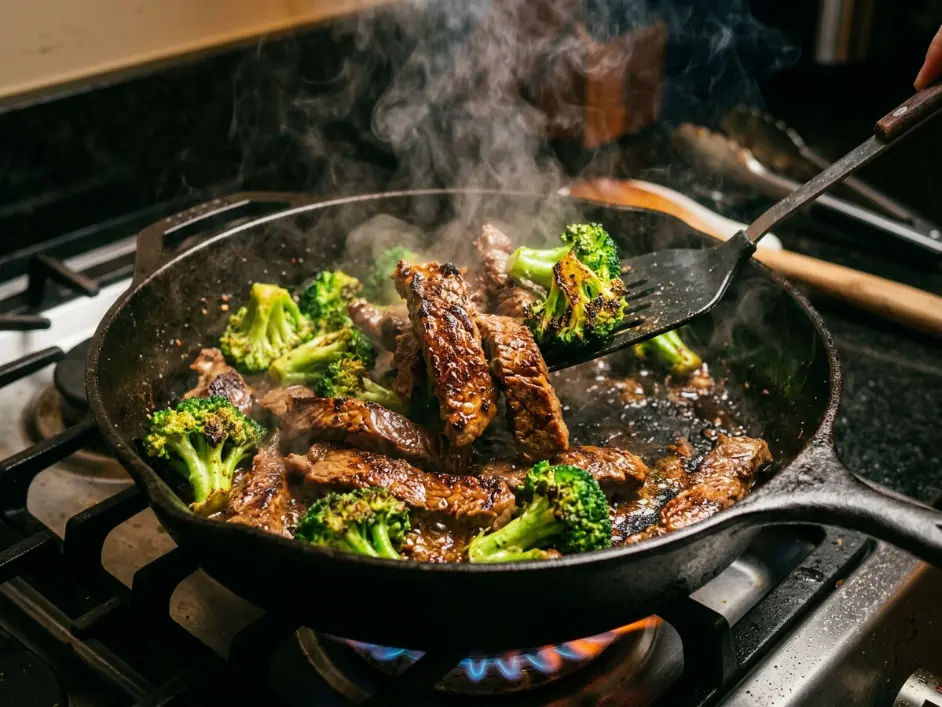
Place a large, heavy-bottomed skillet (preferably cast iron or high-gauge stainless steel) over high heat for 2-3 minutes. The skillet must be screaming hot—you want it to reach approximately 375-400°F / 190-204°C. To verify temperature, flick a water droplet onto the surface; it should evaporate instantly with an aggressive sizzle.
Add 1.5 tablespoons / 22.5ml of high-smoke-point oil to the hot skillet and swirl to coat the entire bottom. The oil should shimmer immediately and smoke slightly.
Working quickly, add the velveted beef strips to the hot oil in a single uncrowded layer. Do not stir—let the strips sit undisturbed for 45-60 seconds on the first side. This contact time allows the Maillard reaction to develop, creating a caramelized crust through rapid protein denaturation and carbohydrate-amino acid browning reactions.
After 45-60 seconds, flip the beef strips using tongs and sear the second side for another 30-45 seconds. The beef should show a dark caramelized exterior. At this point, the internal temperature is approximately 140-145°F / 60-63°C, which is medium-rare.
Remove the seared beef to a clean plate. Do not overcrowd the skillet—if you have more than 0.75 pound / 340g beef, work in two batches. The skillet temperature should remain high enough to sear properly.
Add the remaining 1.5 tablespoons / 22.5ml of oil to the skillet and allow it to heat for 15 seconds. Add the 3 cups / 225g of broccoli florets in a single uncrowded layer. Do not stir immediately—let the florets sit undisturbed for 60-90 seconds, allowing the flat surfaces to contact the hot skillet and develop browning.
Toss the broccoli gently and cook for another 90-120 seconds, stirring occasionally. The broccoli should show light browning on the floret tips and maintain vibrant green color throughout. The florets should be tender-crisp, not mushy.
Emulsion Bind and Glaze Reduction Final Assembly Phase
When the broccoli reaches crisp-tender texture, add the reserved seared beef back into the skillet along with the prepared sauce base (soy, stock, brown sugar, rice vinegar, and ginger mixture).
Increase heat to high and bring the mixture to a rapid boil. The sauce should bubble vigorously. Let it reduce undisturbed for 30-45 seconds, allowing some liquid to evaporate and concentrating the flavors.
While the sauce is boiling, prepare the cornstarch slurry in a small cup: whisk 1.5 tablespoons / 12g cornstarch with 0.25 cup / 60ml cold water until completely smooth with no lumps. The slurry should look like thin, opaque milk.
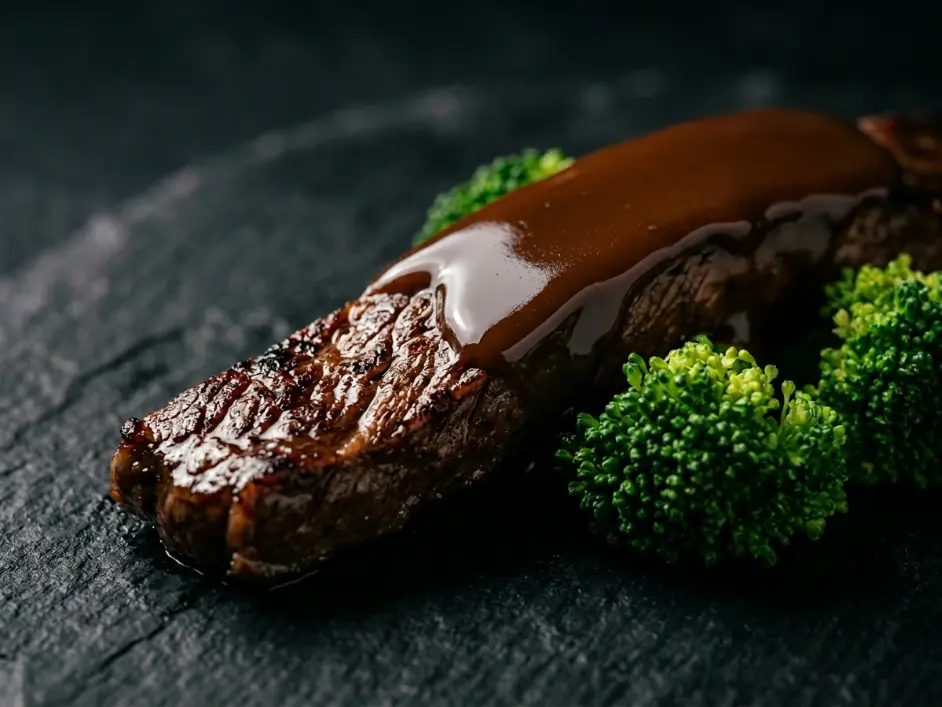
Pour the cornstarch slurry into the boiling sauce while stirring constantly. The starch granules will begin swelling and gelatinizing immediately at the high temperature, thickening the sauce and creating a glossy suspension. Stir for approximately 30 seconds until the sauce clings to every piece of beef and broccoli without being gluey.
At this final moment, add the 4 minced fresh garlic cloves and stir for approximately 10-15 seconds—just long enough for the allicin to convert into mellow, integrated compounds without burning into acrid black specks.
Remove from heat immediately. Drizzle 1 tablespoon / 15ml of toasted sesame oil over the beef and broccoli for finishing richness and aromatic depth. Add 0.25 teaspoon / 0.5g of optional red pepper flakes if desired.
Plate immediately and garnish with 0.25 cup / 20g of fresh sliced scallions scattered across the top. The scallions should be added at the absolute last moment—their aromatic volatiles are maximized when fresh and not exposed to heat.
Managing rapid surface-to-volume evaporation rates and specialized pan agitation loops comprehensively outlined at The Spruce Eats demonstrate why maintaining high skillet thermal storage ensures absolute success in high-heat stir-fry cooking. The difference between excellent and exceptional is respecting these thermal curves and understanding how every variable—temperature, crowding, timing—impacts the final texture.
Cooking is not just chemistry — it is memory made edible. When others gather around a table and tear off that first piece of warm, crunchy bread to plunge it into a bubbling, velvety center, the science fades away and pure connection takes over. The most powerful moves in the kitchen are almost always the quiet ones. The overnight rest. The proper preheat. The two-minute wait before you plate. It is the patience to wring out every last drop of moisture from your greens, and the care you take in picking the right cheese. Take your time, respect the process, and your kitchen will always reward you. — Chef Joseph | Expert Palate
3 Unrivaled Secrets to Prevent Disastrous Greasy Easy Smashed Burger Tacos with Secret Sauce
Technical Data & Nutrition Table
| Nutrient | Per Serving (Approximately 8 oz / 225g Beef and Broccoli with Sauce) |
|---|---|
| Calories | 320 kcal |
| Protein | 38g |
| Total Fat | 12g |
| Saturated Fat | 3g |
| Carbohydrates | 15g |
| Dietary Fiber | 2g |
| Sodium | 850mg |
| Cholesterol | 75mg |
Note: Nutrition values are careful kitchen estimates based on standard ingredient composition databases. Actual values may vary depending on soy sauce sodium content, beef sourcing, and residual oil retention during searing.
Food Safety & Thermal Management
Beef strips require reaching a safe internal temperature where myofibrillar proteins have coagulated sufficiently to eliminate any potential pathogens, typically around 145∘F/63∘C for medium-rare doneness. Given the thin cross-section of properly sliced beef strips (0.25 inch / 6mm), this temperature is achieved uniformly within 60-90 seconds of searing at 375-400°F / 190-204°C. Visual doneness cues (opaque color throughout, firmness when pressed) are reliable indicators that food-safety thresholds have been met for tender beef.
The standard danger zone for bacterial growth in beef occurs between 40∘F−140∘F/4∘C−60∘C. Never leave your prepared quick skillet beef and broccoli stir-fry sitting at room temperature for more than 2 hours. Once cooked and the beef reaches 145∘F/63∘C, it must remain above 140∘F/60∘C during storage or service.
Optimizing sodium-to-protein ratios while protecting baseline cellular nutrition values matches the safe cooking profiles managed inside the clinical food indexes at the Harvard T.H. Chan School of Public Health. For hot holding, keep finished beef and broccoli stir-fry on a warming tray at 140−150∘F/60−65∘C for no longer than 2 hours. Beyond this time window, the starch slurry begins breaking down and the beef continues cooking internally, becoming drier.
Storage & Reheating Matrix
| Storage State | Fridge Limit | Freezer Option | Best Reheating Method |
|---|---|---|---|
| Fully Cooked Beef and Broccoli Stir-Fry with Sauce | 3-4 days in airtight container | Up to 2 months in freezer-safe container, though texture quality degrades upon thawing. The starch slurry separates and the beef becomes slightly drier. | Reheat in a hot skillet over high heat with 2-3 tablespoons of water or stock for 2-3 minutes, tossing frequently. The high-heat, brief flash-toss restores moisture equilibrium and re-integrates the starch suspension without breaking it further. Alternatively, place on a plate, cover loosely with foil, and warm at 325°F / 163°C for 8-10 minutes. Never microwave—rapid micro-radiation instantly collapses starch slurry suspensions into separated, broken sauce and over-coagulates beef fibers, turning the meat rubbery and the sauce watery. |
| Cooked Beef Only (Without Broccoli or Sauce) | 3-4 days in airtight container | Up to 3 months in vacuum-sealed bag | Reheat in a hot skillet over high heat for 1-2 minutes with a tiny splash of water. Watch carefully—reheated beef can over-cook quickly. Alternatively, shred cold beef and incorporate into noodle dishes, fried rice, or grain bowls where additional moisture masks any texture degradation. |
| Cooked Broccoli Only (Without Beef or Sauce) | 3-4 days in airtight container | Up to 3 months in freezer | Reheat gently in a skillet over medium heat for 2-3 minutes. The broccoli tolerates reheating better than delicate beef tissue. You can also consume cold directly from the refrigerator as a salad component or snack without quality loss. |
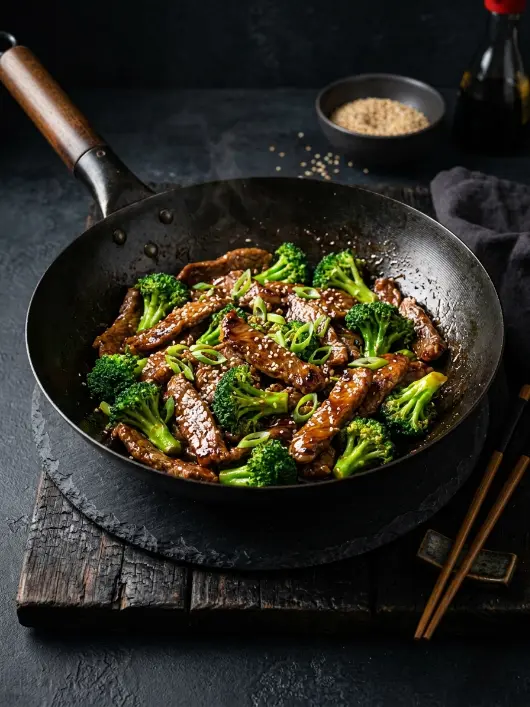
Quick Skillet Beef and Broccoli Stir-Fry
Ingredients
Equipment
Method
- Select one pound beef flank steak and locate the visible grain running in one direction across the meat.
- Slice the beef against the grain perpendicular to the fiber direction into strips approximately one-quarter inch thick and two to three inches long.
- Transfer sliced beef to a bowl and sprinkle one-half teaspoon baking soda over all strips tossing gently to coat every piece.
- Allow beef to sit at room temperature for exactly fifteen minutes during which the alkaline environment weakens myosin-actin bonds and creates microscopic pockets for water retention.
- After exactly fifteen minutes rinse the beef thoroughly under cold running water stirring gently to remove all residual baking soda residue.
- Pat beef completely dry with paper towels spending thirty seconds removing all surface moisture that would create steam during searing.
- Combine one-half cup fermented soy sauce one-half cup low-sodium stock one tablespoon brown sugar one tablespoon rice vinegar and one tablespoon minced fresh ginger in small bowl whisking until brown sugar dissolves.
- Place large heavy-bottomed skillet over high heat for two to three minutes until the surface reaches approximately three hundred seventy-five to four hundred degrees Fahrenheit.
- Add one and one-half tablespoons oil to the screaming-hot skillet swirling to coat the entire bottom evenly.
- Add velveted beef strips to hot oil in single uncrowded layer allowing them to sit undisturbed for forty-five to sixty seconds on first side creating caramelized exterior.
- Flip beef strips using tongs and sear second side for thirty to forty-five seconds until dark caramelized color develops on both sides.
- Remove seared beef to clean plate and if you have more than three-quarter pound beef work in a second batch adding additional oil and repeating the searing process.
- Add remaining one and one-half tablespoons oil to skillet and allow to heat for fifteen seconds.
- Add three cups fresh broccoli florets in single uncrowded layer allowing them to sit undisturbed for sixty to ninety seconds then tossing gently and cooking another ninety to one hundred twenty seconds until tender-crisp with light browning.
- Return seared beef to skillet along with prepared sauce base bringing mixture to rapid boil.
- Whisk one and one-half tablespoons cornstarch with one-quarter cup cold water in small cup until completely smooth creating the slurry.
- Pour cornstarch slurry into boiling sauce while stirring constantly for approximately thirty seconds until sauce thickens and clings to all ingredients creating glossy unified suspension.
- Add four cloves minced fresh garlic during final ten to fifteen seconds stirring briefly then removing from heat immediately.
- Drizzle one tablespoon toasted sesame oil over beef and broccoli for finishing richness and aromatic depth.
- Sprinkle one-quarter teaspoon optional red pepper flakes if desired.
- Plate immediately and garnish with one-quarter cup fresh sliced scallions scattered across the top.
Notes
Always slice beef against the grain perpendicular to the fiber direction to sever myofibrillar bundles and shorten fiber length creating inherent tenderness.
High-heat uncrowded searing is critical for developing caramelized crust through rapid Maillard browning without steaming the meat or broccoli.
The cornstarch slurry ratio of one point five tablespoons per one cup total liquid is precise and non-negotiable for glossy clinging sauce without becoming gelatinous.
Fresh garlic must be added during the final ten to fifteen seconds of cooking to prevent burning into acrid black specks that taste metallic.
Frequently Asked Culinary Questions
Why is my beef turning out tough and chewy even though I’m using thin slices?
You’re likely skipping the alkaline velveting step or not soaking long enough. The 15-minute baking soda treatment is non-negotiable—it weakens the myosin-actin bonds and allows water retention during searing. Additionally, ensure you’re slicing against the grain (perpendicular to the fiber direction), which severs myofibrillar bundles and shortens fiber length. If you’re slicing with the grain, the long fibers remain intact and feel tough when cooked.
Can I use a wok instead of a skillet?
Absolutely. A wok is ideal for stir-frying because its rounded bottom heats differently and its sloped sides make tossing easier. Ensure your wok is well-seasoned cast iron or carbon steel—stainless steel woks distribute heat less efficiently. The high-heat principles remain identical: preheat thoroughly, work in uncrowded batches, and maintain rapid motion throughout cooking.
What if my sauce separates into oily pools instead of staying unified?
This typically happens when the starch slurry is added at the wrong time or in incorrect proportions. The slurry should be added during the final 1-2 minutes of cooking when the wok is still at high heat. The slurry ratio should be 1.5 tablespoons / 12g cornstarch per 1 cup / 240ml total liquid—no more, no less. If your sauce breaks, remove from heat and whisk in an additional tablespoon of cold water off-heat to temporarily re-emulsify, though it will never be perfect.
Can I use cornstarch substitutes like arrowroot or tapioca starch?
Yes, though results vary slightly. Arrowroot starch creates a slightly more delicate, glossy suspension but requires slightly less total volume (use 1.25 tablespoons / 10g instead of 1.5). Tapioca starch creates a thicker, more opaque sauce. Wheat flour works but creates a cloudier, grainier appearance. Cornstarch remains the best choice for authentic, glossy Asian stir-fry sauce texture.
How do I prevent the broccoli from turning gray-green during cooking?
Keep the broccoli uncrowded and use high heat for rapid searing instead of steaming. Gray-green color develops from chlorophyll degradation, which happens when broccoli is exposed to acid and heat for prolonged periods. Brief, high-heat searing minimizes chlorophyll exposure to acidic sauce components. Additionally, avoid creating steam pockets by not crowding the skillet. If color loss is inevitable, add the broccoli during the final moments of cooking, minimizing exposure time.