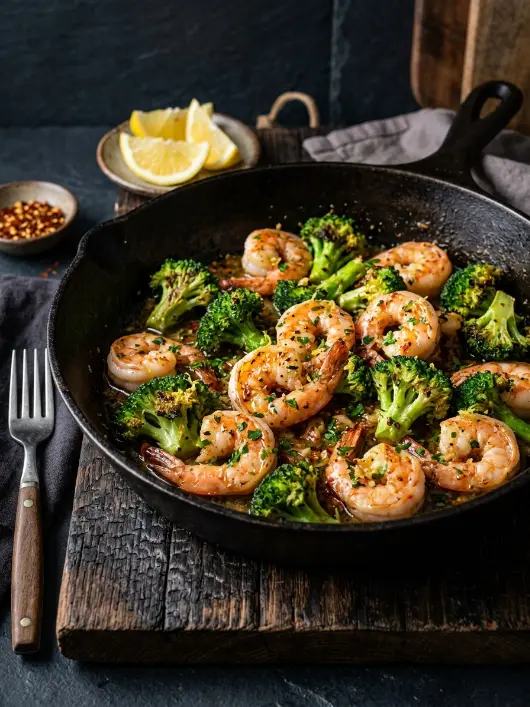
Ingredients
Equipment
Method
- Bring large pot of salted water approximately two quarts with one tablespoon coarse sea salt to rolling boil for par-blanching broccoli.
- Cut fresh broccoli crowns into uniform florets approximately two inches in length ensuring even cooking across all pieces.
- Submerge broccoli florets into boiling salted water for exactly two minutes to remove surface moisture and preserve chlorophyll color through brief thermal treatment.
- Strain broccoli through colander immediately and transfer to bowl of ice water to halt all cooking through rapid temperature reduction and preserve vibrant green color.
- Let broccoli sit in ice water for thirty seconds then drain thoroughly and pat completely dry with paper towels removing all surface moisture that would create steam during sauté.
- Pat fresh U-15/U-20 shrimp completely dry with paper towels ensuring no surface moisture remains to allow proper searing at high heat.
- Heat large cast-iron skillet over high heat for two to three minutes until surface reaches approximately four hundred to four hundred twenty five degrees Fahrenheit for optimal searing.
- Add two tablespoons high-smoke-point oil to hot skillet and swirl immediately to coat bottom uniformly then let oil heat for fifteen seconds until shimmering visibly.
- Add par-blanched broccoli florets to skillet in single layer with visible gaps between pieces allowing high heat direct contact for Maillard browning reaction.
- Allow broccoli to maintain contact with hot skillet surface for thirty to forty five seconds before stirring to develop golden-brown caramelization on all exposed surfaces.
- After two minutes total sautéing time with occasional stirring push broccoli to sides of skillet creating clear center space for shrimp addition.
- Add patted-dry shrimp to hot center space and let sit undisturbed for exactly ninety seconds per side allowing opaque pink color to develop through controlled myosin protein denaturation.
- Flip shrimp and cook second side for forty five to sixty seconds until opaque pink color indicates perfect doneness threshold within narrow thermal window.
- Reduce heat to low immediately to prevent butter emulsion from breaking when cold butter is added to hot pan.
- Add cold European-style cultured butter to hot low-heat skillet and stir gently as it melts allowing water to evaporate slowly and milk solids to emulsify with pan juices.
- Add minced fresh garlic immediately and stir constantly for thirty to forty five seconds until aromatic allowing allicin compounds to infuse without burning.
- Squeeze fresh lemon juice into skillet and add grated lemon zest stirring gently to incorporate acidity and brightness into unified butter emulsion.
- Taste finished sauce and season as needed with additional coarse sea salt cracked black pepper or red pepper flakes for desired flavor profile.
- Toss broccoli and shrimp gently in butter emulsion ensuring all surfaces coat uniformly with glossy unified sauce instead of separated grease pools.
- Transfer immediately to serving plates and garnish with fresh coarsely chopped parsley and optional grated Parmesan cheese while emulsion remains stable and warm.
Notes
Par-blanch broccoli for exactly two minutes before ice-shocking to remove surface moisture that would otherwise steam during saute and degrade chlorophyll color into dull olive-gray.
Pat shrimp completely dry before cooking ensuring high-heat searing occurs instead of steaming which would compromise myofibrillar protein structure and result in mushy texture.
Reduce heat to low before adding cold butter preventing violent steam shattering and emulsion breakdown that occurs when cold fat contacts surfaces above boiling temperature threshold.
Add fresh minced garlic only after heat reduction to prevent burning of volatile sulfur compounds which transform from aromatic into acrid bitter flavors when exposed to excessive heat for prolonged periods.
Leave at least half-inch space visible on pan bottom between broccoli and shrimp ensuring single-layer arrangement for proper sauté instead of steaming from crowding.
Pat shrimp completely dry before cooking ensuring high-heat searing occurs instead of steaming which would compromise myofibrillar protein structure and result in mushy texture.
Reduce heat to low before adding cold butter preventing violent steam shattering and emulsion breakdown that occurs when cold fat contacts surfaces above boiling temperature threshold.
Add fresh minced garlic only after heat reduction to prevent burning of volatile sulfur compounds which transform from aromatic into acrid bitter flavors when exposed to excessive heat for prolonged periods.
Leave at least half-inch space visible on pan bottom between broccoli and shrimp ensuring single-layer arrangement for proper sauté instead of steaming from crowding.