Ingredients
Equipment
Method
- Whisk together two point five cups soft wheat pastry flour zero point seventy-five teaspoon baking soda and one teaspoon fine sea salt in large mixing bowl ensuring the leavening distributes evenly throughout the flour mixture taking approximately thirty seconds of whisking.
- Add six tablespoons cold cubed European-style butter to the flour mixture and using a pastry cutter two knives or fingertips work the cold butter into the flour using light rapid cutting motions for two to three minutes until the mixture resembles coarse breadcrumbs with visible butter chunks remaining discrete throughout.
- Pour one point twenty-five cups cold cultured full-fat buttermilk into the flour-butter mixture all at once and using a spatula or wooden spoon gently fold the buttermilk into the dry ingredients using approximately ten to twelve gentle folding motions.
- Stop mixing the moment the mixture comes together into a shaggy dough with no visible dry flour remaining ceasing all mixing immediately to prevent gluten development.
- If using optional heavy cream fold it into the buttermilk before mixing into the dry ingredients combining it with the wet liquid component.
- While the dough rests briefly approximately two to three minutes prepare the immersion pan by melting zero point five cup additional European-style sweet cream butter in a small saucepan over medium heat for two to three minutes.
- Allow the melted butter to heat gently until it reaches approximately three hundred fifty degrees Fahrenheit verifying temperature by dropping a tiny piece of dough into the hot butter which should sizzle aggressively and turn golden-brown within ten to fifteen seconds.
- Carefully pour the molten butter into a nine-by-thirteen-inch cast-iron baking pan coating the entire bottom and sides with the hot fat creating approximately one-third to one-half pan fullness for the swimming environment.
- Using two spoons or an ice cream scoop gently transfer the wet biscuit dough directly into the hot butter bath carefully pushing each portion partially submerged into the molten fat.
- Arrange the biscuits closely together in a single tight layer in the pan allowing them to nestle side by side approximately eight to twelve biscuits total depending on their size.
- Work quickly but carefully with the hot butter and immediately transfer the butter-immersed biscuits into a preheated four hundred fifty degree Fahrenheit oven.
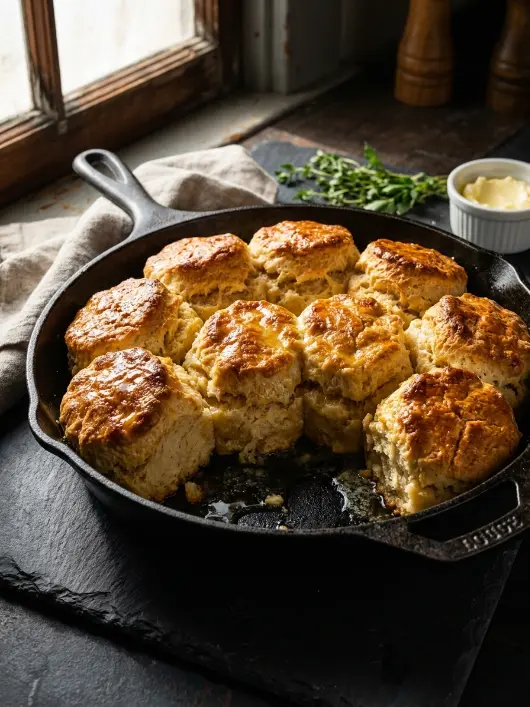
- Bake undisturbed for approximately eighteen to twenty-two minutes depending on oven calibration allowing the biscuits to rise to approximately two to three inches tall and develop a deep golden-brown exterior crust.
- Check for doneness at the eighteen-minute mark by inserting a toothpick into the center of the largest biscuit ensuring the toothpick emerges clean or with just a few moist crumbs indicating complete starch gelatinization.
- Remove the pan from the oven and allow the biscuits to rest in the pan for approximately three to five minutes permitting residual steam to escape and the crumb to set firmly.
- After resting lift the biscuits from the pan using a small spatula or by lifting directly with your hands they will be hot but manageable.
- Serve immediately while warm with the remaining butter pool at the pan base for dipping.
Notes
Always use soft wheat pastry flour with eight to ten percent protein content to minimize gluten development and achieve tender flaky crumb structure instead of tough bread-like texture.
Mix the dough only until just combined with visible flour disappearing allowing butter chunks to remain discrete and preventing excessive gluten development from mechanical action.
Always use cold buttermilk straight from refrigerator approximately thirty-eight to forty degrees Fahrenheit to slow leavening reactions and keep butter chunks from melting during mixing.
Ensure immersion butter reaches approximately three hundred fifty degrees Fahrenheit creating immediate steam pockets and rapid explosive rise instead of slow gradual rising in cool fat.
Verify interior starch gelatinization completely reaching approximately two hundred ten degrees Fahrenheit using an instant-read thermometer or a toothpick test showing clean emergence ensuring the crumb sets firmly.
Mix the dough only until just combined with visible flour disappearing allowing butter chunks to remain discrete and preventing excessive gluten development from mechanical action.
Always use cold buttermilk straight from refrigerator approximately thirty-eight to forty degrees Fahrenheit to slow leavening reactions and keep butter chunks from melting during mixing.
Ensure immersion butter reaches approximately three hundred fifty degrees Fahrenheit creating immediate steam pockets and rapid explosive rise instead of slow gradual rising in cool fat.
Verify interior starch gelatinization completely reaching approximately two hundred ten degrees Fahrenheit using an instant-read thermometer or a toothpick test showing clean emergence ensuring the crumb sets firmly.